Getting tree removal permission in Ireland right depends on three things: where the tree is, what species it is, and which legislation applies to your situation. Most residential removals have a clear legal path. The problem is that most homeowners never find out what that path is before the chainsaw comes out, and that is where the fines start.
Which Laws Apply to Tree Removal in Ireland?
Tree cutting in Ireland is primarily governed by the Forestry Act 2014, which replaced earlier legislation and introduced a single application process for felling licences. Ireland’s forest cover stands at around 11.6% of total land area, well below the EU average of 38%, which is part of why the legislation around felling is taken seriously.
Under this Act, it is an offence to fell trees without a felling licence unless a specific exemption applies. That applies to trees on your own land as much as anyone else’s.
The Department of Agriculture, Food and the Marine administers the felling licence system through its Forest Service. Local authorities handle a separate but related mechanism called Tree Preservation Orders. Both can affect your right to remove a tree, and in some cases both apply to the same situation.
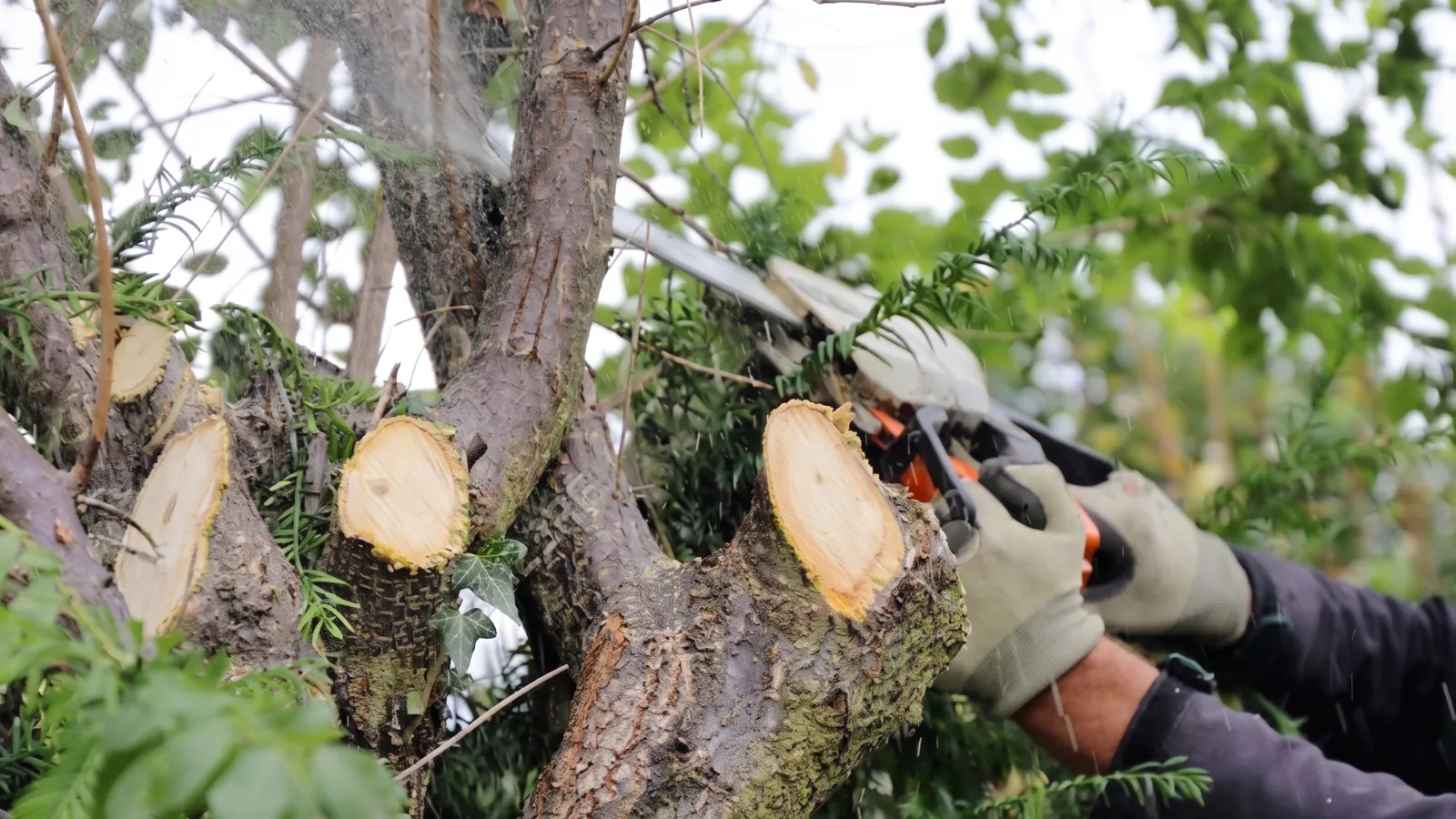
The Wildlife Act 1976 adds a separate layer: cutting trees and hedges between 1 March and 31 August is an offence under Section 40 of that Act, which makes it unlawful to cut or destroy vegetation in a hedge during that period. This applies even if no felling licence is required for the tree itself.
How to Apply for a Felling Licence in Ireland
If none of the exemptions apply, you’ll need to apply through the Department of Agriculture, Food and the Marine via the Forestry Licence Viewer portal. The application fee is €20, and the Department aims to decide within four months following a 30-day public consultation period. Licences can run for up to ten years, and conditions such as replanting or site notices are commonly attached.
For a fuller breakdown of how felling licences affect timelines and cost on a real job, see our tree felling cost guide.
What Are the Fines for Illegal Tree Removal in Ireland?
The Forestry Act 2014 sets out penalties that escalate significantly with the seriousness of the offence. On summary conviction, the fine is not to exceed €200 per tree removed, subject to a maximum combined penalty of €5,000, or imprisonment for up to six months.
On conviction on indictment, the fine can reach €1,000,000 and imprisonment up to five years.
Most people who remove a tree without permission are never caught. That is also true of most people who drive without insurance. The risk is not that enforcement is certain. It is that when it happens, it happens without warning and the consequences are disproportionate to the original decision. One tree. One fine. No appeal on the grounds that you did not know.
Breach of a tree preservation order carries additional penalties under the Planning Acts. Local authorities also have powers to serve replanting orders. Landowners can be required to replace removed trees at their own cost.
This is not an area where it pays to gamble. If a tree has become dangerous and you need to act quickly, document everything before and after removal with photographs. Evidence of the hazard condition is the foundation of any legitimate claim to an emergency exemption.
Who Is Responsible for Roadside Trees in Ireland?
Roadside trees catch landowners out more often than any other scenario in rural Clare, Limerick, and Galway. The general rule is straightforward: trees on your land are your responsibility, regardless of whether they sit beside a public road or not.
If trees or vegetation on your land pose a hazard to road users, your local authority can serve a notice requiring you to act.
For trees that contact or risk contacting power lines, this is different territory entirely. Work involving trees near ESB networks equipment must be carried out by qualified personnel through ESB Networks. A tree surgeon working outside that system should not be cutting into the zone near live overhead lines.
Can You Cut Down Trees on Your Own Property or Land in Ireland?
Owning the land or property doesn’t remove the legal requirement. A felling licence is needed to fell most trees in Ireland, whether it’s a garden, a field, or any other private property, unless a specific exemption applies. There’s no blanket exemption for private landowners. Certain trees may also carry a Tree Preservation Order from the local authority, which applies regardless of whose land they stand on. A handful of specific scenarios are exempt, including trees within 30 metres of a building, certain hedgerow species, and small-scale agricultural removals. See our full exemption list above for the complete picture.
Can You Cut a Neighbour’s Overhanging Tree in Ireland?
You are entitled to cut back branches or tree roots from a neighbour’s tree that encroach onto your property, up to the boundary line. All cuttings remain the property of the tree owner and must be offered back.
What you cannot do is poison encroaching roots, which is unlawful regardless of the nuisance the tree causes.
Cutting trees or removing trees without the landowner’s permission is unlawful if the tree is on their land. A dispute about a neighbour’s tree should be resolved through dialogue, mediation, or, where necessary, legal advice. It should not be resolved by quietly removing the tree on a Tuesday morning.
Signs a Tree Is Dead, Dying, or Dangerous
Not every concern about a tree requires removal. A qualified tree surgeon will assess whether removal is actually necessary or whether crown reduction, pruning, or other work will address the issue. In most cases, the answer is not removal.
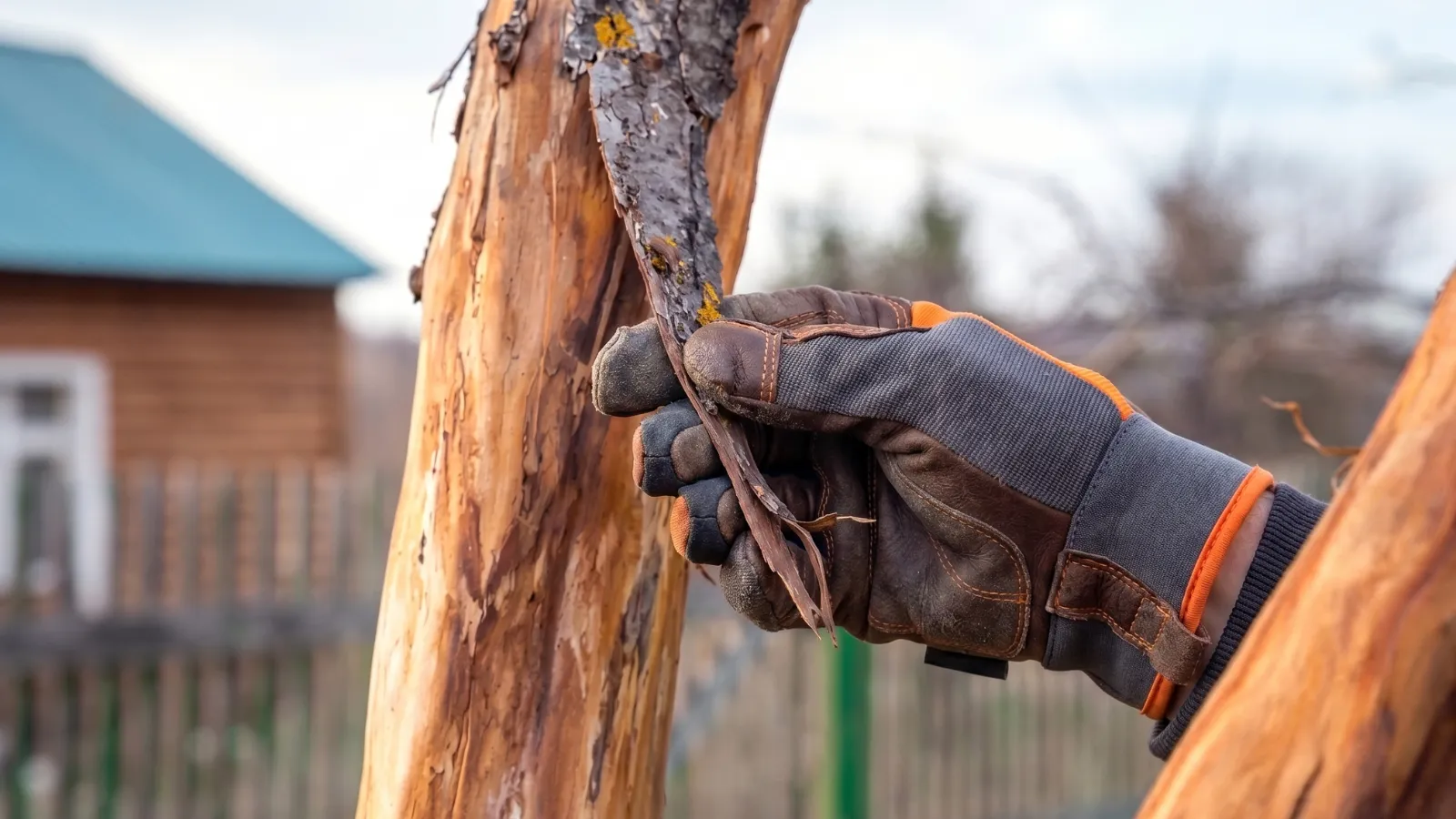
Common signs that a tree is in poor condition include visible deadwood, fungal growth at the base or on the trunk, significant lean, root damage from construction or soil compaction, and bark damage that exposes heartwood.
Trees that are dead, dying, or demonstrably dangerous may also qualify for removal without a licence beyond the specific scenarios listed above, but the onus remains on the landowner to document the condition that justified removal. Photographs and a written assessment from a qualified arborist are the most reliable evidence.
What Tree Removal Costs in Ireland
Pricing for tree removal varies considerably based on the size, location, species, and access conditions. A small ornamental tree in an accessible garden is a different proposition from a large mature ash beside a wall or near a building.
As a rough guide, residential tree removal in Clare, Limerick, and Galway typically ranges from around €200 for a small, straightforward removal to €1,500 or more for large, complex work requiring specialist equipment.
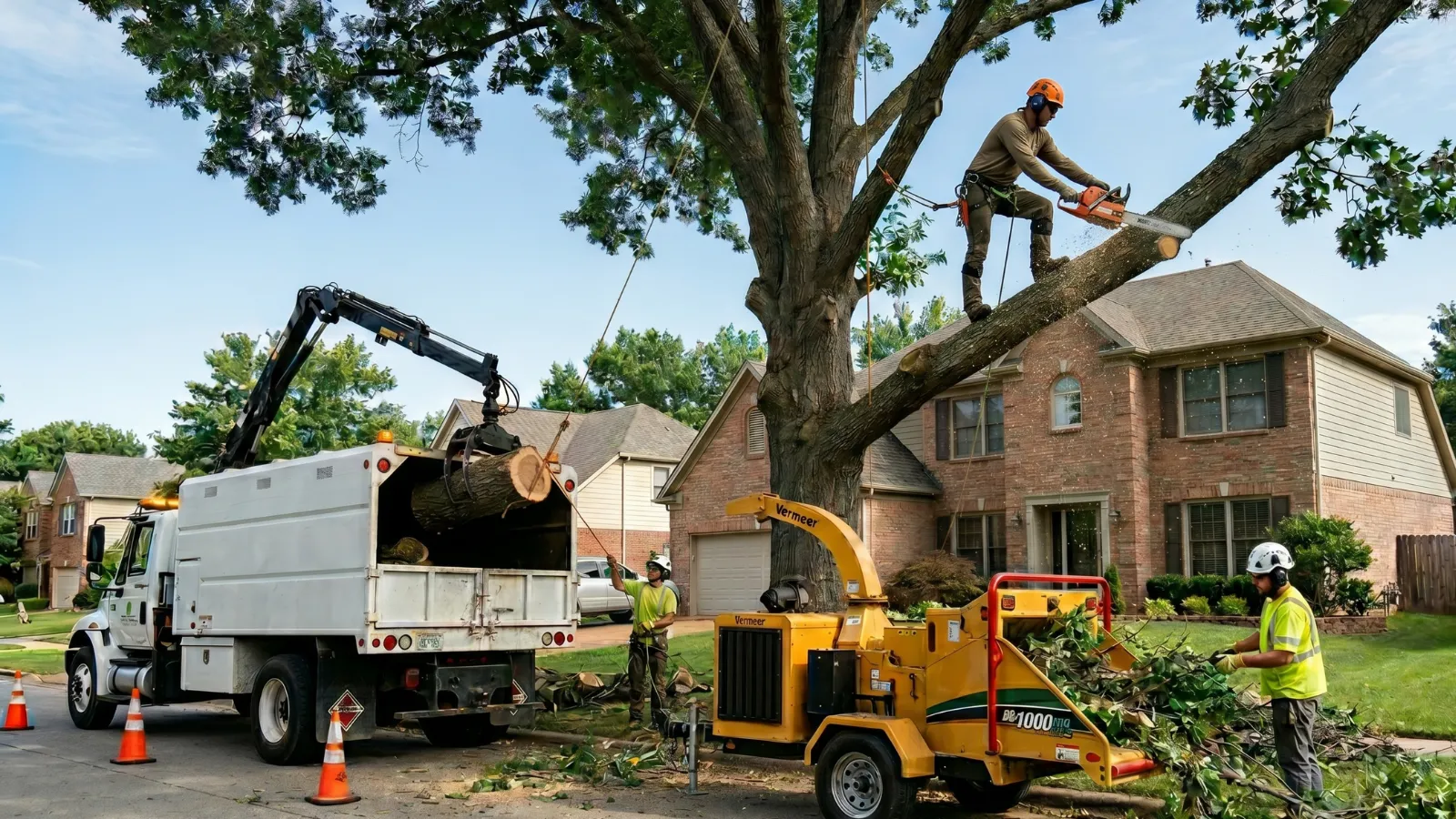
A large mature ash growing close to a boundary wall, for example, often requires sectional dismantling rather than a straight fell. That kind of job with crane access and careful lowering of sections can run from €1,000 to €3,000 depending on conditions. Stump grinding is usually quoted separately and adds €75 to €300 depending on stump diameter and access. Log removal, chip disposal, and site clearance are factors that affect final cost depending on the agreement with the contractor.
For commercial sites, multi-tree removals, or work near infrastructure, pricing is project-specific and requires a site assessment before any accurate figure can be given.
How to Make Sure Your Tree Removal Is Legal and Insured
The felling licence and TPO system is ultimately the landowner’s responsibility. When you instruct a contractor to remove a tree, you remain liable if the removal was carried out without the correct permissions in place.
Using a qualified tree surgeon who holds ISA (International Society of Arboriculture) membership means that if something goes wrong: a missed TPO, an unlicensed felling, a disputed exemption. You have a documented professional assessment behind you rather than a bill and a fine arriving at the same time.
In our experience, the cases that cause the most problems are not the obvious ones. They are the trees that sit just outside a clear exemption, where a landowner assumed they were fine and never checked.
A qualified arborist will check whether your tree falls within an exemption, identify any TPO protection, and handle the felling licence application where one is required. That knowledge has real value, not just from a compliance standpoint but from a practical one: a mismanaged removal near a building or road can bring down a roof, crack a boundary wall, or write off a parked car. Those are costs that make the price of professional work look modest in comparison.
Before any contractor starts work, ask them to confirm in writing that they have checked for TPOs, reviewed any planning conditions on the property, and verified whether a felling licence is required. A professional contractor will have no hesitation doing this. One who cannot or will not is a risk you do not need.
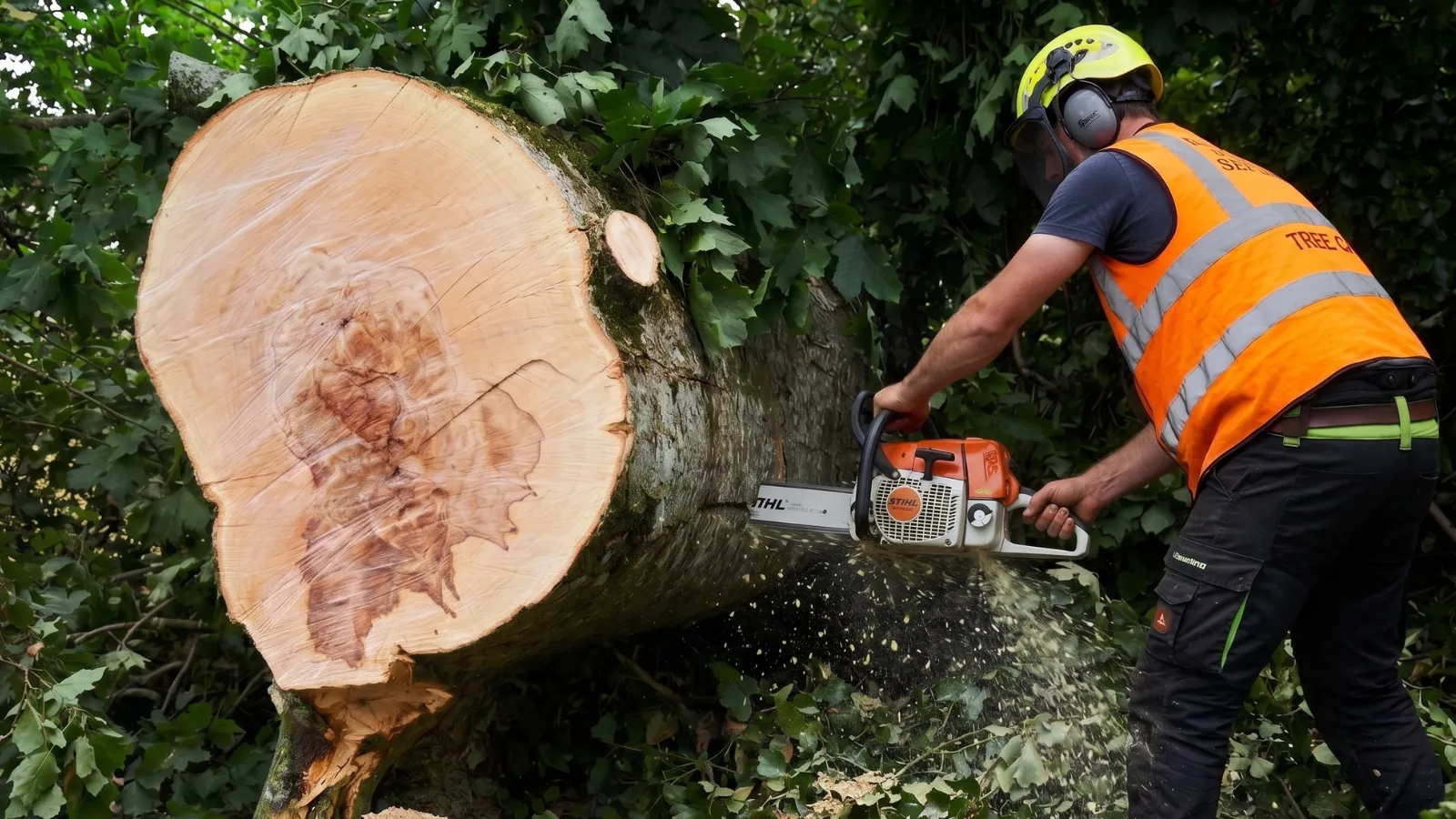
At Elm Landscaping, our ISA-qualified arborists carry out tree removal across Clare, Limerick, and Galway with full attention to the legal framework that applies to each site. Whether you need a single tree assessed and removed or a larger site clearance project managed from start to finish, we bring the right equipment and credentials. We also know the law, and we handle the paperwork when a licence is needed.
If you have a tree that needs attention and you are not sure where you stand legally, the most useful first step is a site assessment from someone qualified to give you a clear picture. Contact the Elm Landscaping team and our ISA-qualified arborists will assess your tree and tell you the right course of action.
The longer you leave a tree that needs attention, the fewer options you have. Find out where you stand before the decision is made for you.
Frequently Asked Questions
When Can You Cut Down Trees in Ireland? (Tree Cutting Season)
There’s no blanket seasonal ban on felling trees, but hedgerow cutting is restricted between 1 March and 31 August under Section 40 of the Wildlife Act 1976, to protect nesting birds. This applies even if the tree itself doesn’t require a felling licence. Outside the hedgerow-cutting restriction, timing is otherwise governed by whichever licence or consent applies to the tree, not the calendar.
What Is the Law on Cutting Down Trees in Ireland?
Tree cutting in Ireland sits across three separate pieces of legislation: the Forestry Act 2014, which requires a felling licence for most trees regardless of who owns the land; local authority Tree Preservation Orders, which protect specific trees for amenity value; and the Wildlife Act 1976, which restricts hedgerow cutting during nesting season. All three can apply to the same tree at once, and each carries its own separate penalties for non-comp