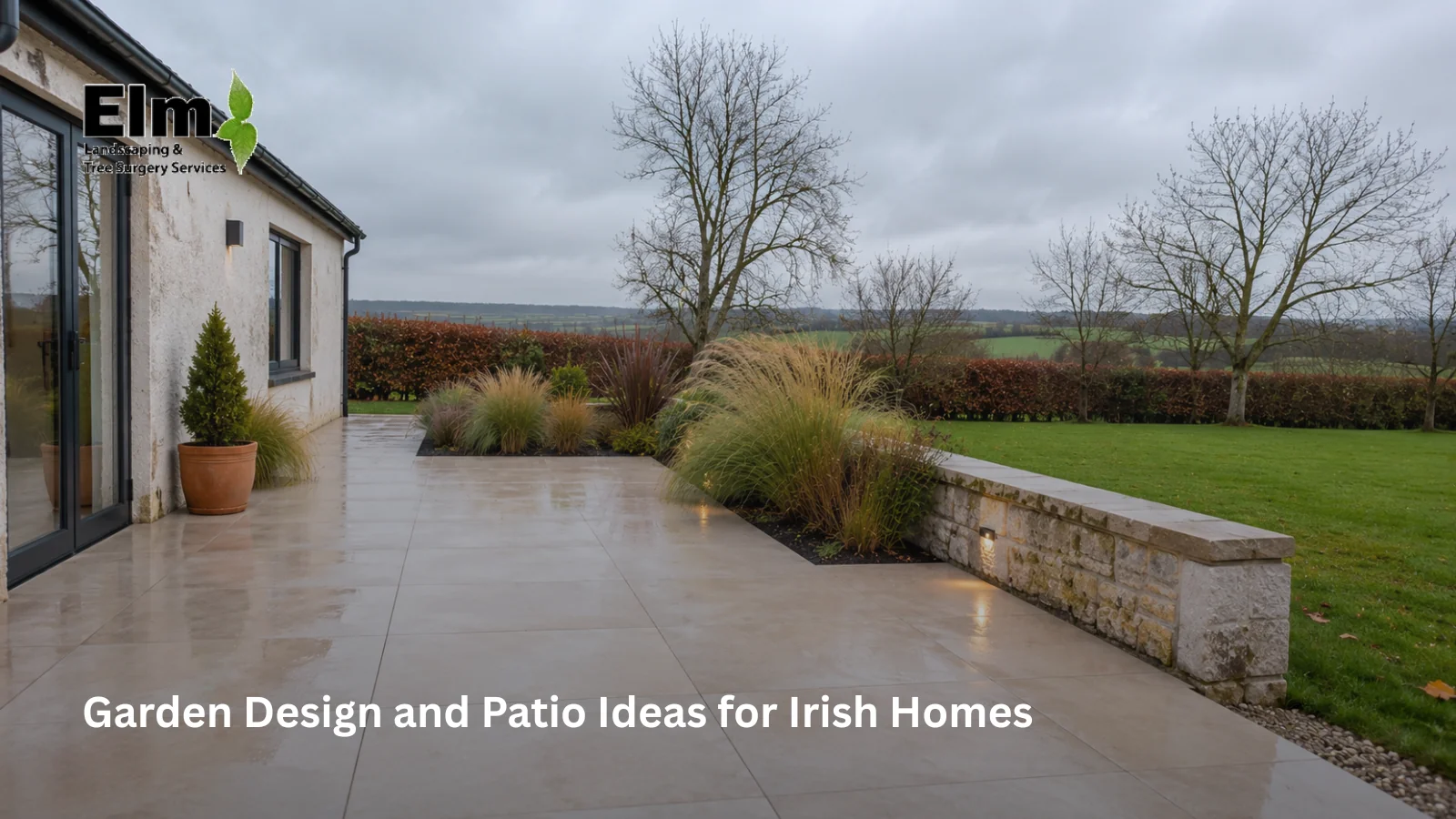
The best garden design ideas for Irish gardens begin with the house and the weather, long before any plant is chosen. Match your style to the building, keep the materials few and plan for damp from day one, and most gardens look right on the day they are finished. Yet plenty still feel wrong by November, and the cause is a detail that no inspiration photograph ever shows.
A garden is photographed in June but lived in all year, and Ireland’s long damp months expose whatever the design left out.
Which garden design styles suit Irish homes?
Pick the style your house already suggests, so the garden looks as though it was always meant to be there.
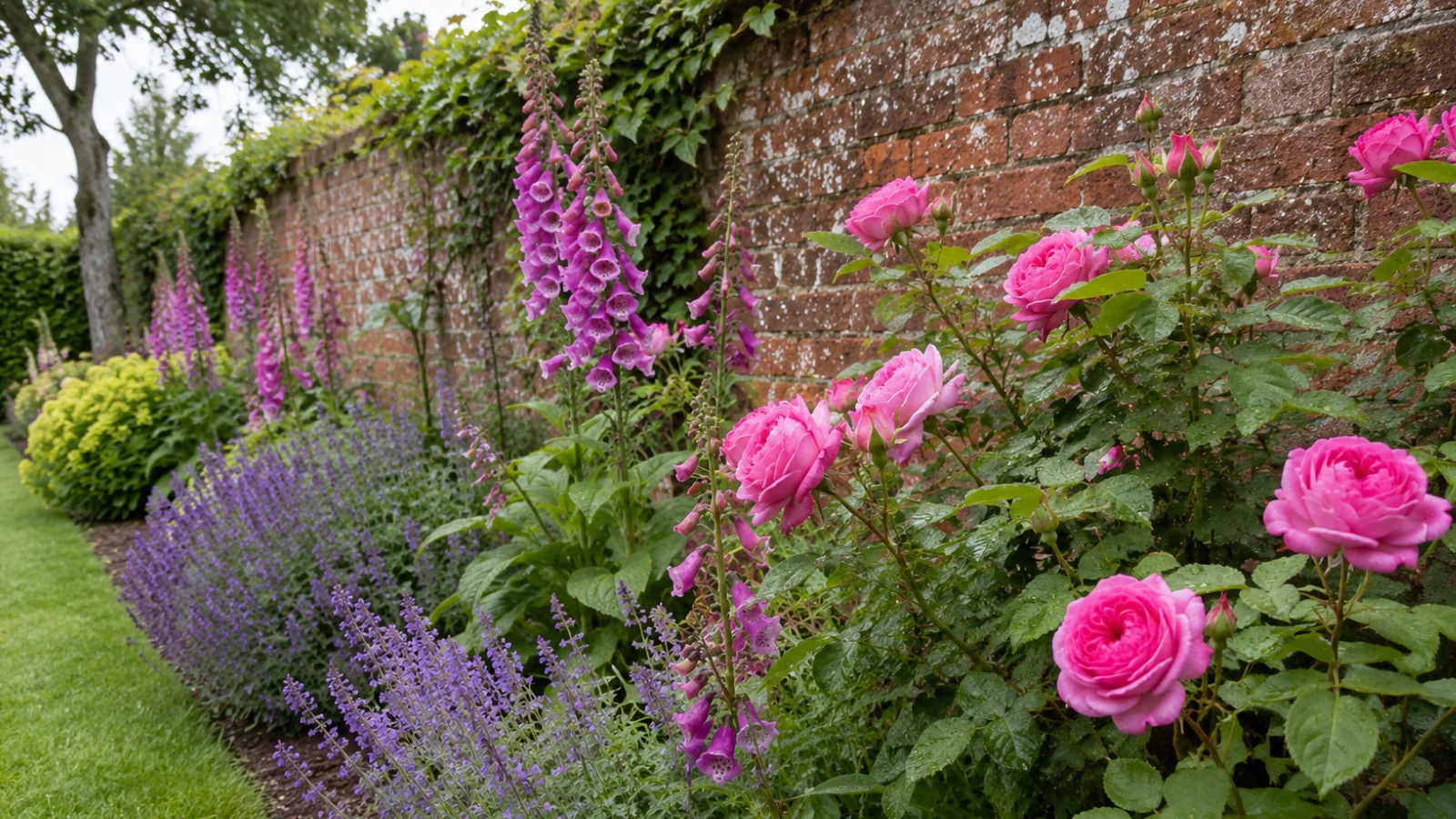
Modern gardens suit newer builds with clean render and large glazing. They work with straight edges and big slabs, plus a short plant list repeated in groups, so very little competes for the eye. One modern garden idea that holds up well is a single long border of ornamental grasses against a rendered wall. Traditional or cottage-style gardens suit older houses with brick or stone frontages, and they lean on curved borders and fuller planting, in natural materials that soften with age. A mixed border of roses and foxgloves along a brick wall is the classic move.
Formal and informal is a separate choice. A formal garden repeats shapes and keeps everything symmetrical, with clipped topiary and a trimmed hedge doing much of the work. An informal garden loosens it all, with longer grass, meandering gravel paths with stepping stones and borders that spill over their edges. Matching planters either side of the door are the easiest way to start a formal look. For an informal path, plant thyme between the stepping stones.
Pick one direction and commit to it. If you are starting a garden from scratch, Elm Landscaping’s guide on how to design a garden walks you through the process step by step.
Once the style is settled, the size of your plot decides which ideas earn their space.
Which garden design ideas suit small Irish gardens?
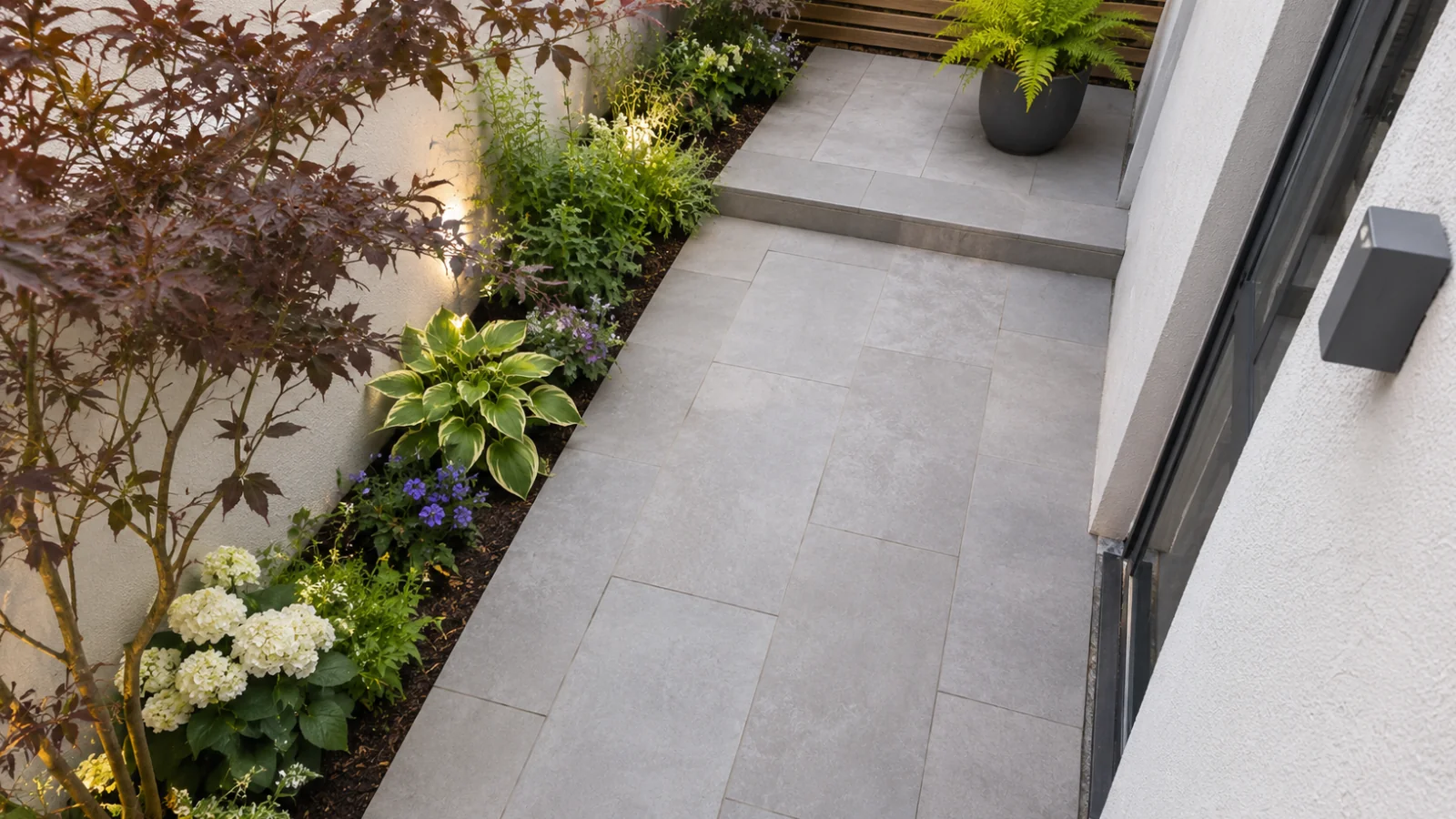
Small garden ideas come down to four precise moves, and none of them needs more than a few metres of your back garden. Slabs laid lengthways, lighter tones, a soft planting edge and one change of height do the work.
Lay your slabs in a single direction, running along the length of the plot. The joints become lines that pull the eye towards the far boundary, and a short, narrow garden starts to read as longer than it is. Choose lighter tones too, because ivory, beige and pale grey bounce back what little light a walled or shaded small space receives.
A narrow plot covered wall to wall looks like a car park. A strip of planting or grass beside the slabs is a soft edge that tells the eye where the garden begins.
Then give the small area one change of height. A single step up to a raised corner creates two zones in a few square metres, and a timber fence or tall planting along one boundary gives the garden a frame.
How do you make a garden look good on a budget?
Spend on what the eye reads first, and economise on what it does not.
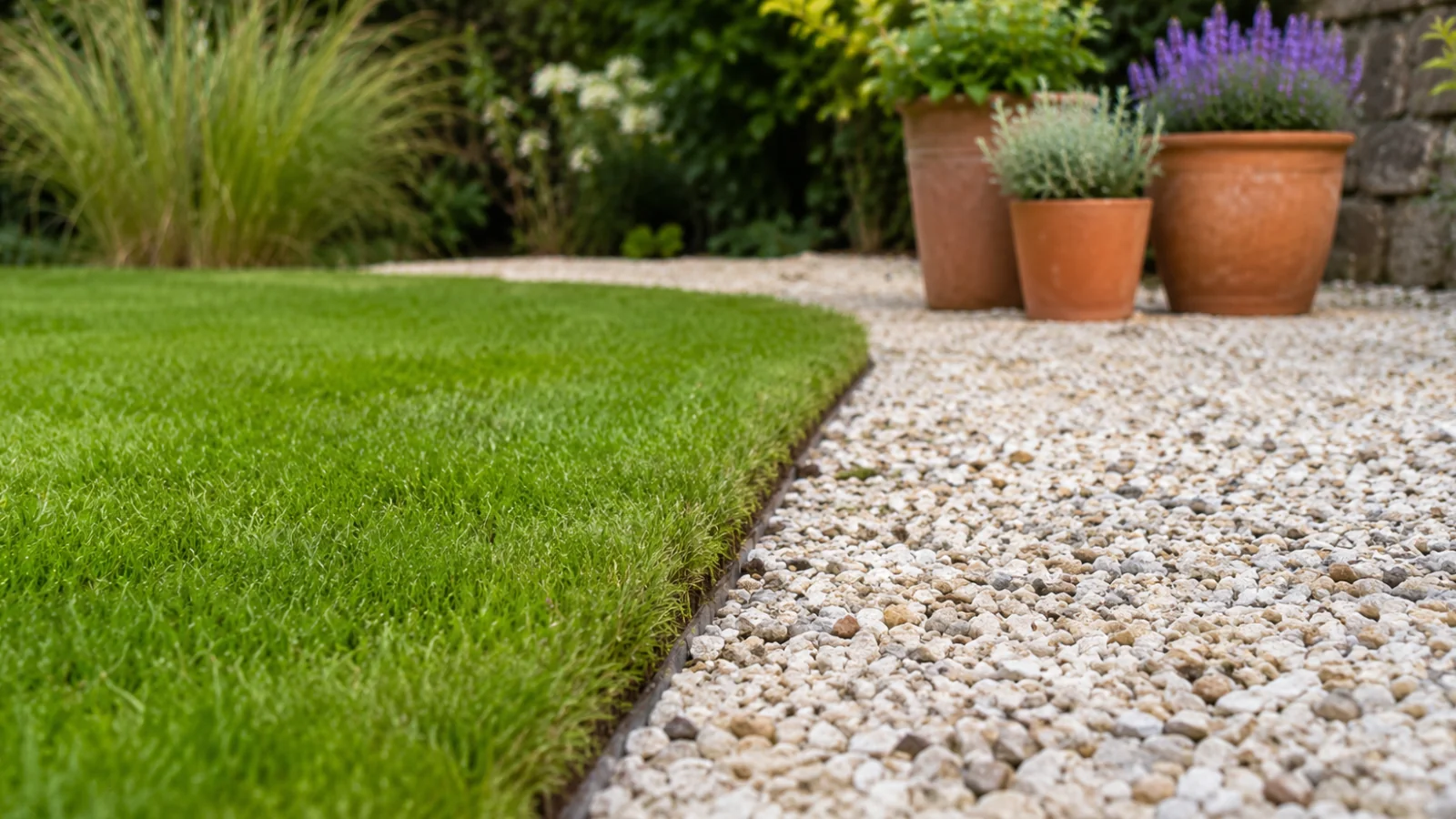
Crisp edges come first. A clean line between lawn and border, or between gravel and stone, makes an inexpensive garden look deliberate.
Gravel suits tight budgets well, though it needs the odd weeding. Use it for secondary areas and paths, edge it firmly so it stays where you put it, and save stone or porcelain for the one spot where you sit. If your existing surface is sound but tired, a thorough clean and fresh joints can change it more than you would expect, and reclaimed bricks or slabs bring character that new material struggles to buy.
Plants earn their keep when you group them. Three medium planters together look intentional, while six small pots scattered around look like leftovers.
Finally, create a focal point and make it a good one. A well-placed specimen tree, a large planted container or a set of low lights beside the seating will do more than ten average garden features.
What low-maintenance garden ideas work in Ireland?
Low maintenance garden design in Ireland means designing for damp. Moss creeps in, weeds never take a winter off and soil can stay wet for months, so the best ideas work with the climate from the start.
Hardy structure that holds the garden together
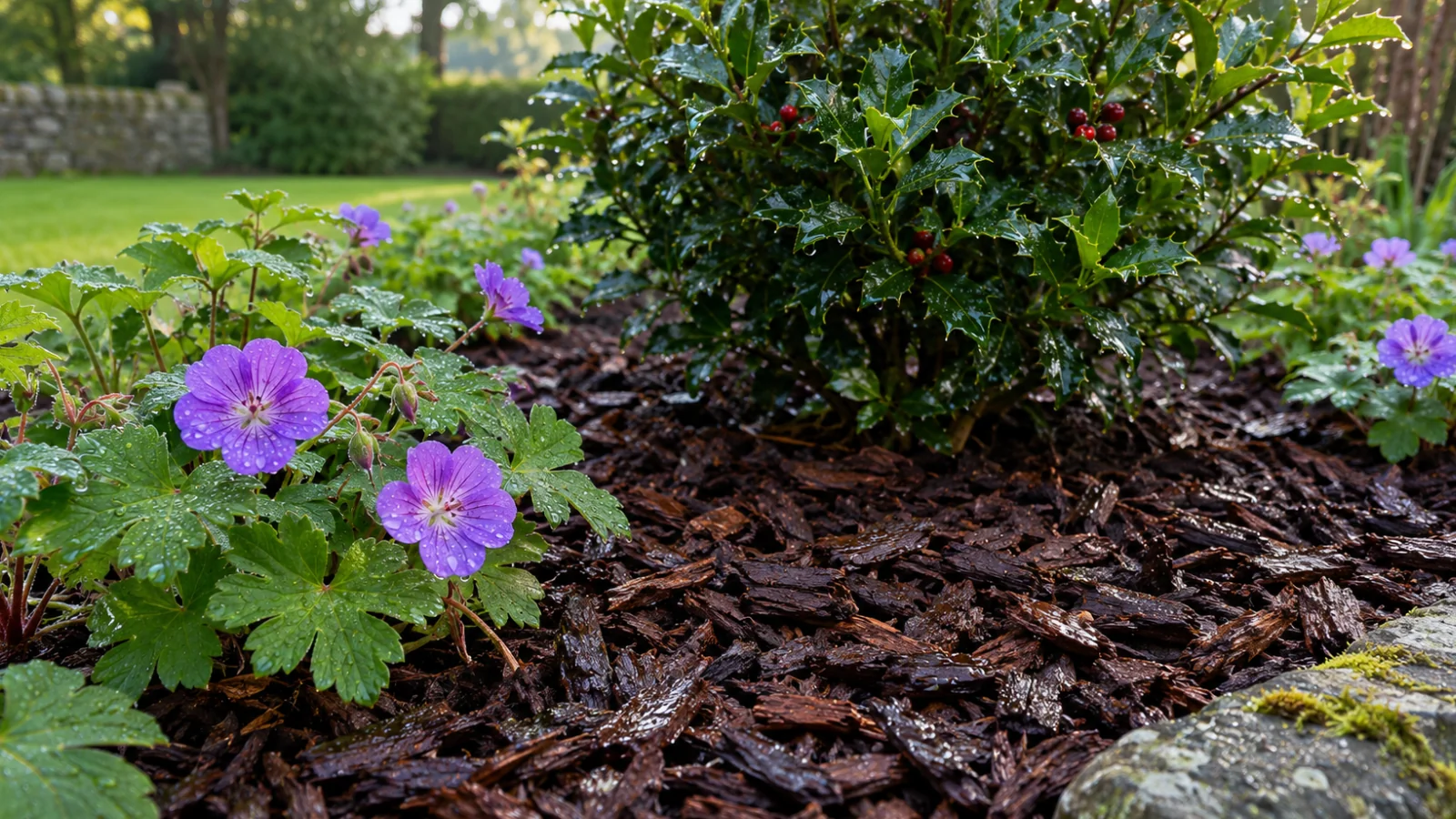
Hardy evergreen shrubs and a trimmed hedge keep the garden looking furnished through winter, when the rest of the border is bare soil. Holly is a dependable Irish choice, and once established it asks for an occasional trim and little else.
Ground cover that fills the gaps
Dense ground cover such as hardy perennial geraniums closes the spaces weeds would otherwise take. Once established, it needs little beyond an annual trim. Weed the bed thoroughly before you plant, because clearing it afterwards is miserable work.
A mulch layer that finishes the bed
Bark mulch laid in spring or autumn, after weeding, holds moisture, keeps weeds down and gives the bed a finished look. Top it up as it thins and even a busy gardener has covered most of a maintenance plan.
Fewer mowing days and more planting
Mowing is the chore most people resent. Cut the lawn back, replace part of it with planting or gravel, or lay artificial grass only where the wear is heaviest, and mowing comes off the weekend list. Our Modern Family Garden in Co. Clare pairs a paved patio with an artificial grass area. Raised beds are another way to replace lawn. They give you space to grow vegetables or cut flowers at a manageable height, in soil you control.
Surfaces that stay clean with little effort
Whether you choose paving or decking, porcelain slabs and composite boards both ask for less than natural stone and timber, which need sealing or oiling. They still need sweeping, and shaded corners will grow algae in an Irish winter, but the routine is a brush and some mild cleaner. No weekend project there.
If you would rather hand the upkeep over entirely, we also offer garden maintenance.
Low upkeep keeps the garden manageable. The patio makes it usable, and it shows weak decisions faster than anything else you build.
How do you transform an outdoor patio for Irish weather?
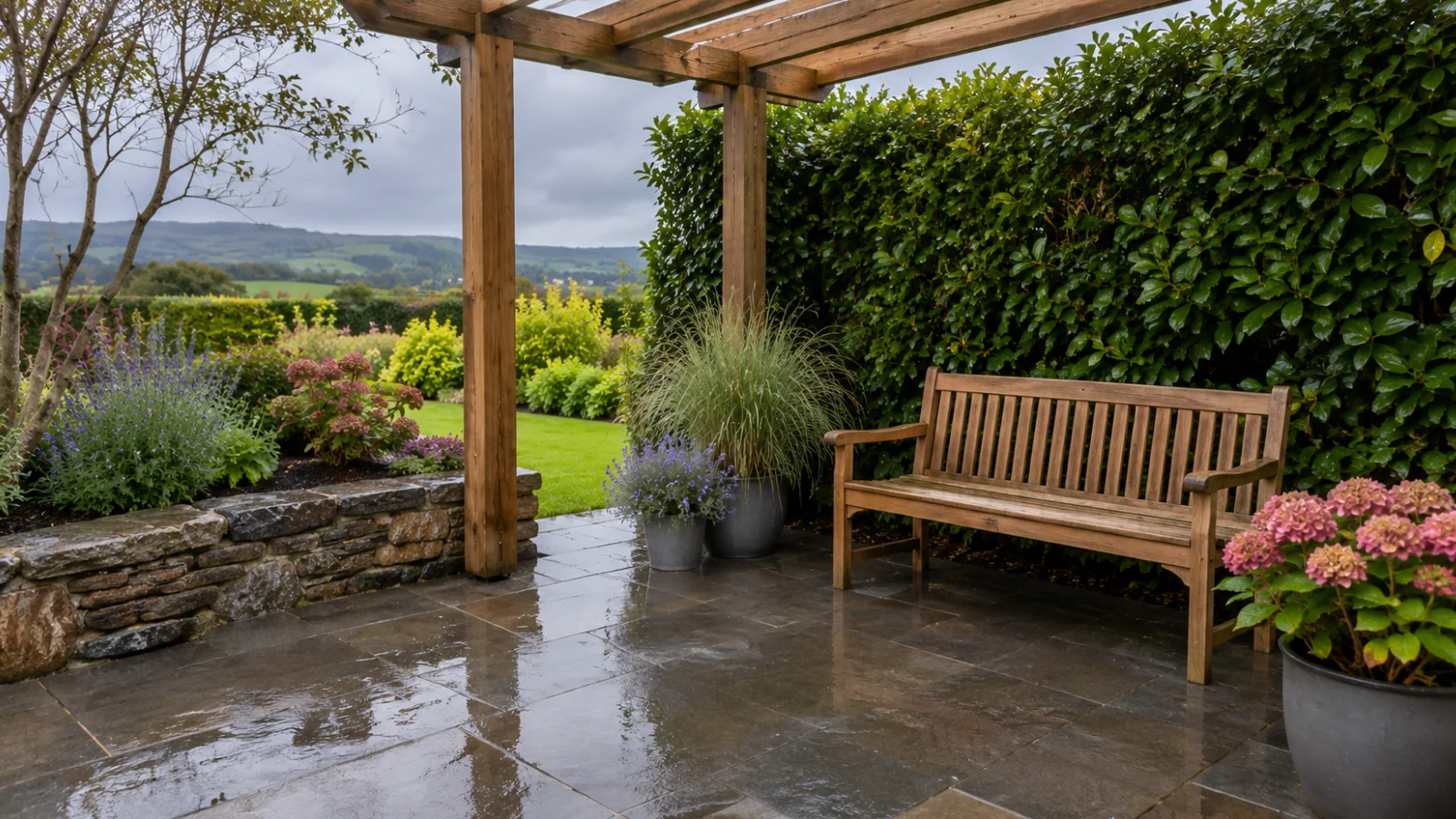
Design the weather in first and the looks will follow. A patio that is lovely for three weeks in summer and awkward for the other forty-nine hasn’t been designed, only laid.
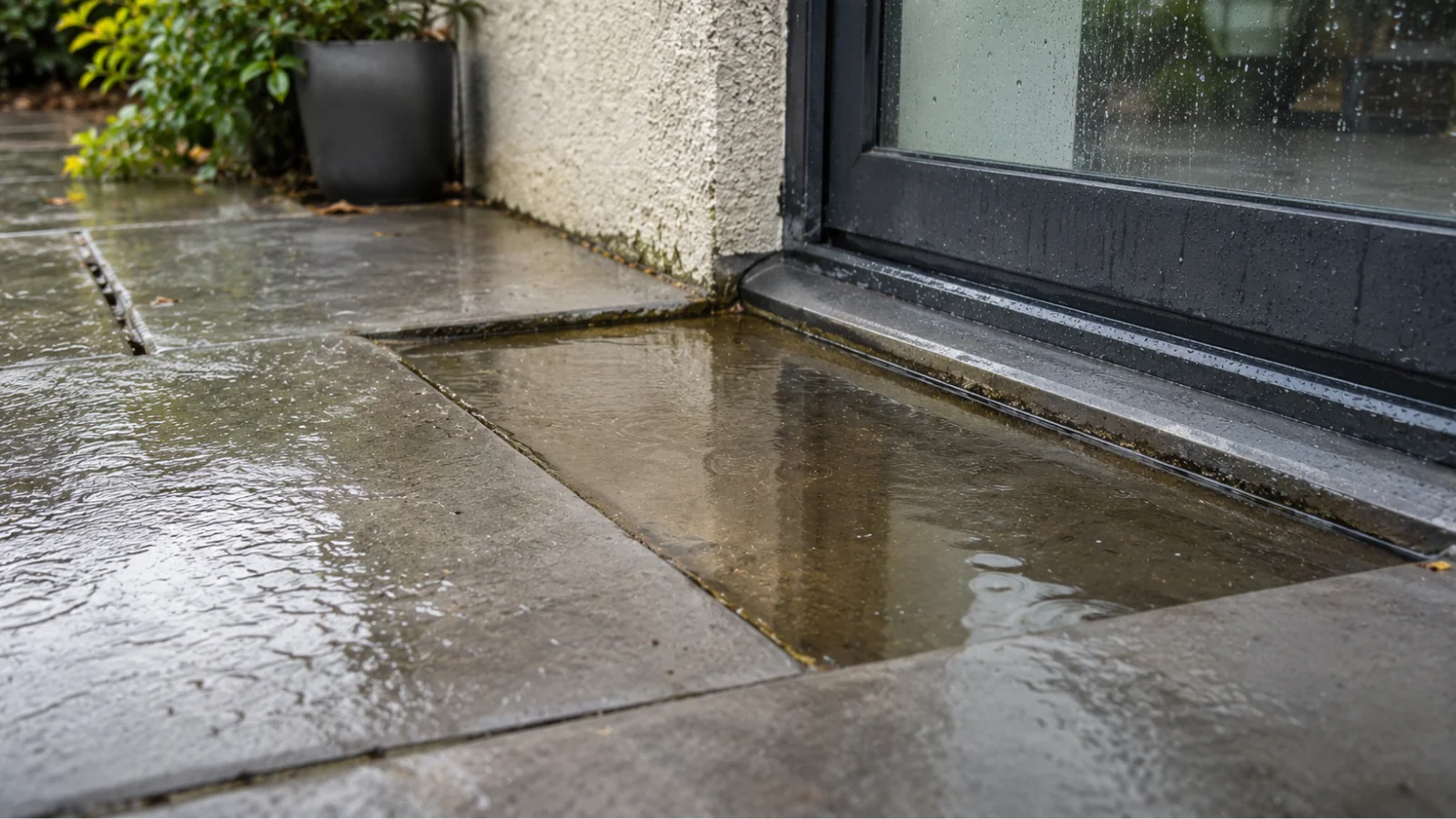
Begin with what you can’t see. This is the detail no photograph shows. No finish hides a poor base, and everything else rests on it. Slabs laid straight onto soil will not stay level. Then check the falls, a slight slope away from the house so rain runs into the garden and not towards your back door.
Grip is the next test. A surface that looks flawless when dry can be treacherous in the wet, so choose paving made for outdoor use and favour a textured finish in shade. Add shelter where the wind comes at you and place the seating where the evening sun lands.
Then choose the material. Porcelain gives a crisp, modern surface. Natural stone has more character and mellows with age, in return for sealing and the occasional deep clean. Our patios and paving work ranges from limestone and Indian sandstone to granite, slate and brick, to suit the age and style of your house. At Taylors Hill in Galway, we built granite paving, cobble, steps and large patio areas to a design by Murphy Sheanon Landscape Architects.
Get these foundations right and the design choices that follow are the enjoyable ones.
How do you make a patio look expe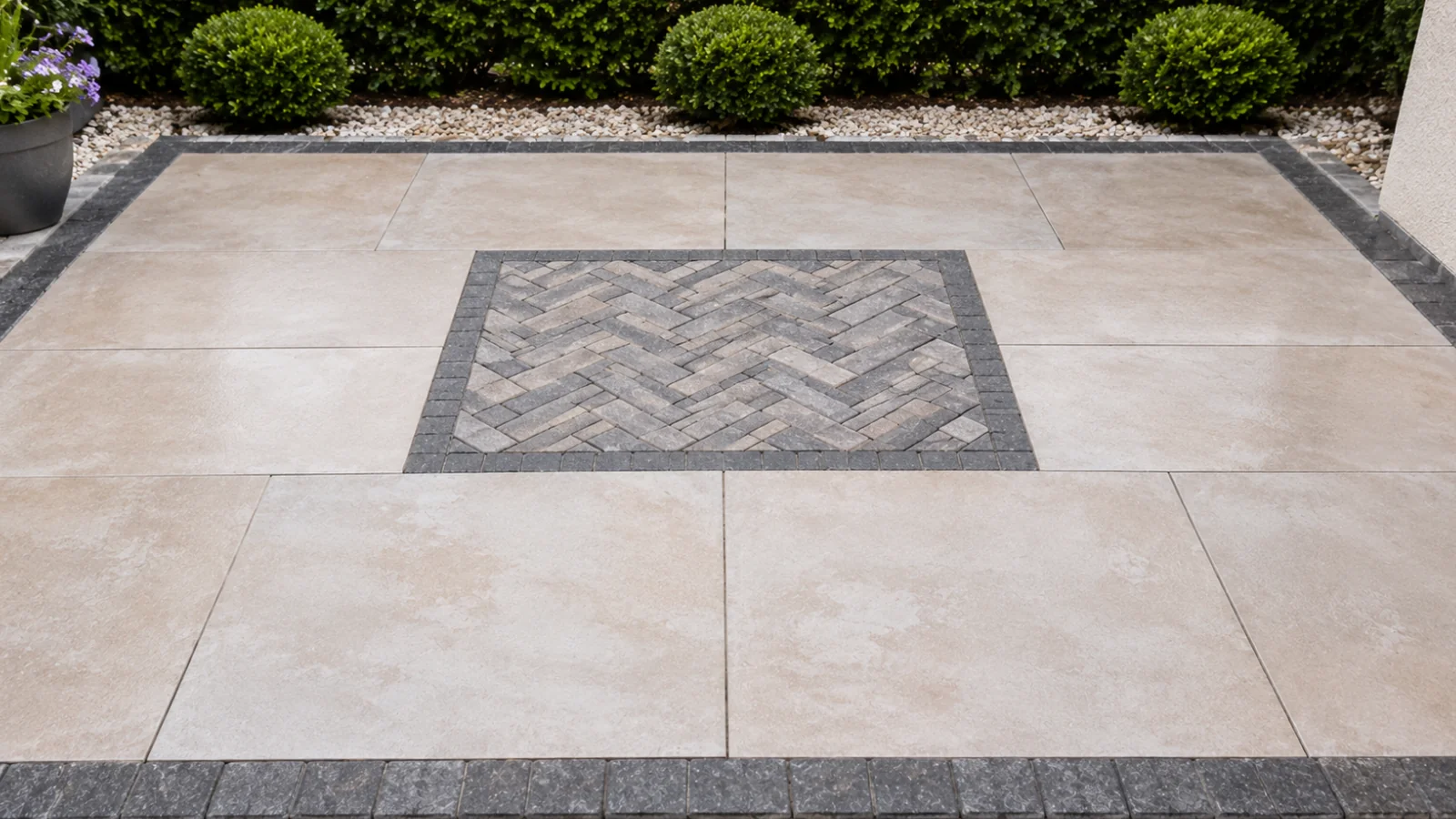 nsive?
Five patio ideas do most of the work.
Choose large slabs
Oversized slabs mean fewer joints, and fewer joints give a surface that reads as one clean sheet instead of a grid. On a small patio that matters most, because a grid of joints shrinks the space. Match one tone to your window frames and containers and the patio starts to look like part of the house.
Frame the patio with a border of setts
A plain rectangle of slabs looks designed the moment you edge it. Setts are small, square-edged paving blocks. Slim ones in a contrasting or complementary tone around the perimeter work like a picture frame. They separate the patio from the lawn and borders. Run the border without breaks and bring the same colour back in a container or two.
Set a herringbone inset under the table
Keep the main surface plain and lay a rectangle of herringbone setts where the dining table or garden furniture will sit. It reads like an outdoor rug. Size it generously, so a chair pushed back still sits on the pattern.
Finish edges and steps with a rounded bullnose
A bullnose is an edge cut with a rounded corner. On steps, raised borders and low walls, it softens the details you see and touch every day. It’s a small decision that separates a patio that looks finished from one that looks assembled.
Hold the patio to two colours
Two tones of stone read as intentional. Four start to look like a mistake. Choose a main slab and an accent, use the accent for the border and the herringbone inset, and let the planting supply the rest of the colour.
What patio design mistakes should you avoid?
Six decisions are easy to get wrong when you rush.
| Mistake | Why it matters |
| Skimping on the base | Rocking slabs and sunken corners almost always begin underneath, where nobody can see them. |
| Water pooling at the door | A surface that looks level to the eye can still send rain towards the threshold, and no choice of colour makes up for that. |
| Using too many colours or patterns | Busy surfaces compete with your furniture and your planting. |
| Forgetting the furniture when sizing the patio | Chairs need room to pull back, and people need room to walk around the table. |
| Choosing a slick surface for a shaded spot | Shade stays damp, and damp surfaces grow algae and turn slippery. |
| Leaving no room for planting | Some lawn or planting keeps the space from feeling like a yard. |
Planting and light turn a patio into somewhere you want to sit.
What planting and lighting ideas work around a patio?
Hard surfaces look better with something living beside them. Containers break up a run of stone, add height and can mark where dining ends and seating begins without building a wall. Planting that spills over the rim softens the line between the patio and the border, so build each container around one central plant with a few lower plants around it.
Scented plants beside the seating area reward you on summer evenings. A tree planted near a bench or table adds height and dappled shade. On a plot the neighbours overlook, it also adds privacy. Our Castletroy garden in Co. Limerick combined Indian sandstone paving with planter beds and mature trees.
If you want planting plans to start from, Bord Bia’s Easy Steps to Dream Gardens offers eight designs by Bloom award-winning show garden designers, each with a planting plan and plant list.
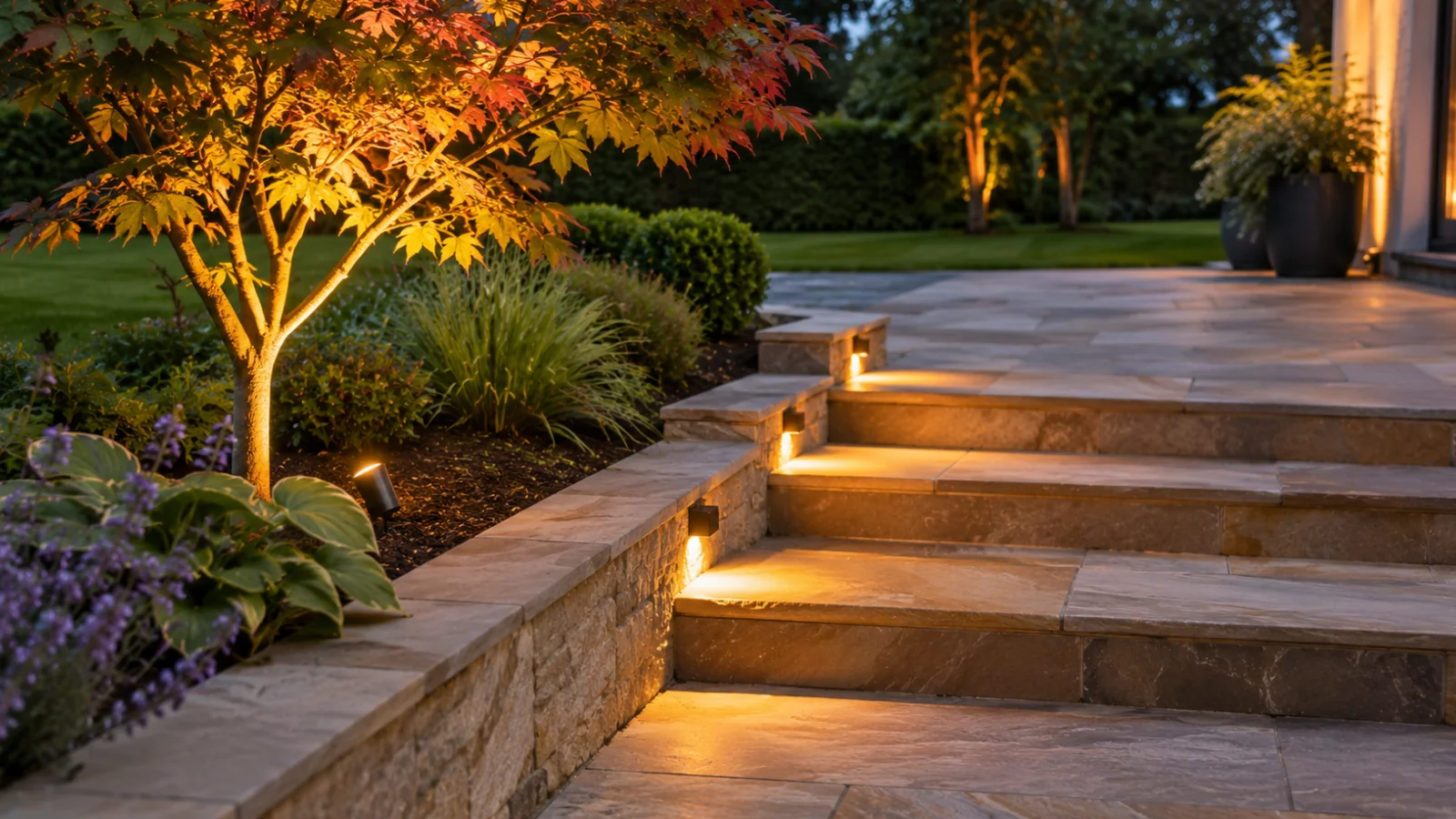
Lighting matters more in Ireland than most people expect, because winter evenings arrive early and last long. Warm, low-level lights along steps and patio edges keep the patio somewhere you can still sit out, and walk around safely, long after dark. An uplight turns a tree into a focal point, and from the kitchen window it gives a winter evening something to look at instead of black glass. Decide on the lighting before the patio is laid, so the cables are in place and the finished surface stays untouched.
What garden and patio design trends are worth following?
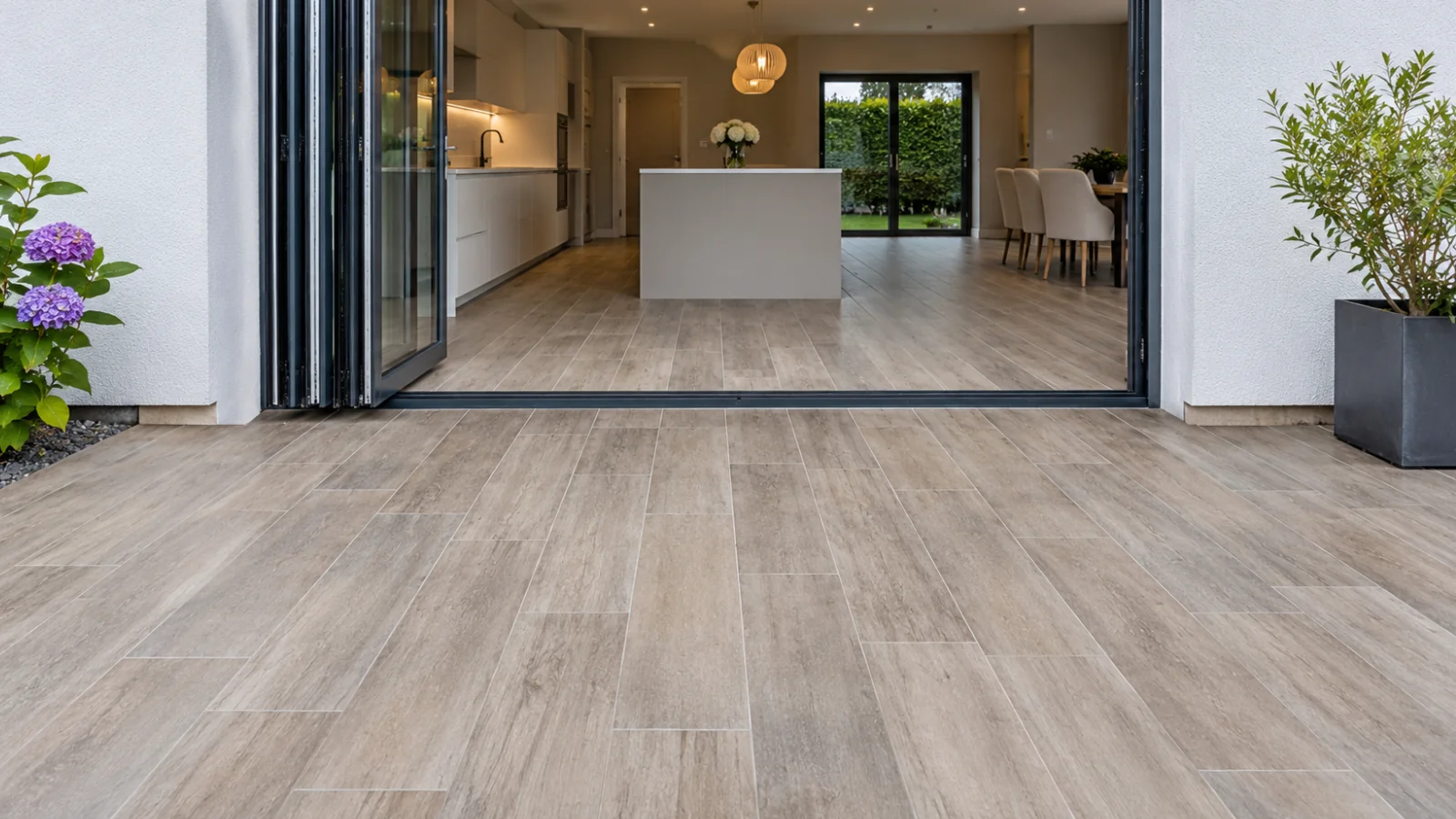
Look at what Irish suppliers keep showing and the same few ideas recur. Large-format porcelain appears across the board. Wood-effect porcelain turns up wherever people want the warmth of timber without the oiling. The kitchen floor increasingly runs straight out through the doors into the terrace, so that inside and outside read as one room.
Each of those trends makes the space easier to use or easier to keep. Follow the ideas that earn their place on an ordinary Tuesday evening, and treat anything that depends on a single season’s look with suspicion.
Is a garden design consultation worth it?
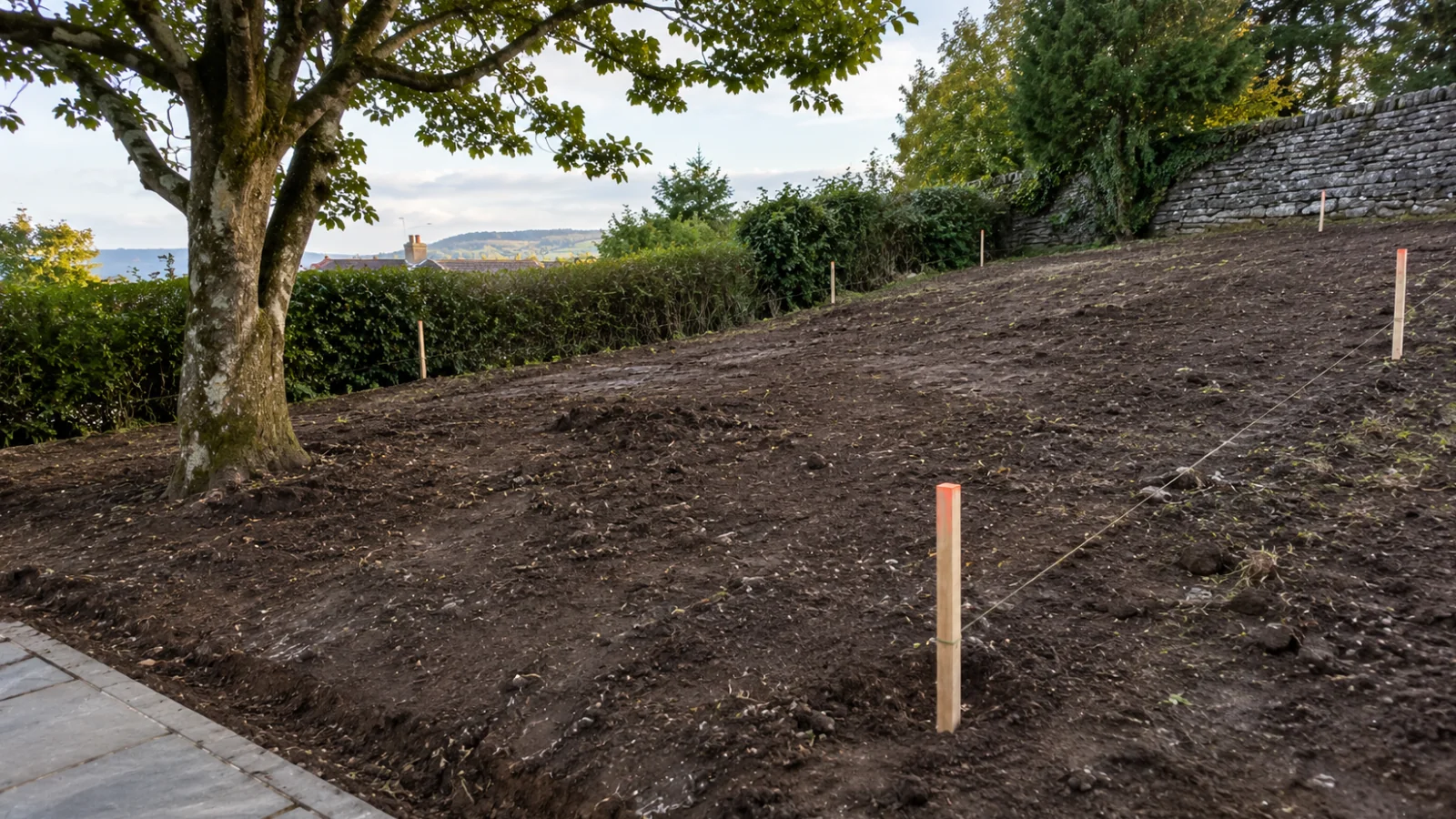
Yes, if you want to know which of these ideas will work on your own plot. An idea that works beautifully on a level, sheltered garden can fall flat on a slope, in heavy soil or in the lee of a mature tree.
That’s why we start with the site. A 1-hour garden consultation at your property covers layout, drainage and planting, assesses your soil conditions and gives you a realistic idea of what your budget can achieve. If you would rather see the result before any ground is broken, our garden design service follows the consultation with a site visit and accurate measurements, then a 3D model of the finished project. It is available only alongside a full landscaping project.
At Elm Landscaping, we have been designing and building gardens across Clare, Limerick, Galway and parts of Tipperary since 2008, with trained staff, local Irish suppliers where possible, ISO certification and professional arborist membership.