Garden drainage cost in Ireland typically runs from about €1,500 to €3,500 for a full residential system, with French drains (gravel-filled pipe trenches) at €40 to €80 per metre and soakaways (buried pits that let water seep away) at €500 to €1,500 a pit.
But a drain only lowers the water if the water can reach it through the soil. On tight Irish clay it often can’t. So you can pay the full price for a system that leaves the garden as wet as before.
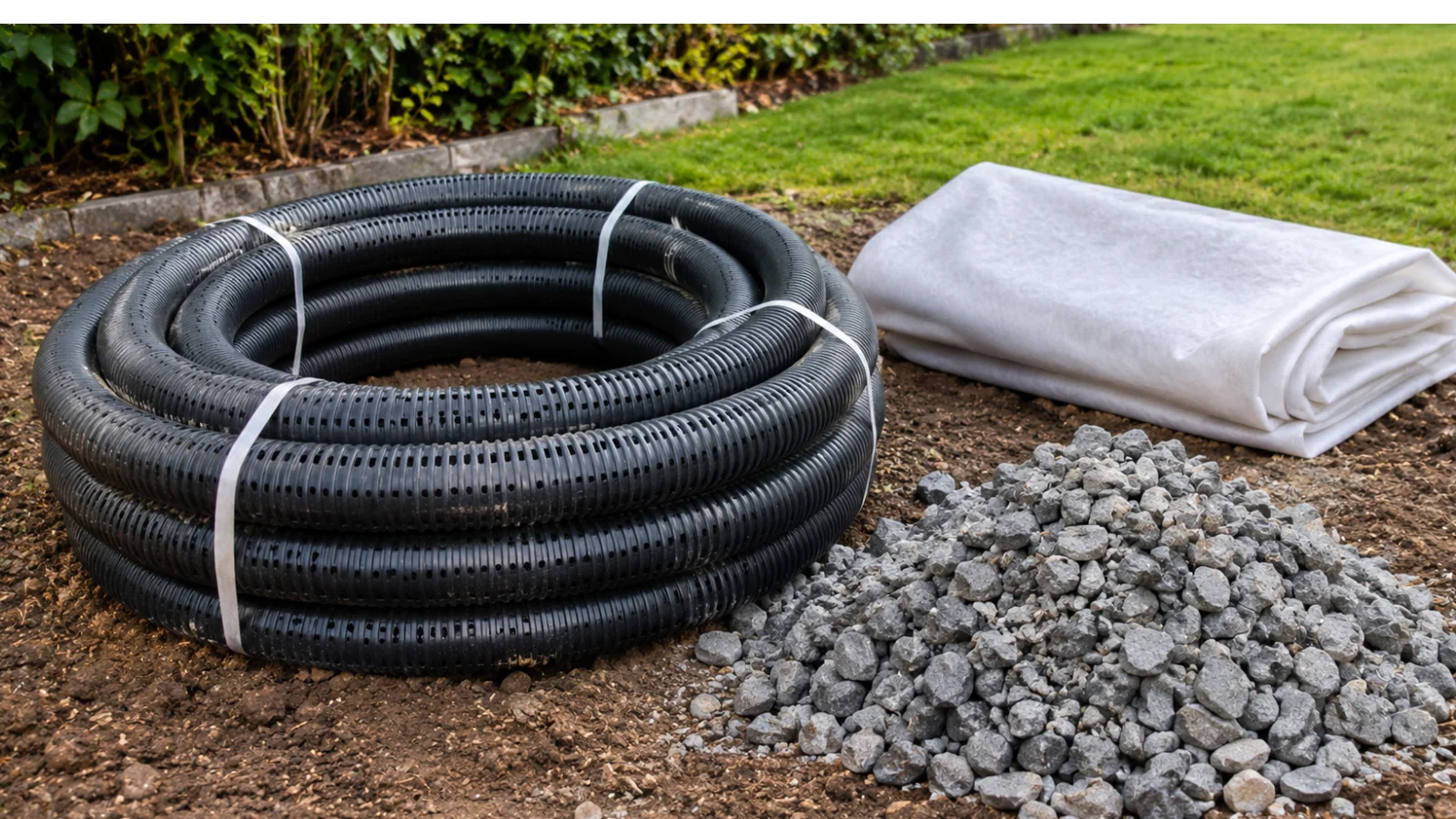
What Does Each Part of Garden Drainage Cost?
Each part is usually priced separately, by the metre of run or by the pit, and not per square metre of garden. The table gives typical Irish garden drainage prices for each. The figures come from published price guides and supplier listings, not a quotation from Elm Landscaping, and they assume ordinary access and soil. Installed rows include labour, and supply-only rows cover materials alone.
| What you are paying for | Typical Irish range | What the figure covers |
| Drain run (gravel trench and pipe), installed | €40 to €80 per linear metre | Excavation, filter fabric, perforated pipe and drainage gravel |
| Soakaway, installed | €500 to €1,500 per pit | A 1m³ pit, modular crates, membrane wrap and backfill |
| Full garden drainage system, installed | €1,500 to €3,500 | Two or three connected drain runs feeding a soakaway |
| Drainage added to a landscaping project, installed | Around €1,250 on average | Pipework or a soakaway where no suitable system existed |
| CCTV drain survey (service) | €150 to €400, typically about €250 | Underground pipes only |
| Soakaway crates, supply only | About €60 to €80 per crate | Materials, with no excavation or labour |
| Basic channel drain with grate, supply only | About €15 to €20 per metre | Light-duty one metre lengths, no installation |
Two things sit behind these numbers. Most published Irish guides draw on Dublin jobs, which makes them a fair starting point and a weak predictor for a garden in Clare or Limerick. And some guides run as high as €5,000 for difficult sites.
How Much Does a French Drain Cost per Metre?
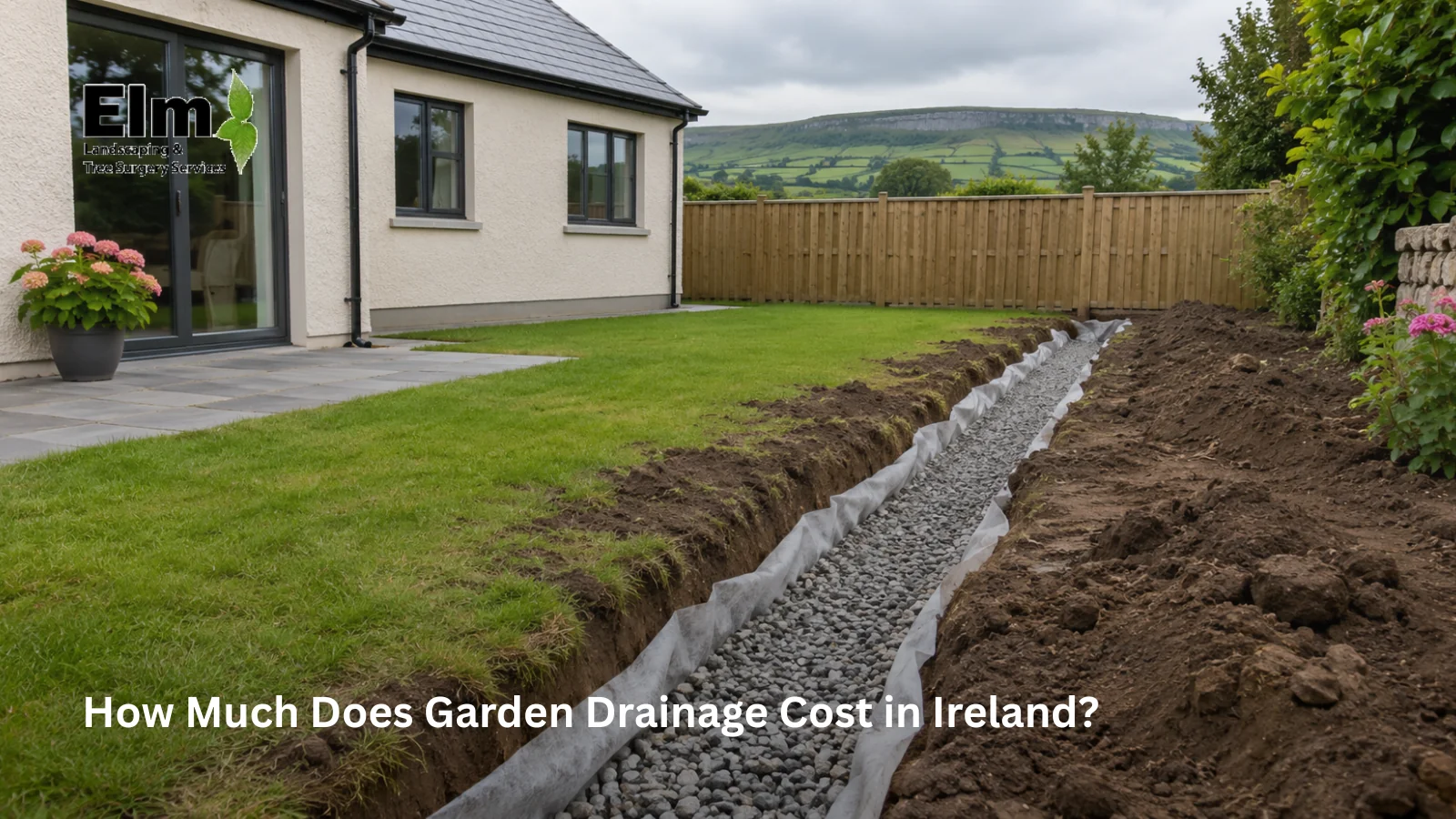
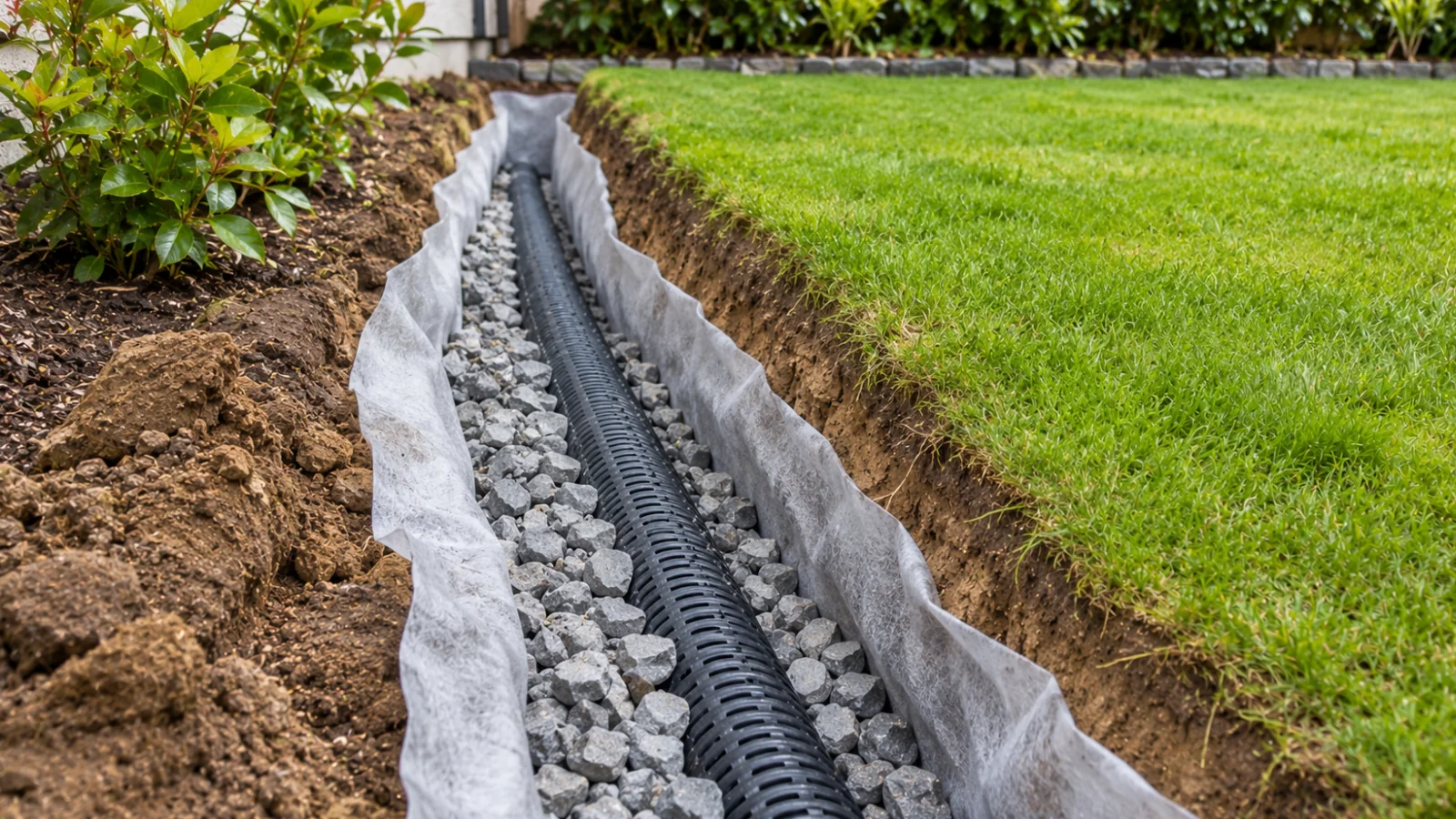
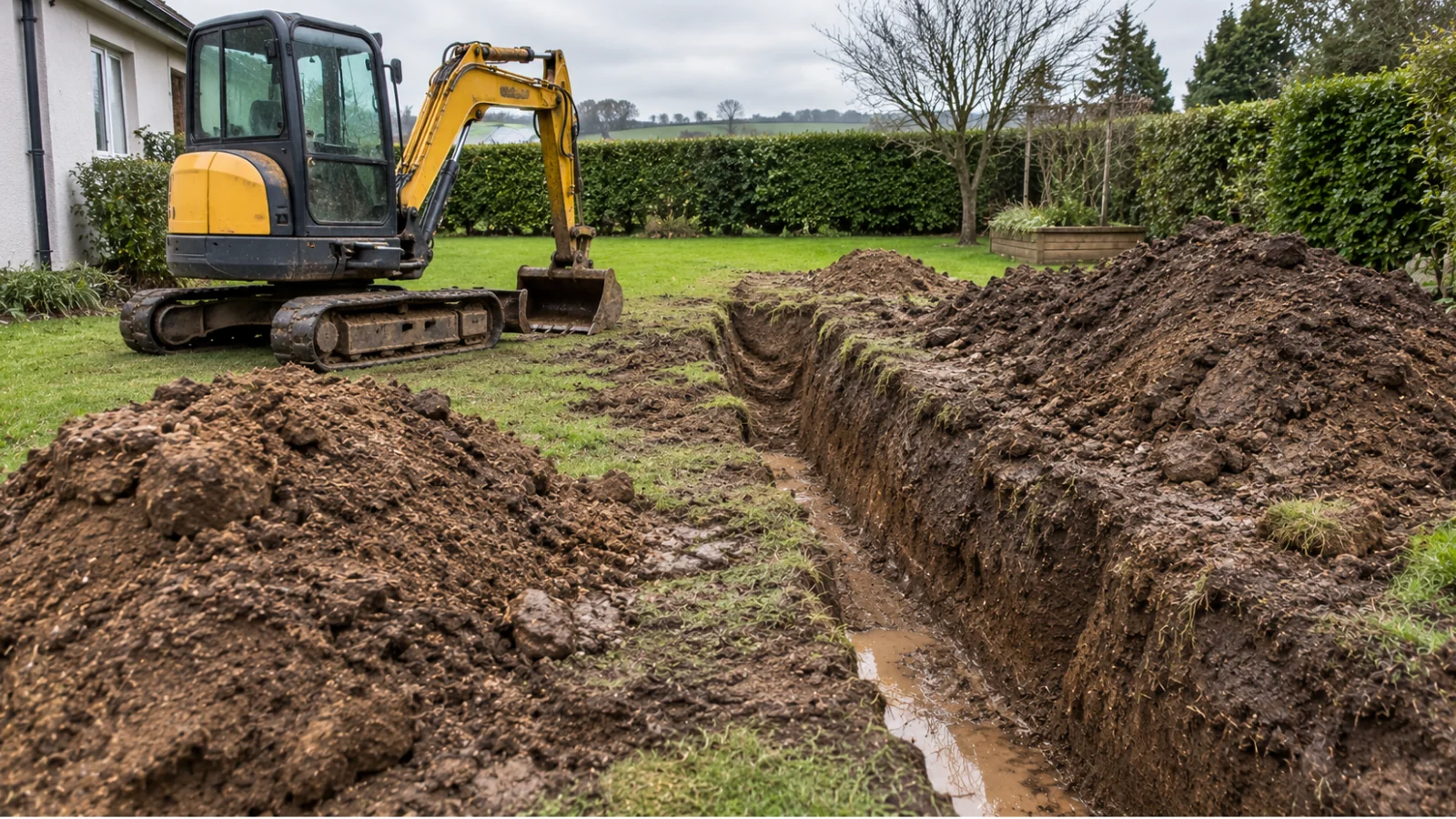
A French drain costs €40 to €80 per linear metre professionally installed. It’s a sloped, gravel-filled trench with a perforated pipe along the bottom, wrapped in membrane so soil doesn’t block the stone. It collects excess water and carries it to a soakaway or another point where it can leave the site.
You can work out a rough figure yourself. Multiply the metres of drain run by €40 to €80, then add €500 to €1,500 for each soakaway. A 10 metre run with one soakaway, for example, comes to €400 to €800 plus €500 to €1,500, roughly €900 to €2,300 in total.
Longer layouts cost more. Published guides put a full herringbone layout, where side branches feed a central run, at €1,500 to €3,500.
Teagasc’s land drainage guide, from the Irish agriculture and food development authority, says drainage stone accounts for the bulk of the cost in most schemes and recommends clean aggregate in the 10 to 40 mm range.
Its 2013 farmland figures of €5 to €11 per metre, excluding open drains, are a poor comparison for a garden, and a wider excavation or gravel filled to the surface adds tonnage fast, so a quotation should state both.
Doing it yourself brings the materials for a 10 metre stretch to roughly €180 to €280 before you hire a mini-digger, and a drain laid without a steady fall has to be dug up and laid again.
A drain moves water along the ground. A soakaway decides where it finally goes, and that is a separate bill.
How Much Does a Soakaway Cost to Install?
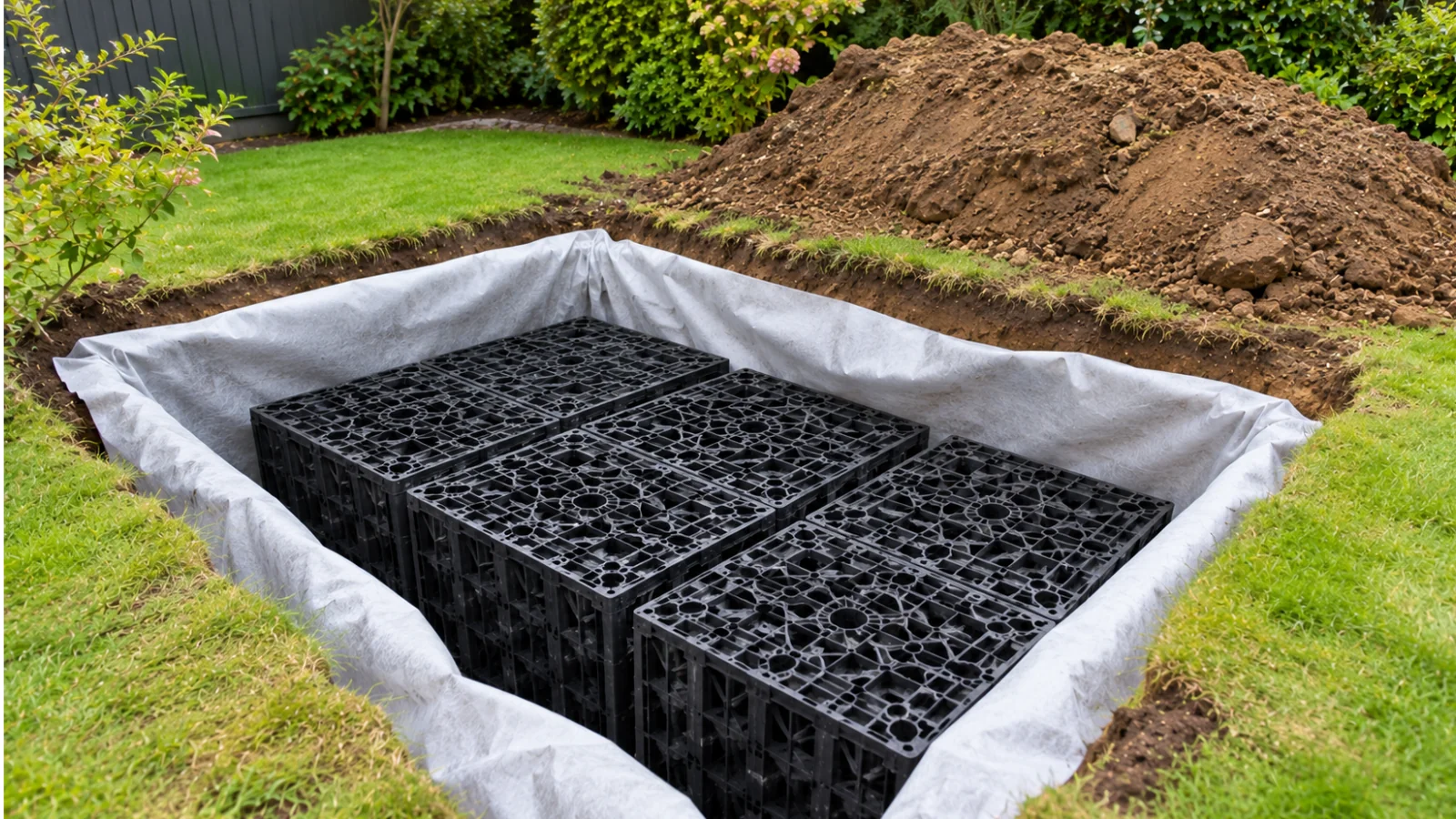
Soakaway installation cost typically runs €500 to €1,500 per pit. A soakaway is a buried pit, usually built from modular crates wrapped in membrane, that holds collected water and lets it seep into the ground. One Irish builders’ merchant lists a standard crate at about €60 to €80 each, and a 1m³ pit takes about four, which is why the supply cost sits well below the installed price.
A soakaway only empties as fast as the surrounding soil can absorb water. In sandy ground that’s quick. In clay it is slow, so the same pit can cost a good deal more on a heavy site: it may need to be larger, deeper or paired with a different outfall, the place the water finally leaves the system.
Position matters as much as size. The water has to end up well away from the house, because a soakaway beside a wall can feed water back towards the foundations and cause the damp and water damage you were trying to avoid.
What Does a Channel Drain Cost?
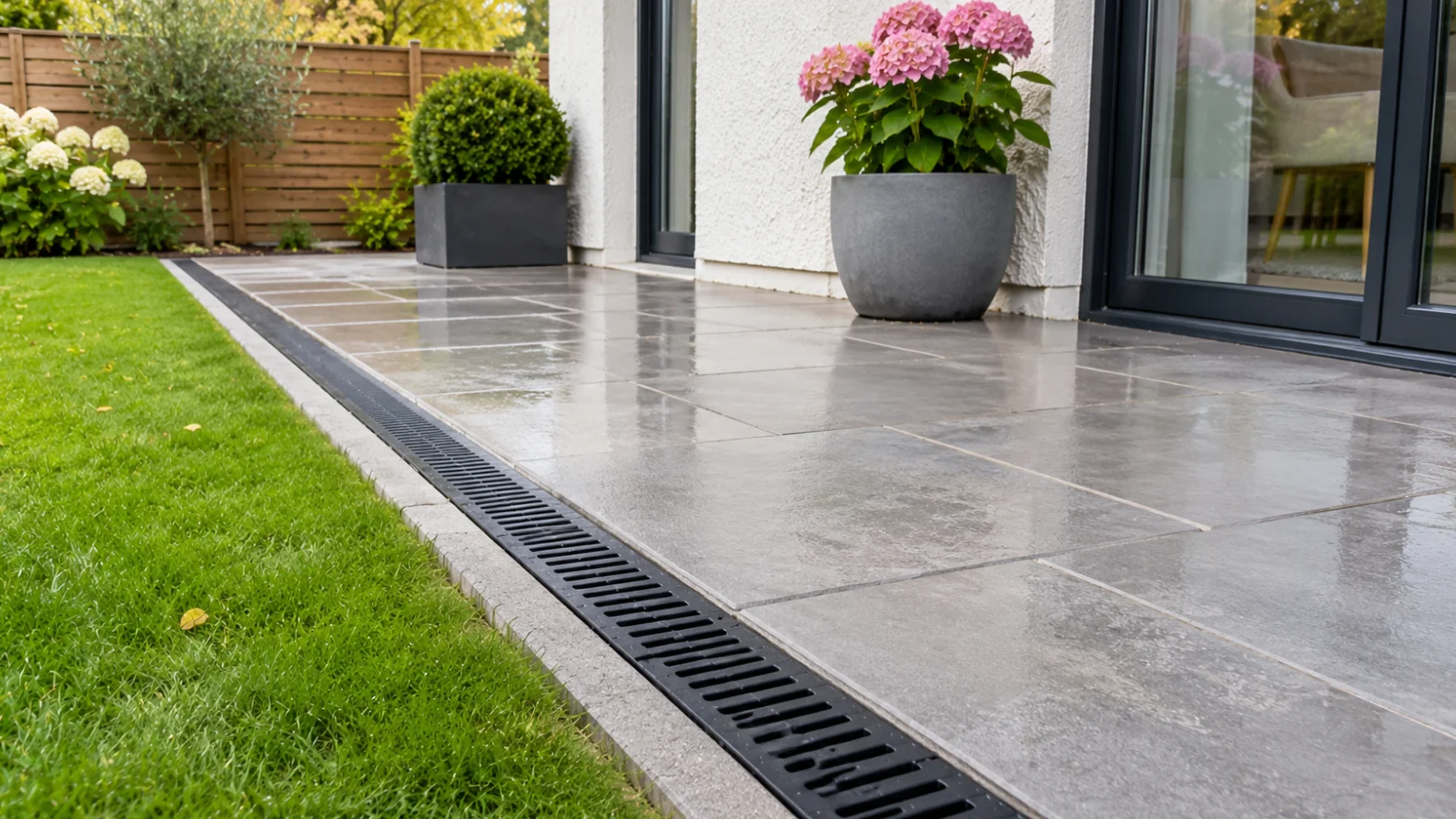
Materials for a basic one metre channel drain with a grate run about €15 to €20, with kits and heavier-duty channels costing more. The installed price depends on cutting into the surface and connecting to an outlet.
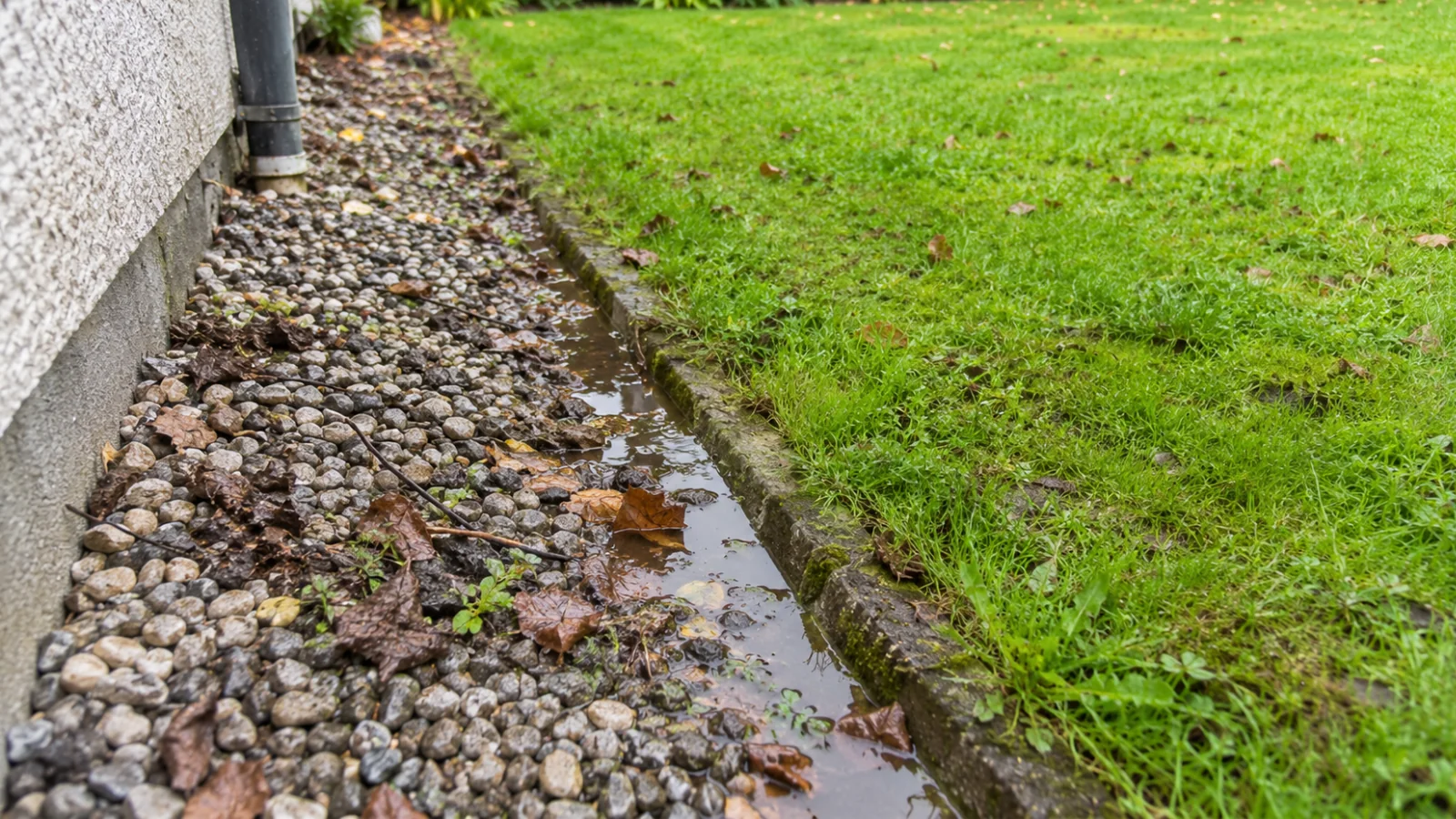
A channel drain is a slim slotted channel set into or beside paving to catch surface water. Roof water from gutters and downpipes is often the largest single source of runoff in a garden, so every downpipe belongs on the plan. A paved patio or driveway adds to it, shedding rain onto the lawn instead of letting it soak in.
What Makes Garden Drainage Cost More?
Soil, access and the outfall move a drainage quote more than anything else, and a CCTV drain survey is the one optional extra.
Heavy Clay Makes Drainage More Expensive
Heavy clay slows every part of the job. Water moves slowly towards the drain and the digging is harder work.
A garden in Ireland can sit on different ground from one county to the next. Teagasc puts heavy, poorly drained soil at 37 per cent for Clare and 42 per cent for Limerick, against 14 per cent for Cork. A new build adds compacted clay left behind by heavy machinery during construction, and older gardens can hide rubble or an old hard-standing base that blocks the water completely.
Access, Soil Removal and Outfall Add to Drainage Cost
A tight side passage means digging by hand or with compact machinery, which adds labour hours. The clay and soil that come out of the excavation have to go somewhere, so haulage and tipping fees join the bill. Depth adds to it too: a deeper run means more digging, more stone and more soil to take away.
Where the outfall can safely go depends on the site. If the garden is low-lying and nothing sits below it, the water may need a sump and a pump to lift it out, which adds cost and a mechanical part that can fail. The same land drainage guide says a scheme is only as good as its outfall.
CCTV Drain Survey Cost and When You Need One
Expect to pay €150 to €400 for a CCTV drain survey, with about €250 typical, and extras such as a written report or recorded footage can add €50 to €100. It sends a camera through underground pipes to find breaks, blockages and collapses, so it matters when old pipes run beneath the garden or you suspect a broken connection. For a garden that is simply wet, it’s rarely the first thing to pay for.
What Are the Downsides of a French Drain?
The biggest downside is that a drain can fail to lower the water at all. Teagasc’s guide notes that drains are not effective unless they sit in a layer of soil that water moves through, or are backed by other measures that improve drainage. In a garden, tight clay with no such layer is the usual culprit, and a trench dug into it ends up collecting little beyond its own rain.
Drains also silt up. Gravel and pipe clog over time, which is why the guide’s maintenance advice is to keep outlets clean and have pipes jetted when the flow drops.
Where a drain is the wrong tool, the alternatives are a re-graded surface that carries water to a better outfall, raised beds that lift roots above the wet ground, or a soakaway at the lowest point where the ground below can absorb the water.
What Is the Cheapest Way to Improve Garden Drainage?
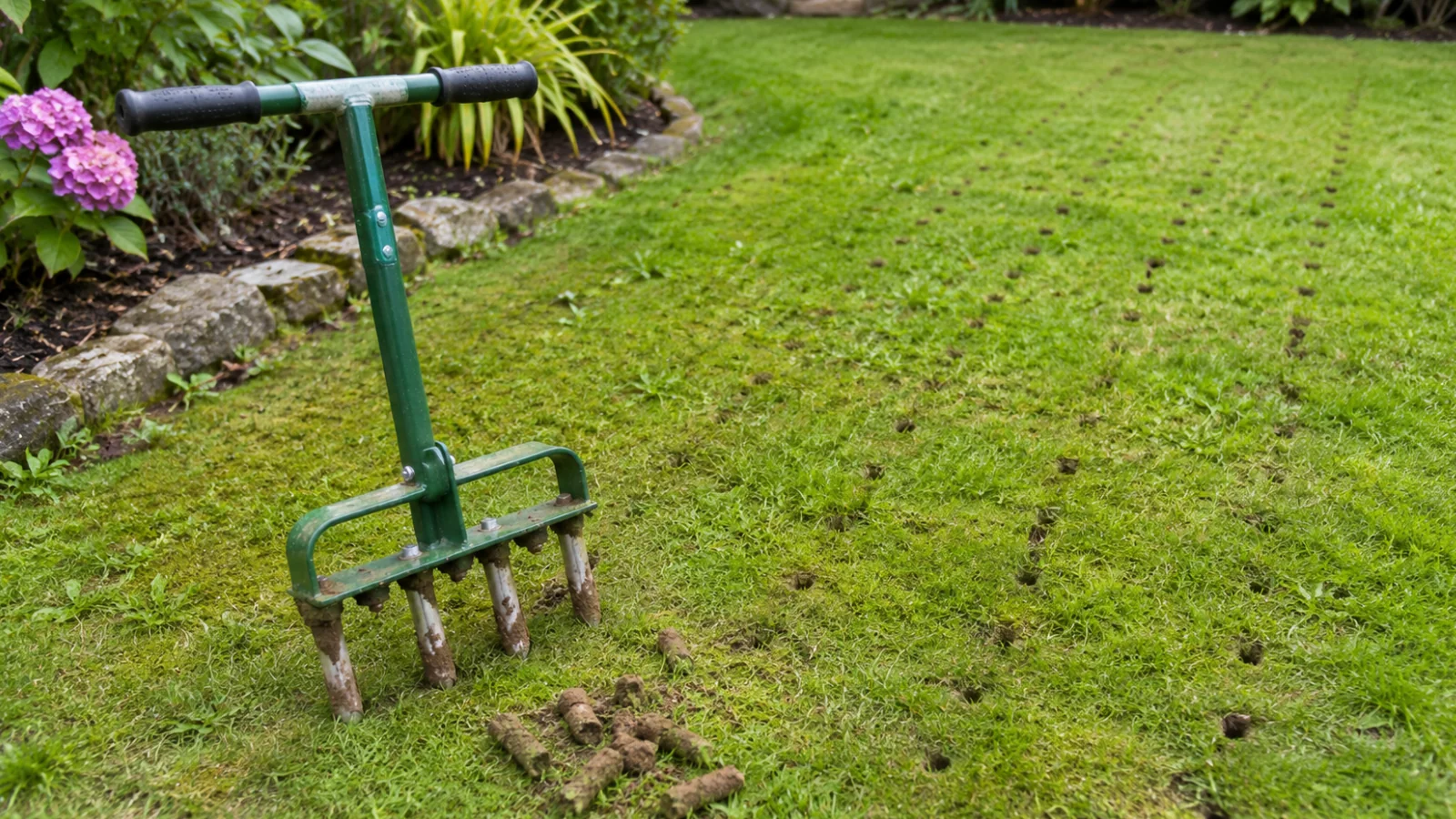
The cheapest way is often to avoid a new drainage system altogether. Gardens on sandy or free-draining ground rely on natural drainage and may need nothing, and mild waterlogging often responds to aeration with a fork or hollow tine aerator and an annual compost feed. Our guide to fixing a waterlogged garden in Ireland covers how to tell which case you have and what to do about it.
Don’t mix sand into heavy clay. In the amounts most people use, it binds with the clay and makes the ground denser. Brushing a little horticultural sand into aeration holes is a different job, and the guide above covers it.
The simplest drain is a stone-filled pit. Before filling one, dig a test hole after a wet spell and see whether it empties. If it holds standing water for days, a pit full of stone will behave exactly the same way.
For the stone itself, buy clean, washed material in the 10 to 40 mm range rather than fine gravel with dust in it, which clogs. Bulk delivery generally costs less per tonne than bags once a run goes beyond a few metres.
Should You Install Drainage Before Landscaping?
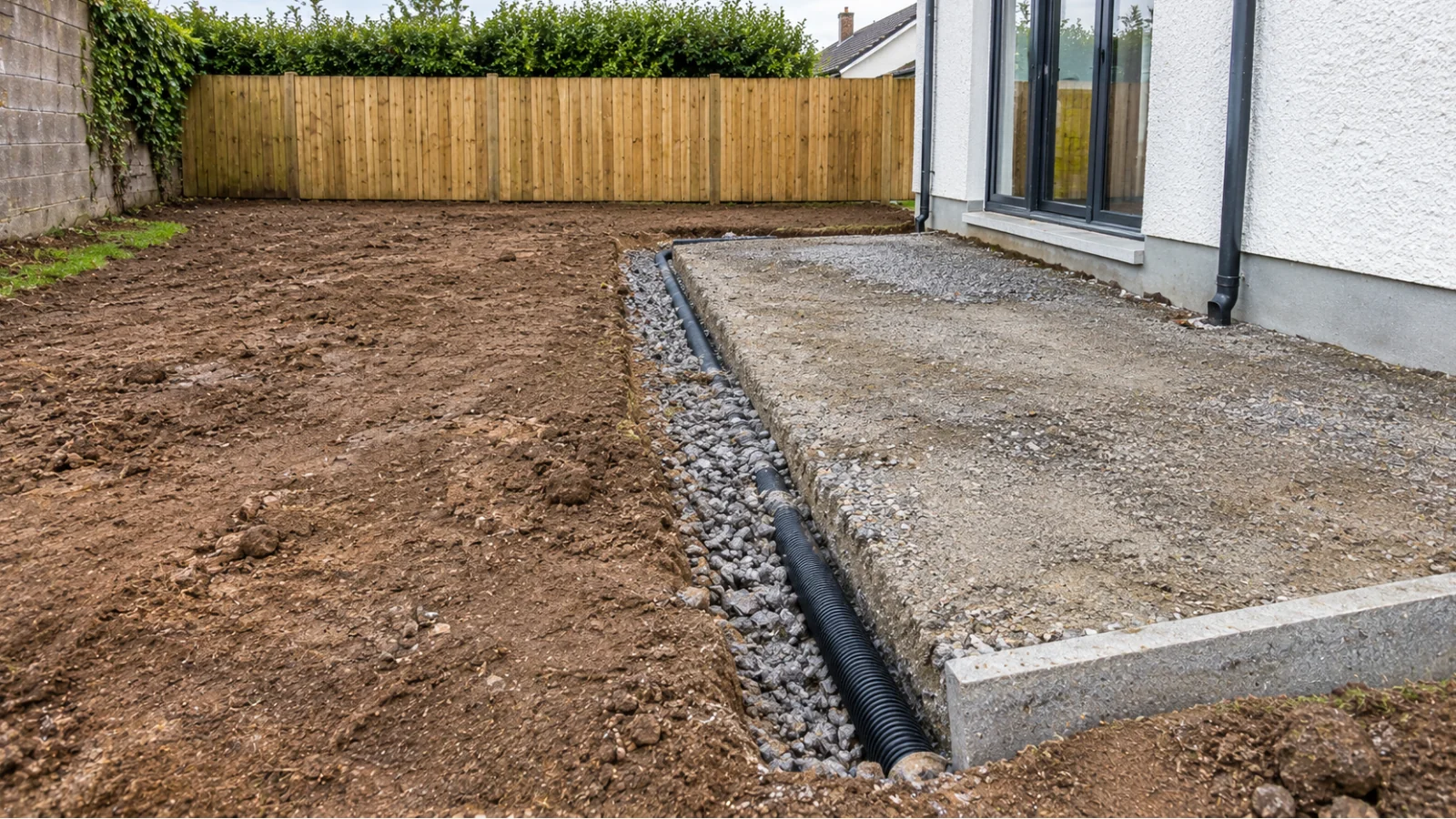
Yes, because lifting a finished patio or lawn to add a drain means paying for the surface twice. Pipework laid during ground preparation goes in before anything is built on top of it.
Phased landscaping builds on the same idea. Drainage and pathways go in during the first stage, so later phases connect to them, which suits a budget spread over several years. A retaining wall needs drainage behind it, and a new driveway or paved area needs its falls and channels planned from the start.
How Do You Get an Accurate Garden Drainage Quote?
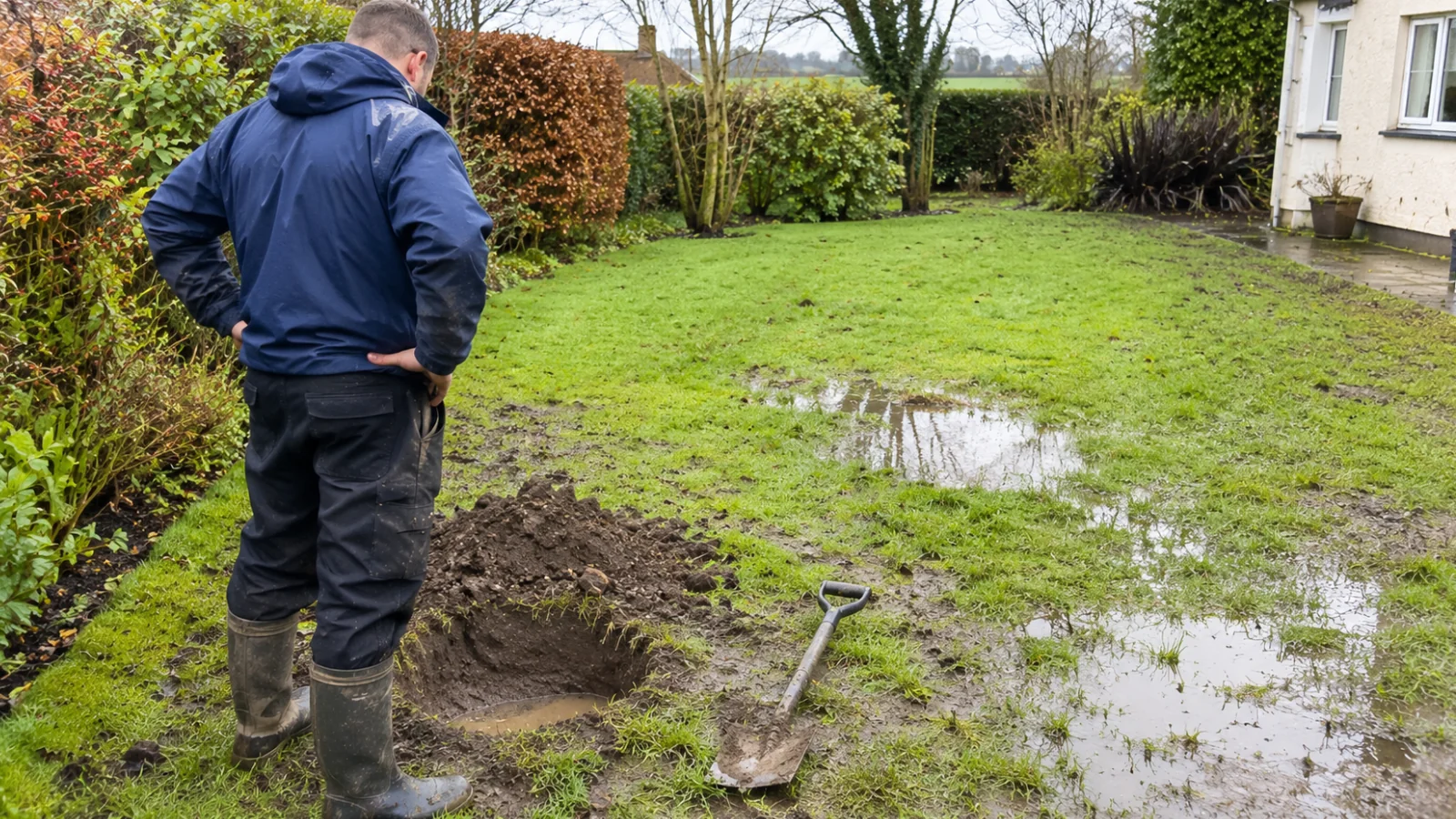
An accurate garden drainage quote starts with a site visit, because only a visit can say whether your outdoor space needs a drain at all, and what kind. Someone walks the roofline and downpipes, checks the slope and digs a test hole to see how the soil behaves.
They locate the outfall and ask where water collects after heavy rain and how quickly it clears. Skip the visit and a small garden can cost as much to correct as a large one.
Whichever drainage contractor you choose, a proper quotation lists the length of each run, the depth and type of stone, and where the water leaves the site.
A one-hour garden consultation is the first step towards a drainage quotation. It covers drainage and water flow on your site, with a realistic idea of what your budget can achieve before any digging starts.
Elm has been in business since 2008, and waterlogged gardens are among the most common calls we take across Clare, Limerick and Galway. Our groundworks team handles excavation and stabilisation, including sites with restricted access.
A drainage quote is only as sound as the diagnosis behind it, and a diagnosis starts with someone standing in your garden after rain.