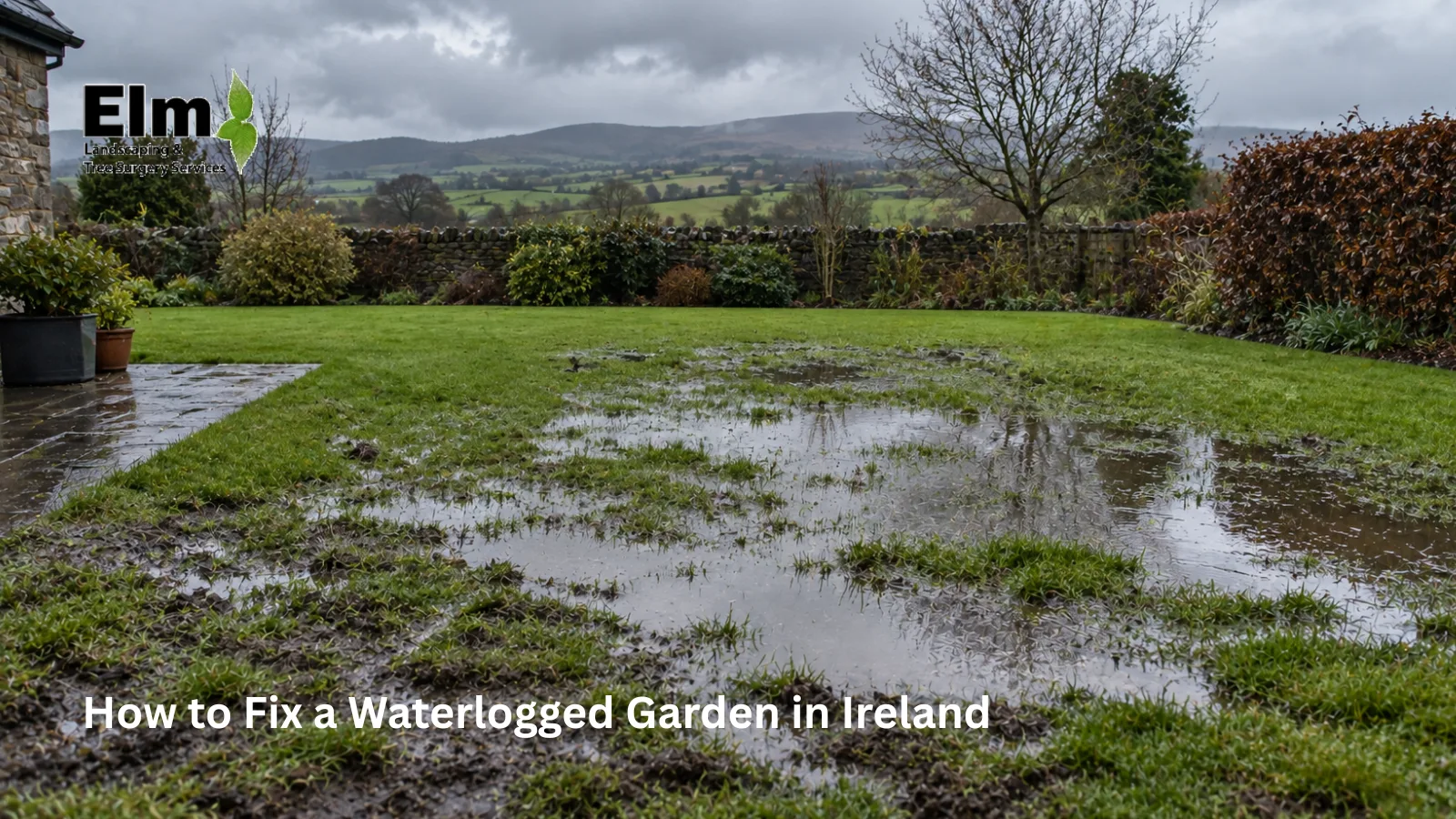
A waterlogged garden is fixed by getting air and water moving through the soil again. For a mild case, that means aeration and organic matter. For ground that stays sodden for weeks at a time, it means a proper drainage system like a French drain or soakaway.
That much you could find anywhere. What most advice skips is the part that actually matters for an Irish garden: knowing which fix your specific patch of ground needs, because the wrong one wastes a weekend and leaves you back at square one by November.
Fliuch báite is one way to describe the current state of most Irish gardens for a large part of the year, and if yours has turned to a swamp every time it rains since October, you’re not imagining it.
This is one of the most common calls we get across Clare, Limerick and Galway, and it almost always comes down to the same culprit sitting underneath a perfectly normal looking lawn.
Why Waterlogged Gardens Are So Common in Ireland
Waterlogging occurs when water fills the spaces in the soil that should hold air, and it has nowhere to go. Roots need both. Cut off the air and even hardy grass starts to struggle within a couple of weeks.
The reason this happens so often here comes down to heavy clay. Clay soil is made up of extremely fine particles that pack together tightly once wet, closing off the gaps a healthy soil structure needs. Soil scientists call the wettest version of this surface water gley, a dense, poorly permeable layer near the surface that traps water in the topsoil instead of letting it drain through.
Add persistent Irish rainfall, Met Éireann recorded 493mm across autumn 2025 alone, 134% of the long-term average and the 4th wettest autumn in 85 years, and clay behaves almost like concrete through winter, holding water on the surface rather than soaking it in.
Turf goes down on plenty of new-build gardens before anyone deals with what’s underneath it. Construction machinery compacts the ground during the build, and soil compaction from heavy machinery on wet ground is one of the most common forms of physical soil damage in Ireland.
A new-build garden picks up that damage before a blade of grass goes down. The lawn looks fine on the day it’s laid, right up until the first proper winter hits and the garden turns into a small lake every time it rains for more than a day.
A hidden dam is often the real culprit in older gardens. Buried construction debris, an old patio base, or leftover hardcore from decades ago can sit under the soil and block drainage, even when the surrounding ground is perfectly healthy.
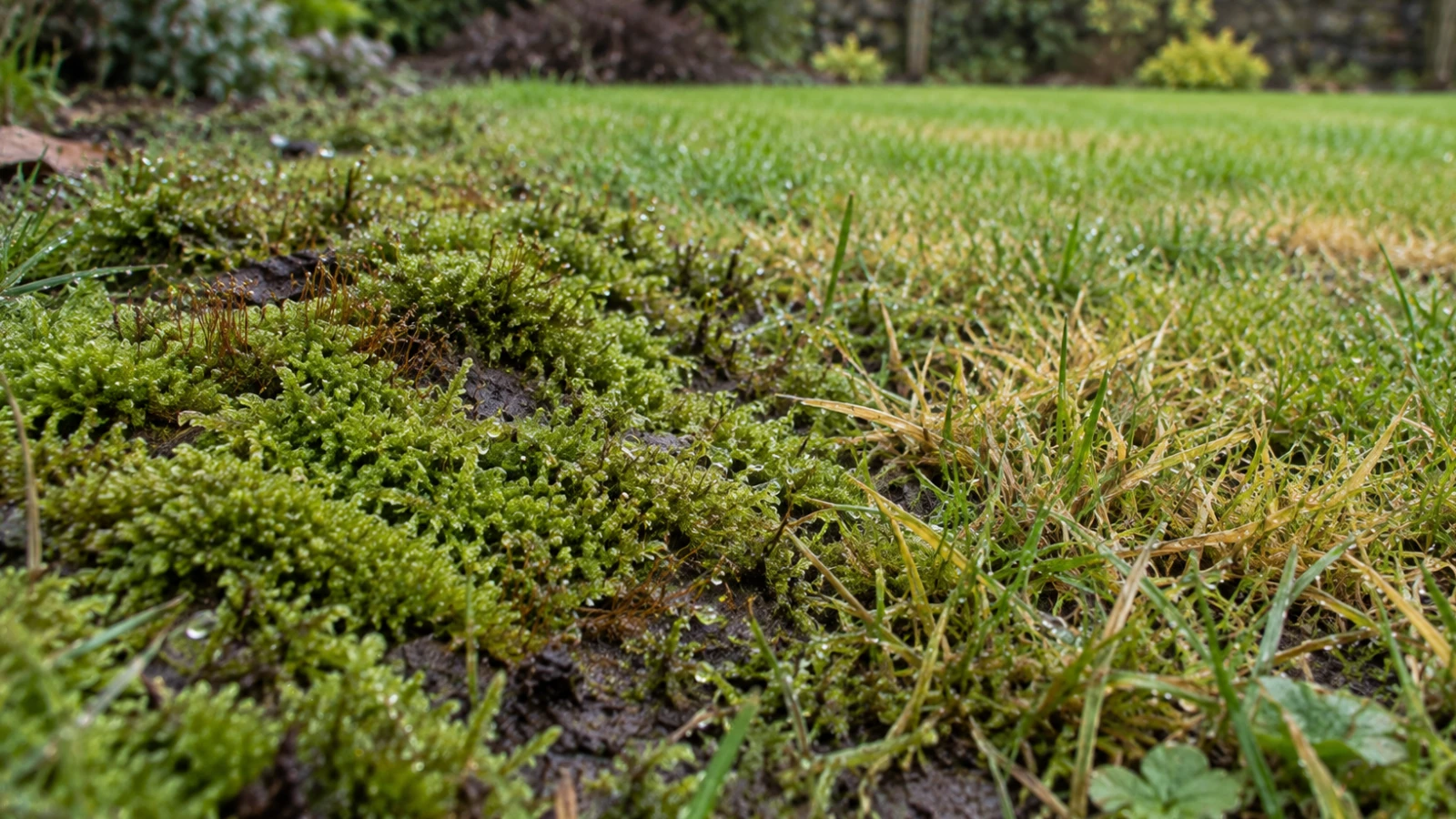
What Are the Signs of a Waterlogged Garden?
Not every wet garden after rain needs fixing. The signs worth paying attention to are the ones that persist well after the rain has stopped.
Puddles that sit on the lawn or in flower beds for days rather than hours. Ground that feels spongy or squelches underfoot in dry weather. Moss growth spreading across areas that used to hold grass fine. Patchy lawns with yellowing grass, even though the soil is clearly wet rather than dry. A sour, stagnant smell coming from parts of the garden where water tends to collect.
If you’re seeing two or more of these regularly, you’re dealing with a drainage issue rather than a normal wet spell. Even healthy soil typically needs several weeks of predominantly dry weather to fully recover after a genuinely wet spell. Don’t judge a garden’s drainage on the state of the ground three days after a downpour.
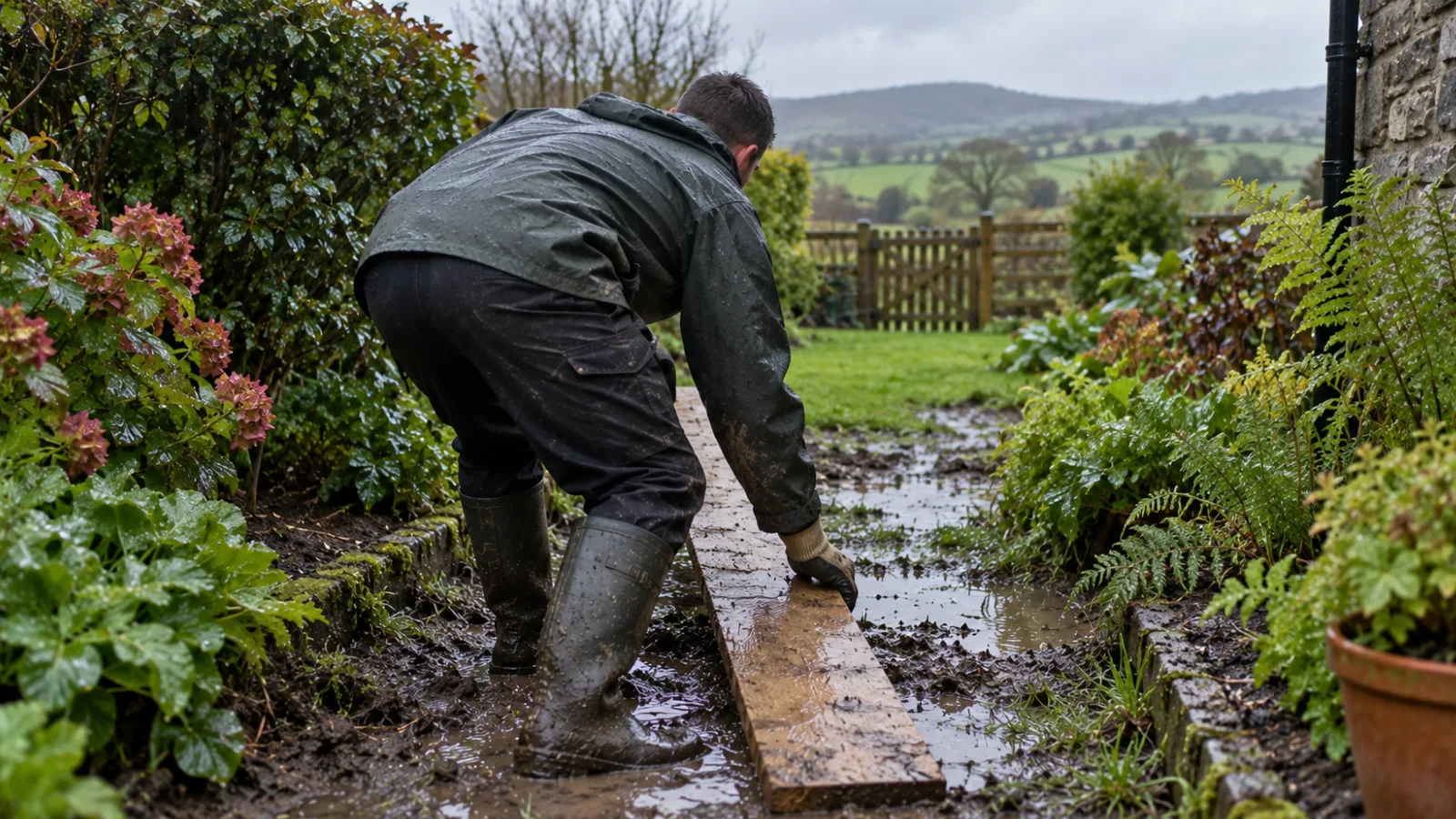
What to Do Right After Heavy Rain Floods Your Garden
Stay off the ground while it’s saturated. Walking on wet clay or loam compresses it further and makes the underlying compaction worse, which is the opposite of what you want. If you need to cross the area, lay down boards to spread your weight rather than walking directly on it.
Clear away any debris sitting in the wet patches. Flattened plants, rotting leaves and waterlogged mulch all encourage fungal problems once they start to break down in standing water, and root rot follows soon after in anything left sitting in it.
Once the surface water has receded a little, a light feed of well rotted garden compost helps bring worm activity back into the soil, which does more for long term structure than most people expect from something so simple.
Long-Term Drainage Fixes for a Waterlogged Garden
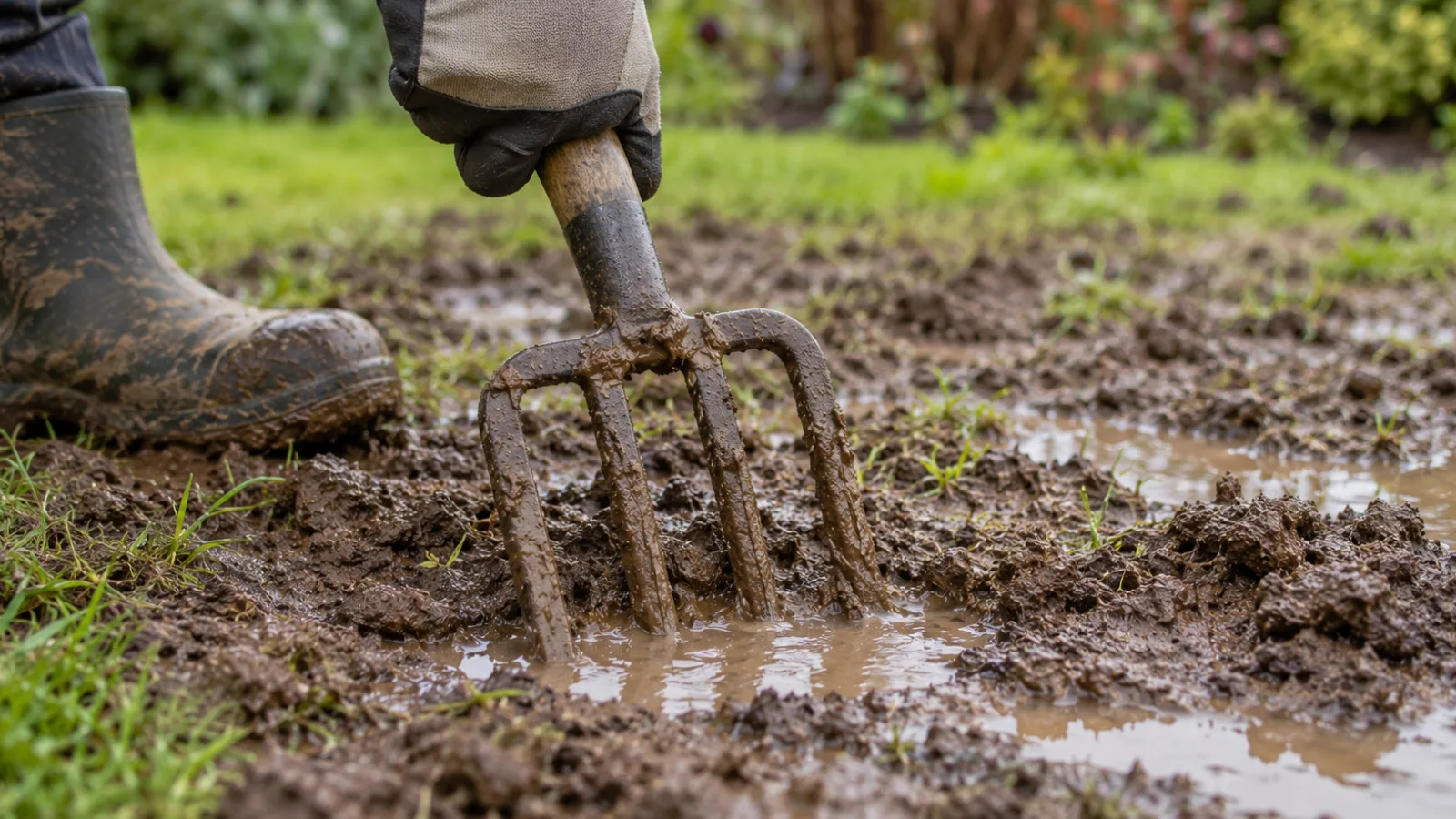
Aeration is the starting point for almost every garden with mild to moderate waterlogging. Push a garden fork into the lawn to a depth of around 15 centimetres across the worst affected areas, then brush horticultural sand into the holes.
This gives water a route down through the compacted layer instead of sitting on top of it. A hollow tine aerator does the same job faster across a larger lawn, and either method works well as an autumn routine before the wettest months set in.
Improving the soil matters just as much as the surface treatment. That same compost feed, done each autumn rather than as a one-off, breaks up dense clay particles over a season or two. Plain sand, by contrast, does more harm than good: mixed into heavy clay in the quantities most people use, it binds with the clay and makes it more solid rather than more open.
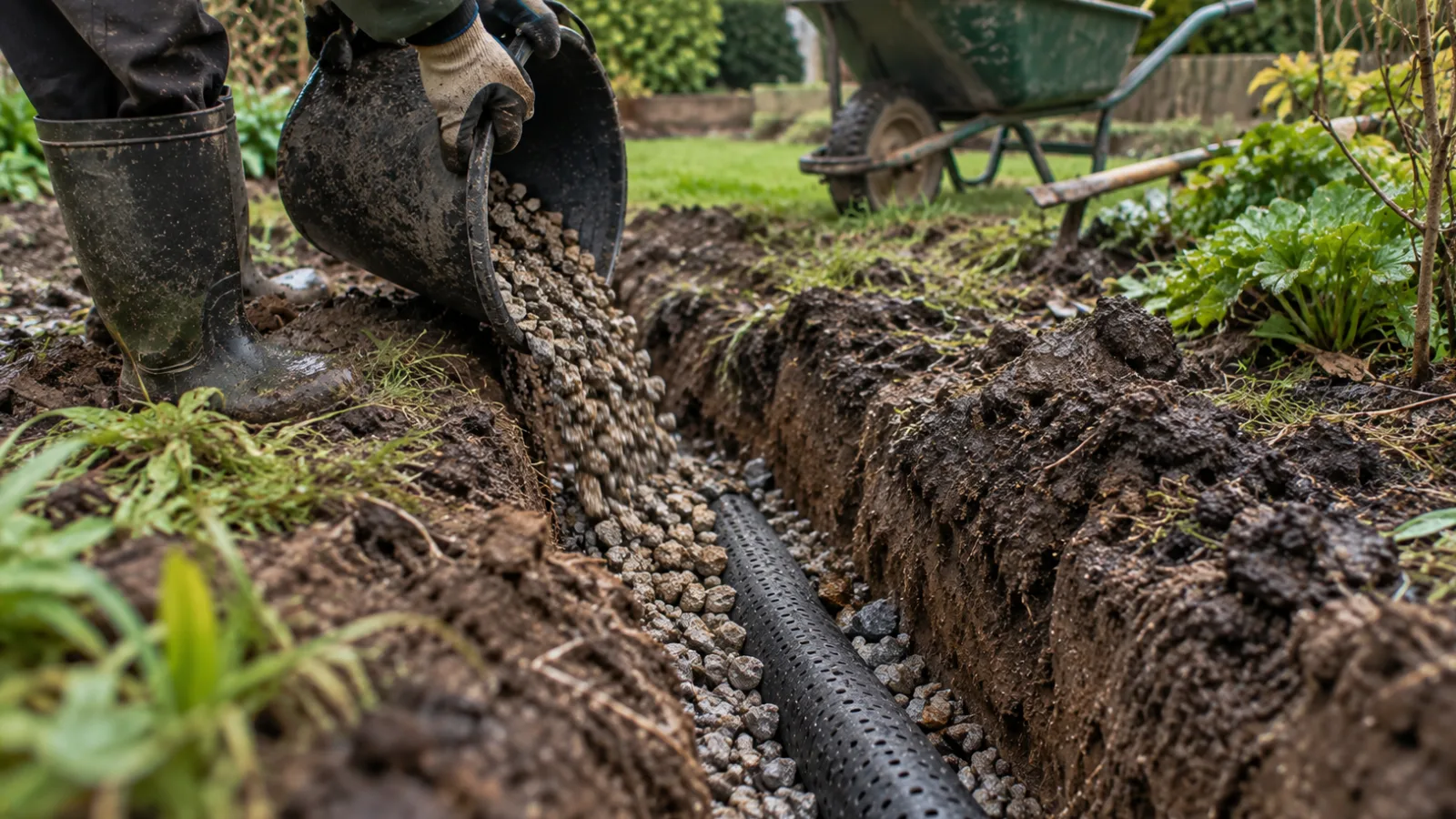
For a garden that stays wet no matter what you do above ground, the answer usually sits below it. A French drain, a sloped trench lined with a permeable membrane and filled with gravel around a perforated pipe, gives water a dedicated channel away from the problem area.
A soakaway does a similar job at the lowest point of the garden, collecting water in a gravel filled pit where it can disperse gradually into the surrounding ground rather than pooling on the surface.
Raised beds solve a narrower but common problem. If you’re trying to grow anything in a spot that won’t drain reliably, raising the growing area above the water table keeps roots clear of the saturated ground beneath, without needing to fix the drainage of the whole garden at once.
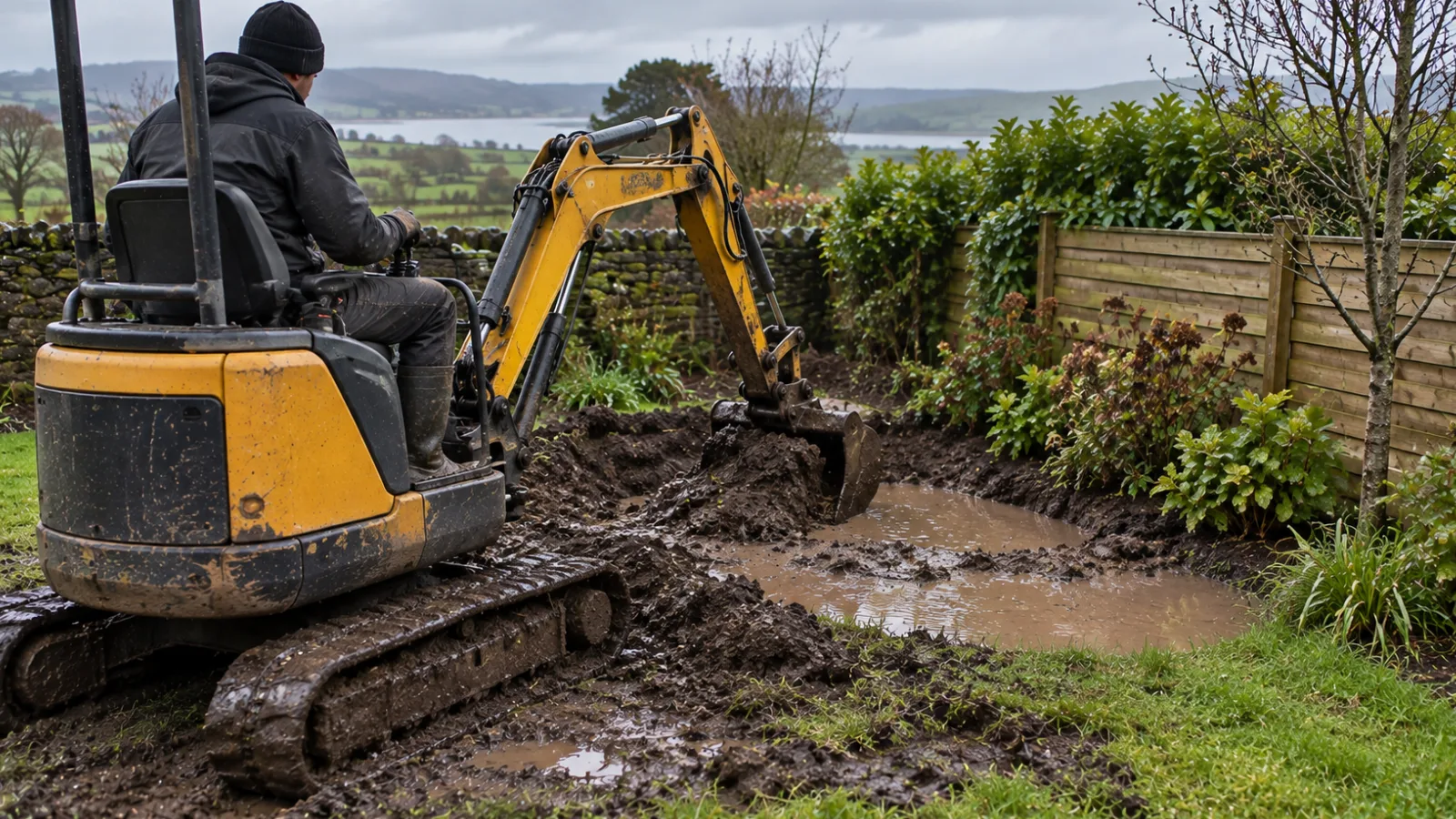
Signs Your Waterlogged Garden Needs Professional Help
Some gardens need more than a weekend of aeration and compost. If the waterlogging covers a large section of the property, if it’s tied to a slope directing water toward the house, or if you suspect the buried debris or old hard surface covered earlier is the culprit, that’s a groundworks job rather than a maintenance one.
Digging blind into a site you don’t fully understand tends to move the problem rather than solve it, and where the subsoil itself is the issue, the excavation and stabilisation work needed goes well beyond what a garden fork or a weekend with a spade can fix.
We deal with exactly this kind of site preparation and stabilisation work across Clare, Limerick and Galway, usually on properties where drainage has been an ongoing issue rather than a one-off wet week.

Choosing the Right Fix for the Rest of Your Garden
A drainage problem rarely stays confined to the lawn. Chronically wet ground affects anything you build on top of it, so factor it in before committing to a bigger project.
If a raised deck is part of your plans for a wet corner of the garden, ground preparation for poor drainage is what separates an accurate decking quote from one that runs into trouble once the crew arrives. The same applies to driveways.
A driveway project built over ground that already struggles to drain needs that addressed at the groundworks stage, not patched afterwards.
A waterlogged garden isn’t usually a mystery once you know what’s underneath it. Guess at the fix and you’ll spend a weekend solving the wrong problem. Get the diagnosis right and the rest sorts itself out.
If your own garden matches more of these signs than you’d like, a site visit settles the diagnosis in a way a blog post never can, and it’s a shorter route to a fix than another season of guessing.