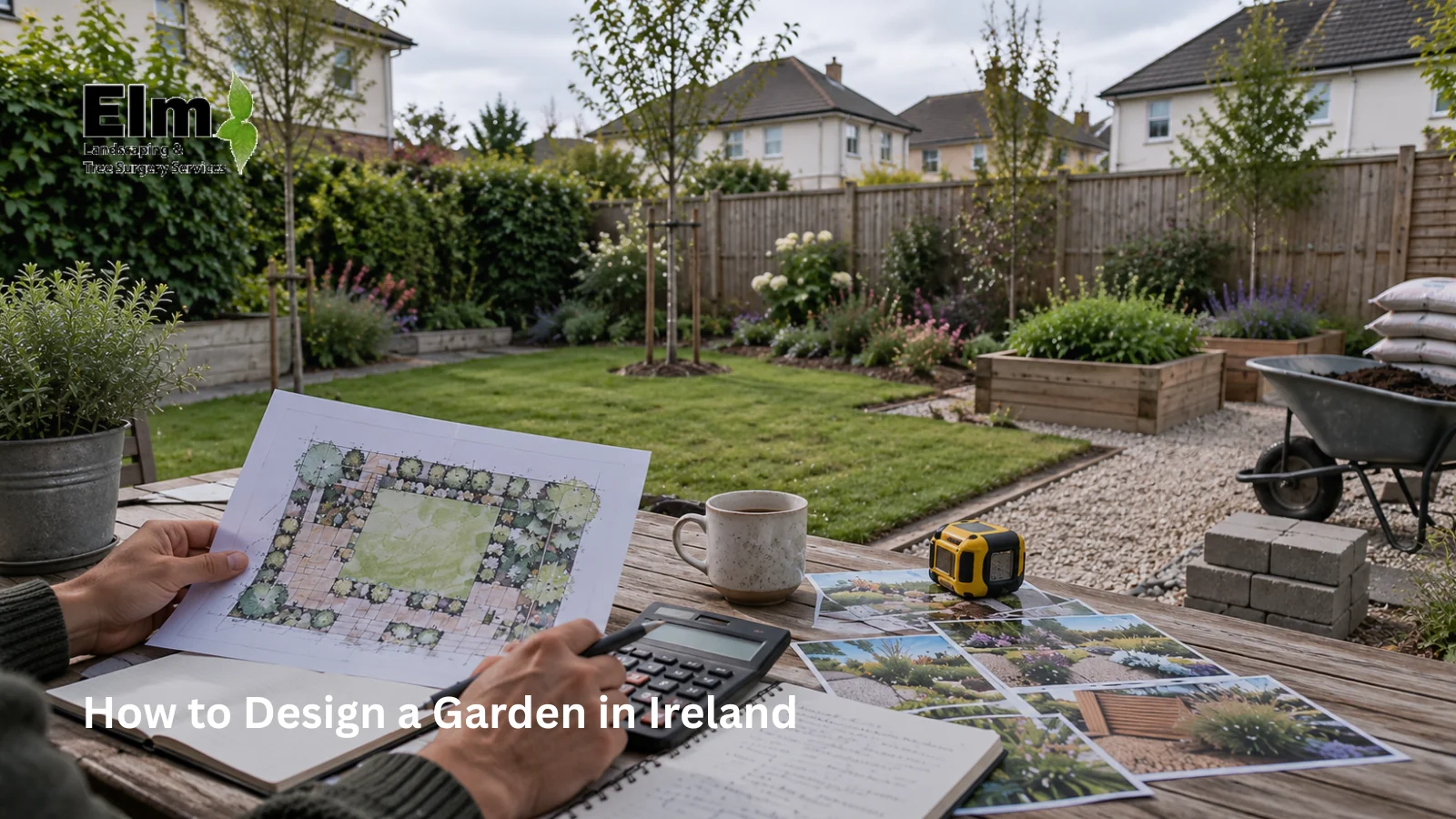
Survey the site, decide how you will use it, divide it into zones, build the paving, walls and boundaries, then plant. That order is how to design a garden, and many people do it in roughly the reverse. It is why so many gardens look finished in June and feel wrong by November.
You have probably seen one. A patio that catches every gust of wind. A border planted for sun that sits in shade by noon. A lawn that turns into a pond from October to March. Each started as a good idea in the wrong place, and each costs more to move once the surfaces are laid.
Whether you are planning your garden from scratch or reworking an overgrown plot, the first day on site decides how many of those mistakes you make.
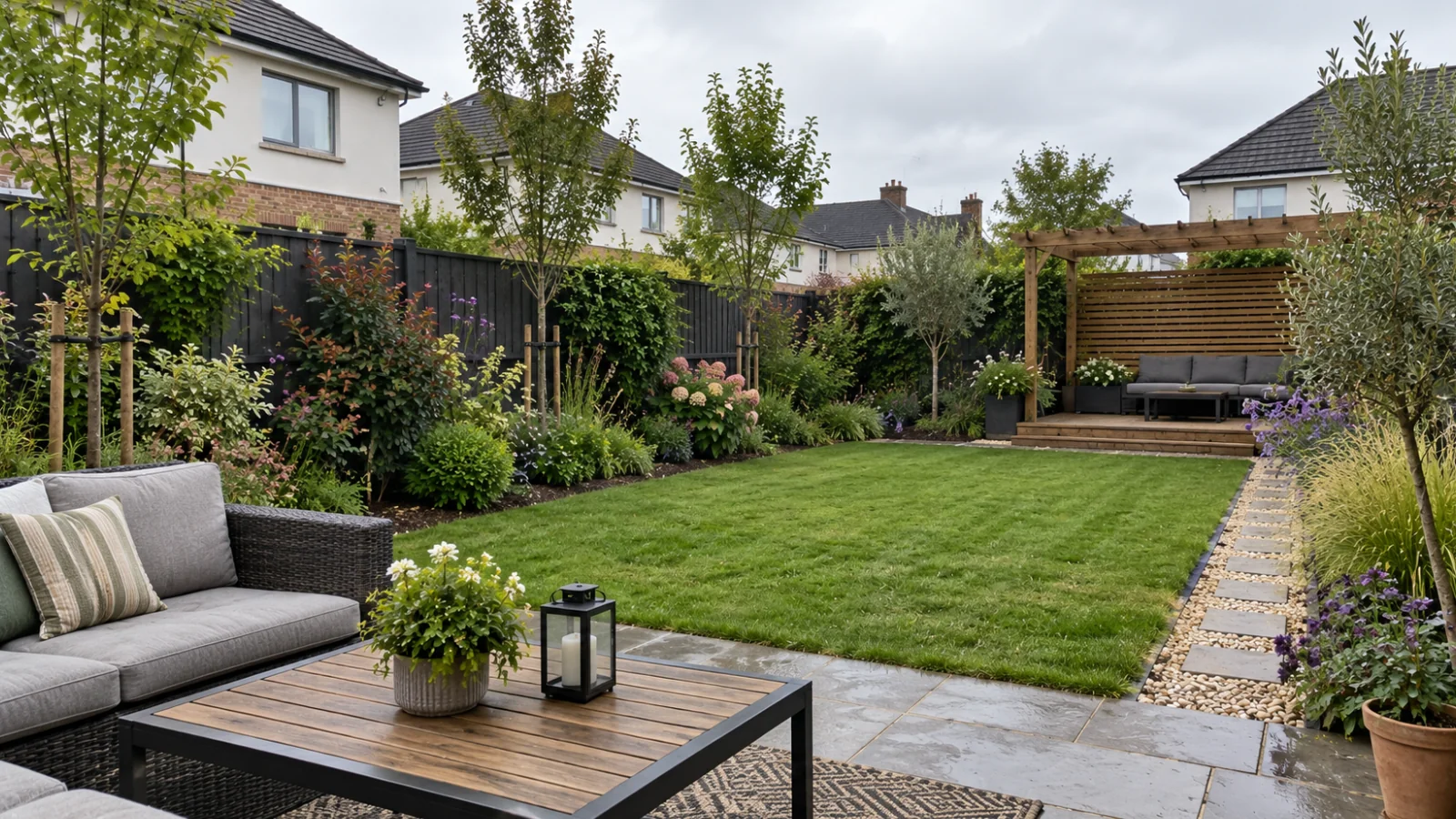
How Do You Start Designing Your Garden?
Start with a survey of what is already there. Designing a garden takes a tape measure and a notebook. Record the outline of the house, the doors and windows, and the boundaries on graph paper, using triangulation from two fixed points on the house for irregular plots.
Sunlight and shelter vary more than you’d think. Track the sun through the day and look for the microclimate, from the sheltered corner by a south-facing wall to the low spot where cold air settles. Prevailing winds in Ireland blow from the south-west, and on exposed western sites they drive the rain as well as the gusts. A patio on that side will feel both. Note which boundaries take the weather and where water runs after a downpour.
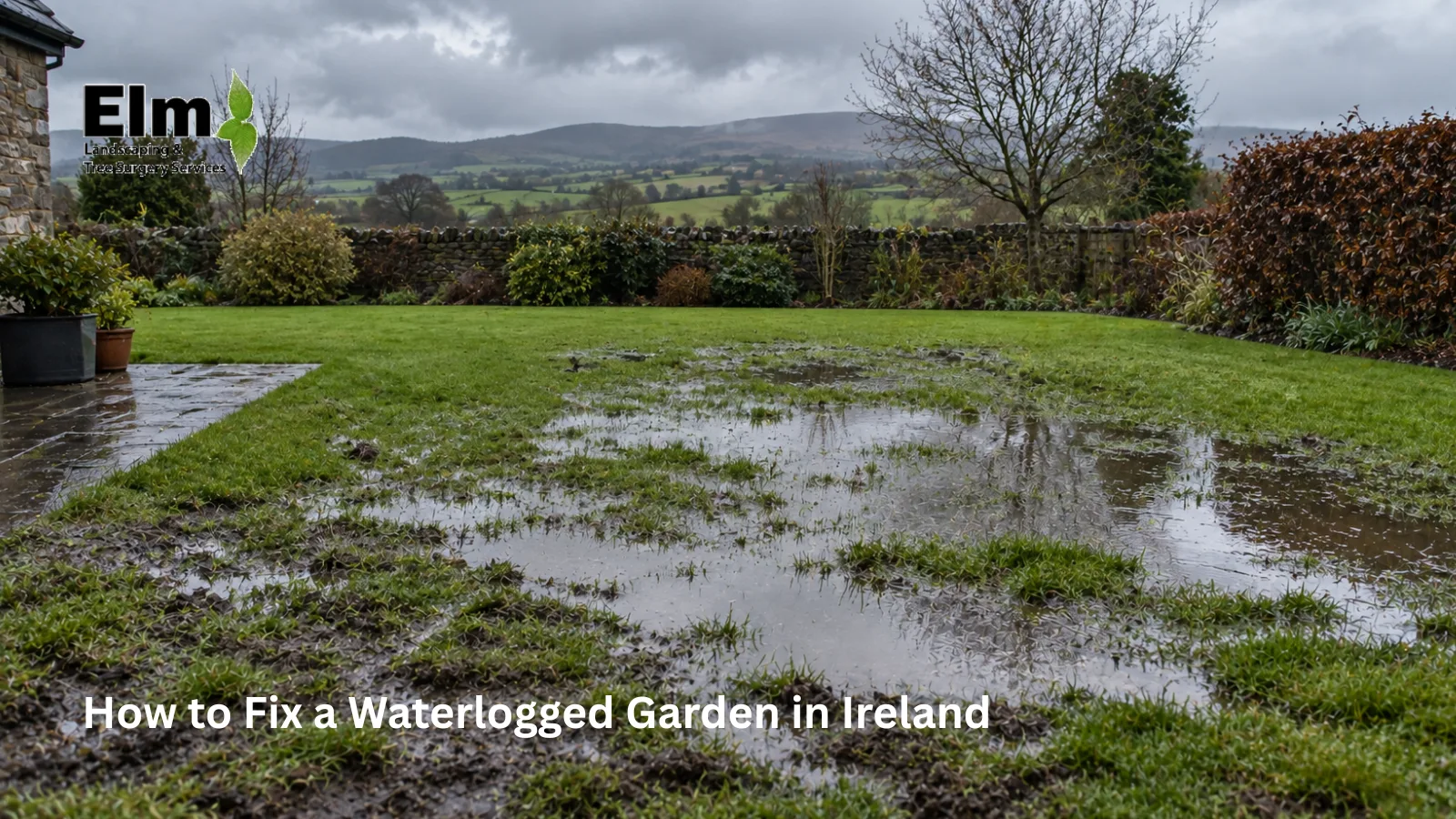
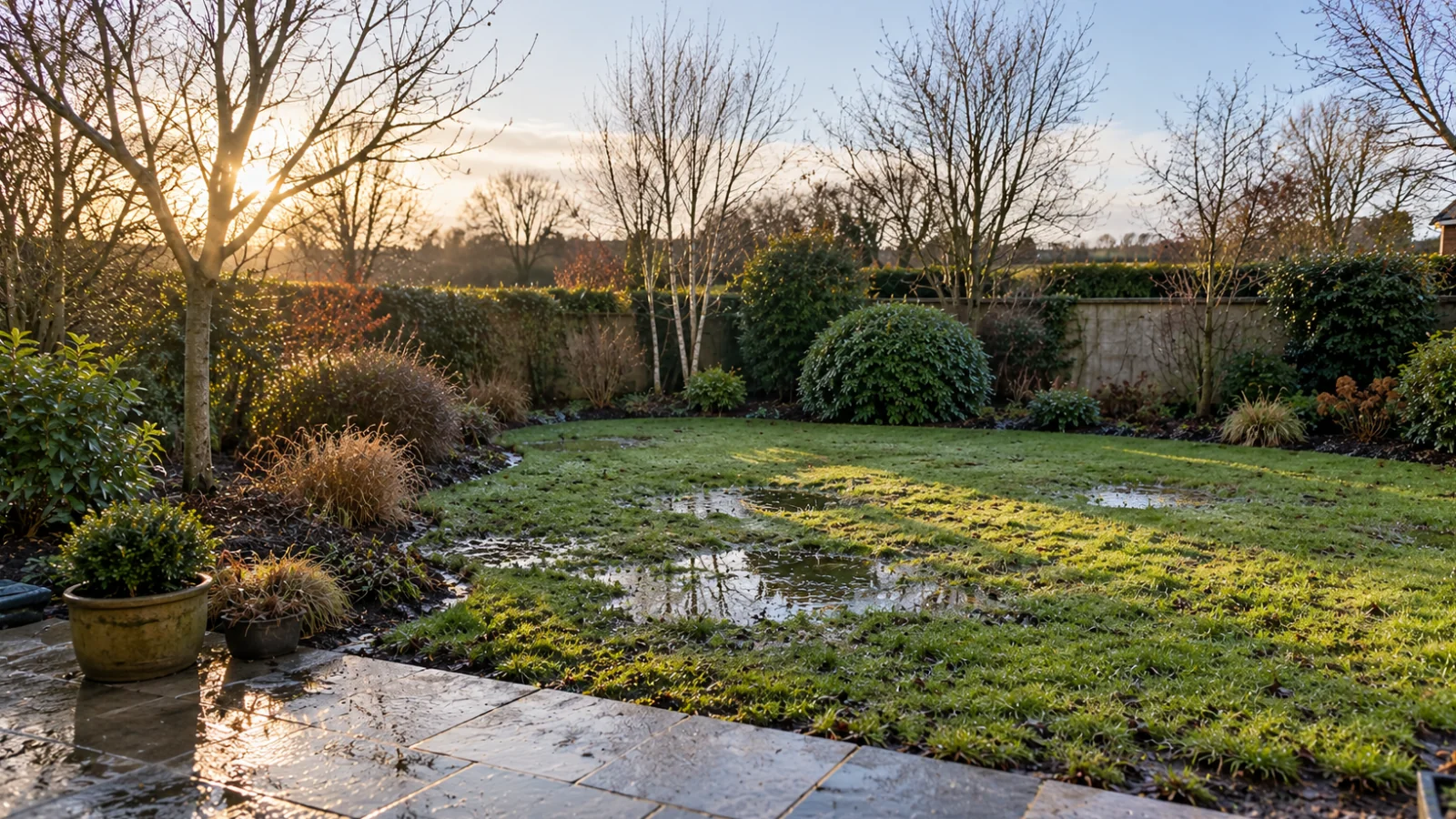
Your soil will tell you how hard drainage is going to be. Dig a hole a spade deep after rain and squeeze a handful. If it forms a sticky ribbon and the hole holds water, you’ve got heavy clay, and drainage becomes your first design problem. If water sits for days, read our guide to fixing a waterlogged garden before you commit to a layout.
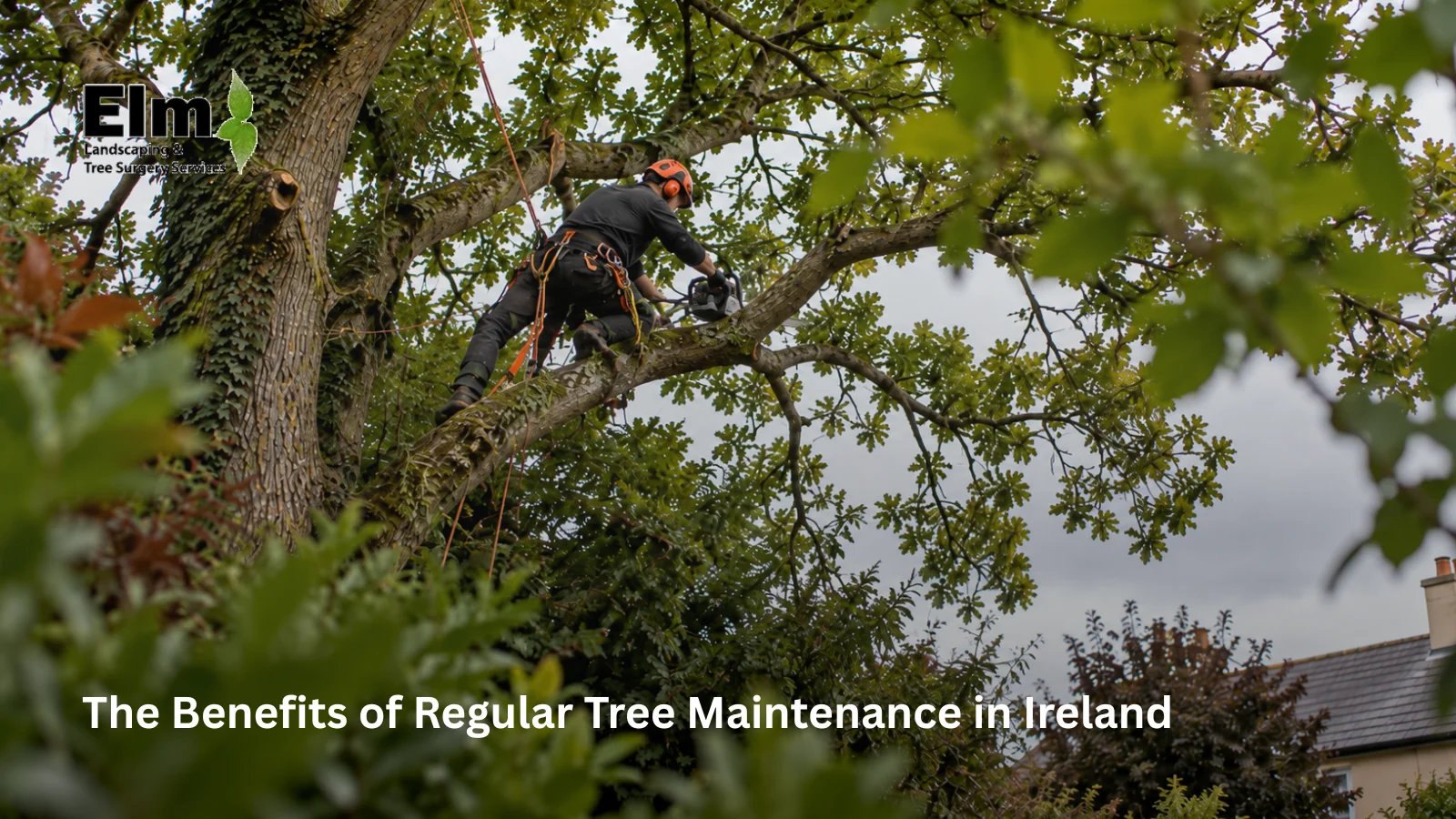
Mature trees decide where you can sit, dig and plant. If you’re unsure about a tree’s health, have a qualified arborist, such as an Arboricultural Association professional member, look at it before the design is fixed.
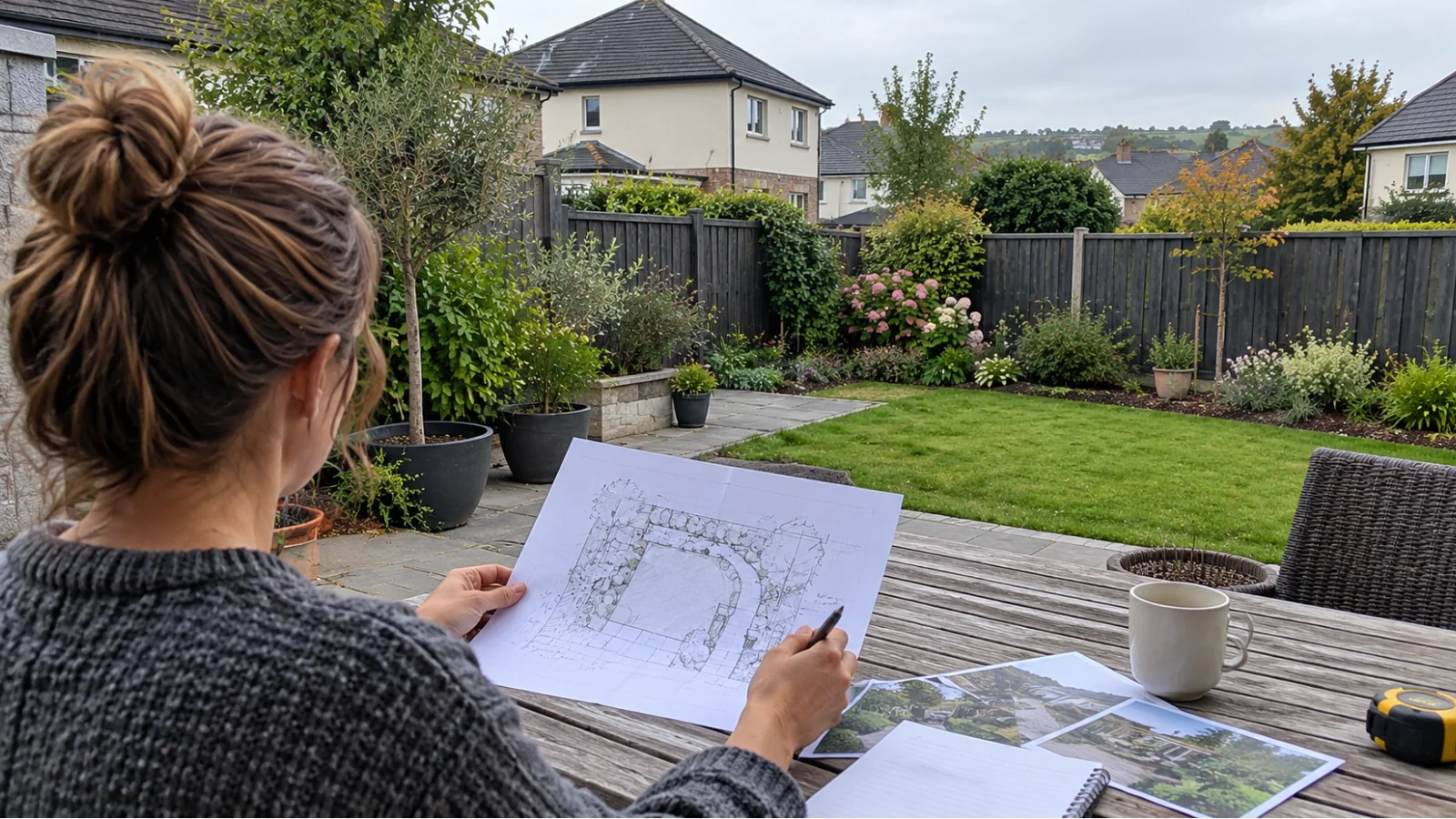
How Do You Plan a Garden on a Budget?
Plan the whole project once, list what matters most, then build it in stages as the budget allows. Then write down every way you want to use your garden. A dining area for six, a play area, a vegetable garden, a quiet corner, a hot tub. Include things you won’t build this year.
Sort the list into must have, would like, and later, and be honest about maintenance. A plot that needs six hours of weeding a week is a poor design for someone with two. Collect garden design ideas as photos of your dream garden and look for what they share, such as materials and colours.
A budget works best as a sequence. Phased landscaping puts the groundwork for later stages in at the start. Drainage, pathways and service runs are the usual groundwork. Do them first and the paving you add in year two won’t mean digging up the beds you planted in year one.
A list of wants is still not a layout. That comes from placing each use on the site you have surveyed.
What Is the Best Way to Lay Out a Garden?
Sketch a rough bubble for each use on your measured outline, thinking about who will use the garden and when. Put the dining area or social area close to the kitchen door, tuck bins and the compost bin out of sight, and keep the play area where a window overlooks it.
Quiet seating belongs at the far end, with space to sit and a view back to the house, and paths should be wide enough for a wheelbarrow or mower.
Straight lines echo a contemporary house, and curves soften a cottage-style plot. Borrow the house’s materials and roof colour. A design style that echoes the building makes the garden feel as though it belongs there. Resist every garden idea you’ve ever saved.
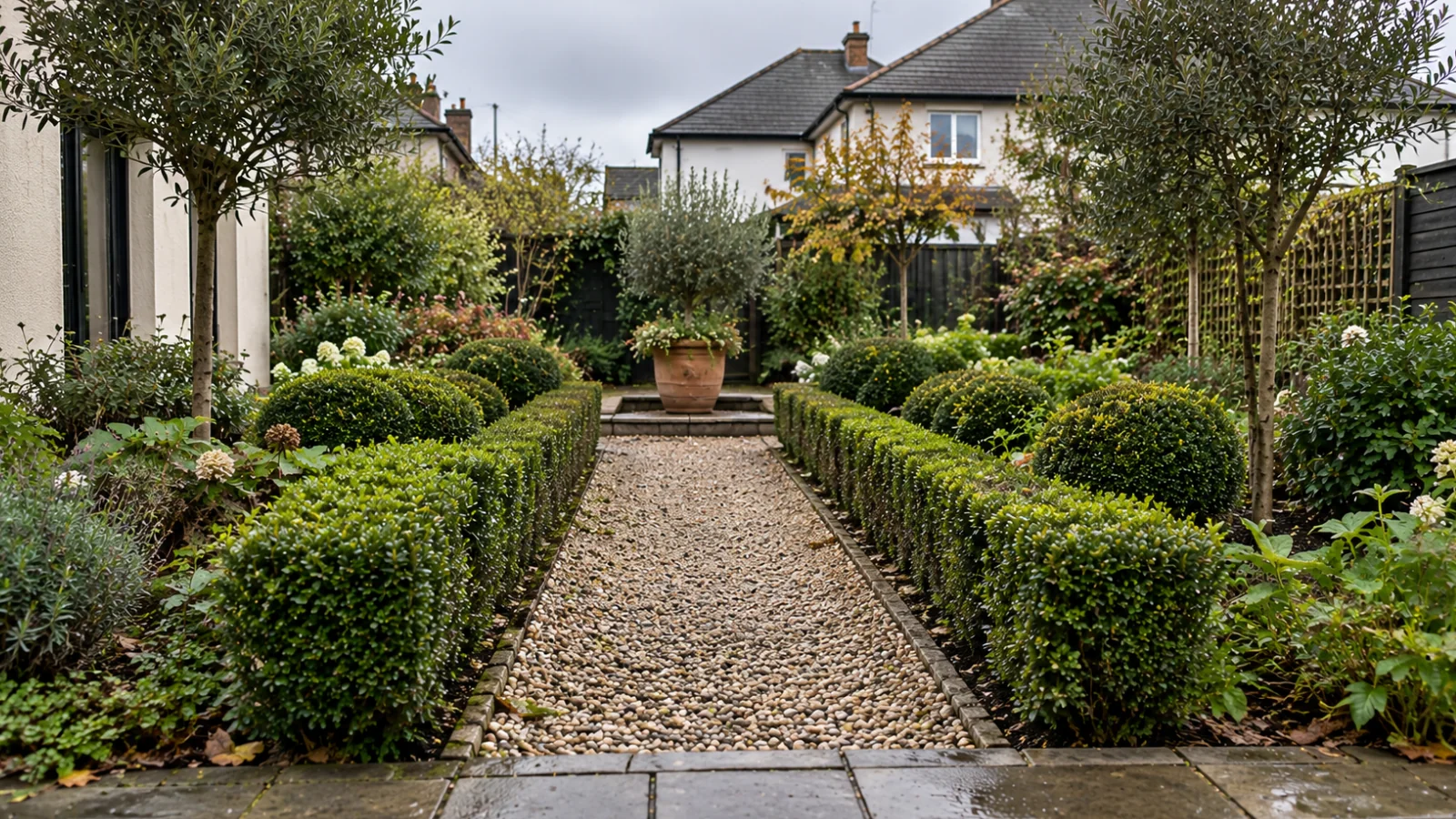
Every layout also needs somewhere for the eye to land. A focal point, such as a specimen tree or a large planted pot at the end of a path, pulls the eye down the garden.
Small Garden Design Ideas for Irish Plots
The best small garden design ideas start with restraint. One strong idea, one or two materials and a clear sightline beat a dozen competing features in a small space. Treat the outdoor space as a set of rooms, each with a purpose, and hard surfaces and planting both work well in small plots.
Go vertical early. A climber on the boundary adds greenery without costing floor space, and a bench with storage underneath does two jobs in one footprint. Keep the paving to one material and let a single large planted pot finish the view.
What Are the Basic Principles of Garden Design?
The basic principles of garden design are unity, balance, proportion, rhythm and emphasis. Guides disagree on the count. These five are the working set.
Unity is what makes a garden read as one place. Limestone paving, a dry-stone wall and a short plant list will do it. Six different surfaces won’t.
For balance, answer a large tree on one side with smaller plants and a seat on the other. Proportion ties every element to the size of the garden and the house, and a pergola that swallows a small terrace is the classic mistake.
Rhythm comes from repetition. The same plant, shape or material at intervals carries the eye through the space. Emphasis means one element dominates and everything else supports it.
Stand at the main seating area, look at the plan and ask which principle is missing. The same principles hold in landscape design at every scale, and a beautiful design is usually the one that said no to half the ideas.
Should You Do Hard Landscaping Before Planting?
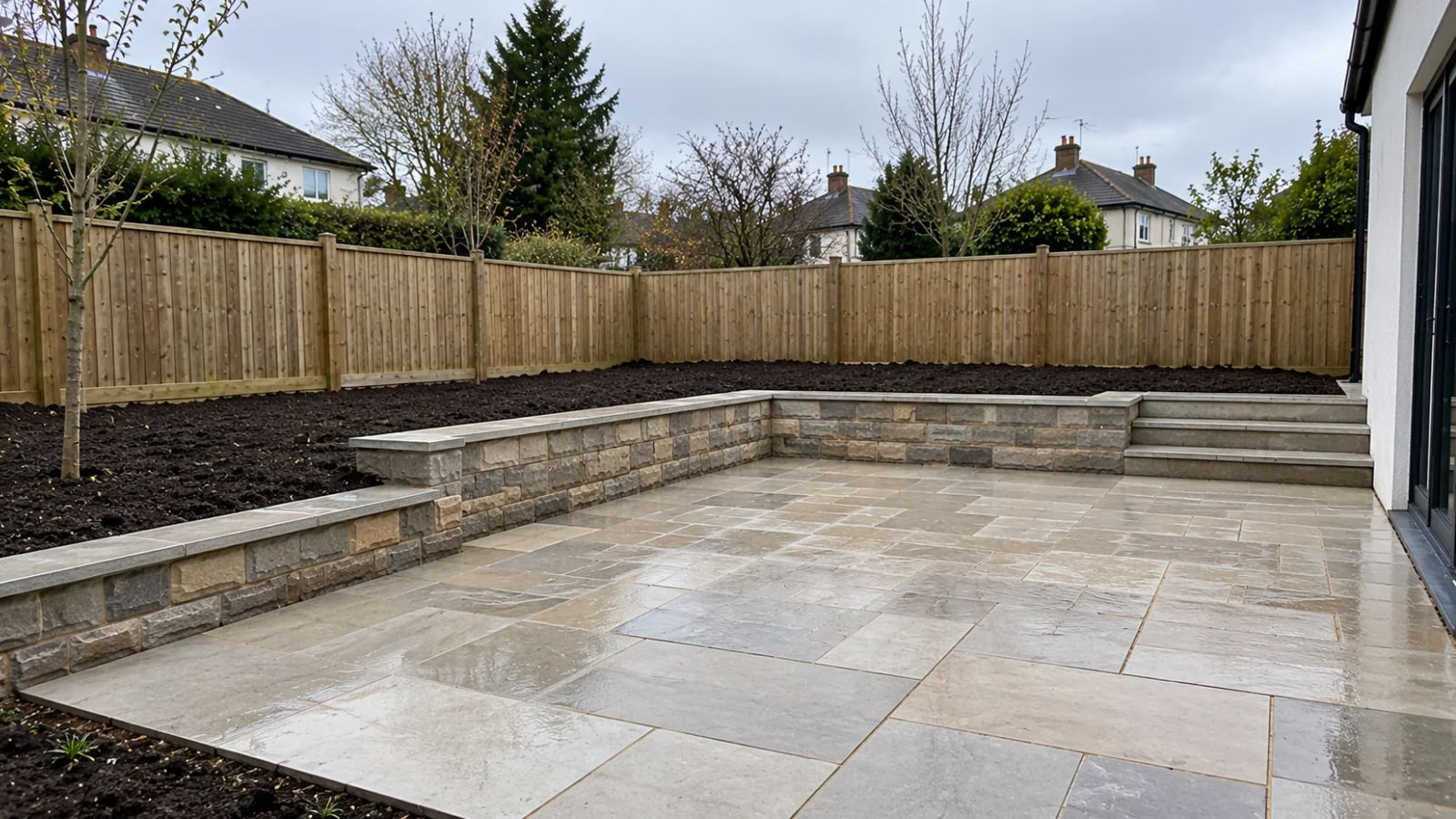
Yes. Paving, paths, steps, retaining walls, boundaries, decking and driveways make up the structure of the garden, and building them is heavy, messy work that flattens plants. Plant afterwards and you plant once.
Boundaries come first because they set the garden’s shape and privacy. A garden fence gives instant screening, while a hedge takes years but filters wind more gently. Walls and fences also form the backdrop for the planting.
Under the paving, levels and drainage matter. Most surfaces need a slight fall away from the house, and a paved area is only as good as its sub-base.
Size the patio or paved area for the garden furniture you own and join it to the house. Indoor and outdoor living merge, and the outdoor space becomes a room people use.
Pergolas and trellis turn vertical space into planting space, with a vine or other climbing plants shading the dining area. Plan outdoor lighting and lay the ducting before the paving goes down, so nobody digs up finished paving later. Retaining walls, big level changes and outdoor electrics are jobs for a professional.
How Do You Arrange Plants in a Garden?
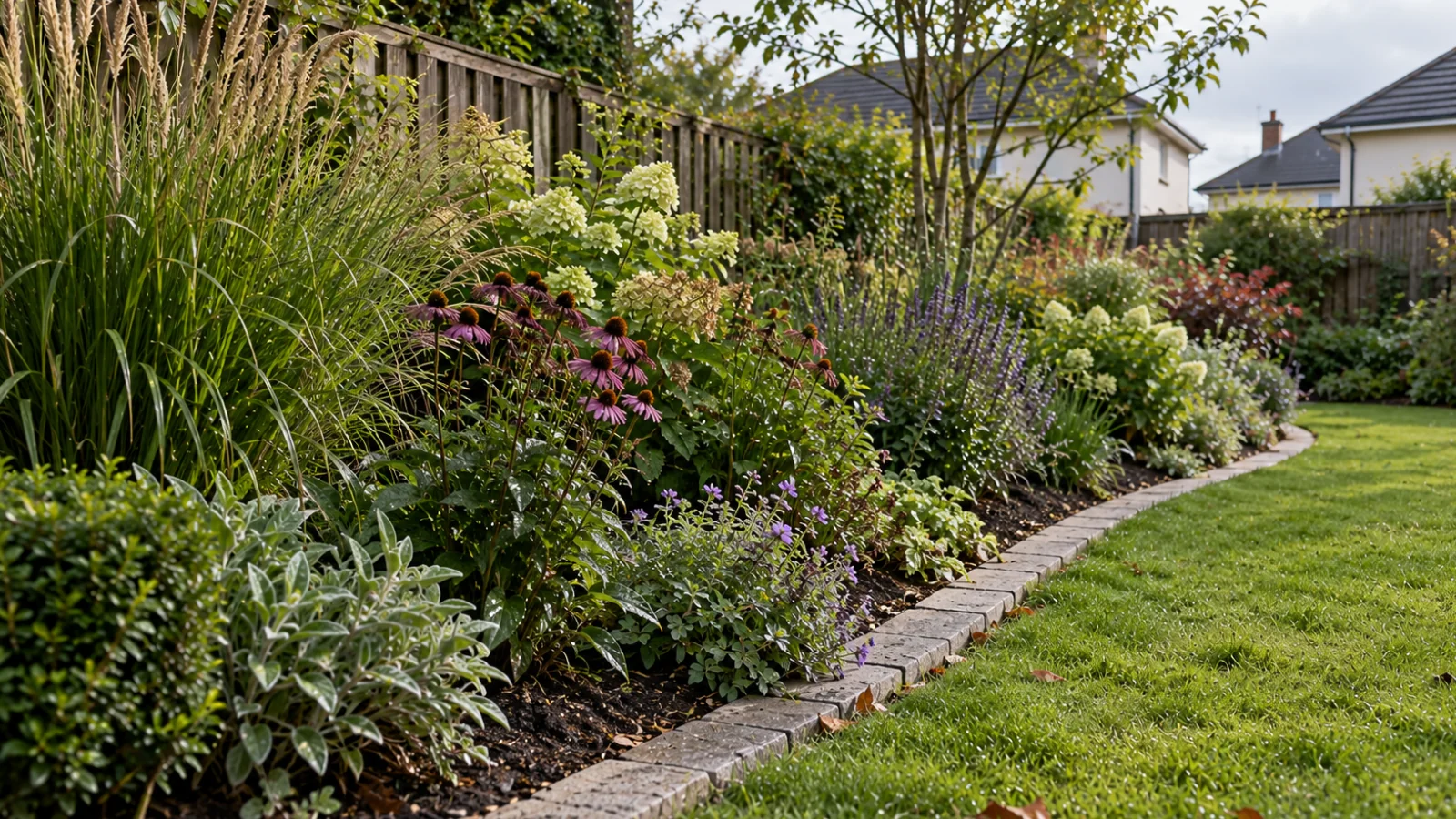
Arrange plants in layers, starting with the permanent ones. Trees and evergreen shrubs give a plot its shape in January. Choose trees for the size they will reach.
Tall plants go at the back of a border, medium-height plants fill the middle, and low ground cover sits at the front. Repeat a short plant list throughout the garden in groups of three, five or seven, because it looks calmer than twenty individual plants used once.
Good plant selection starts with your survey. Match plants to your soil type, light and wind, because the right plants outperform the prettiest ones. A sun-lover in shade sulks for years.
Something should be in bloom for most of the year. Mix perennial and annual planting, with evergreen greenery carrying the borders through winter. A new garden looks sparse in its first year, and that’s normal.
Compost goes into the beds before planting. If you want to grow vegetables on heavy clay, build a raised bed.
Take your plant list to the garden centre, check plant health before you pay, and water new plants through their first season. You don’t need a green thumb to plant well, only a plan.
Can a Free App or AI Design Your Garden?
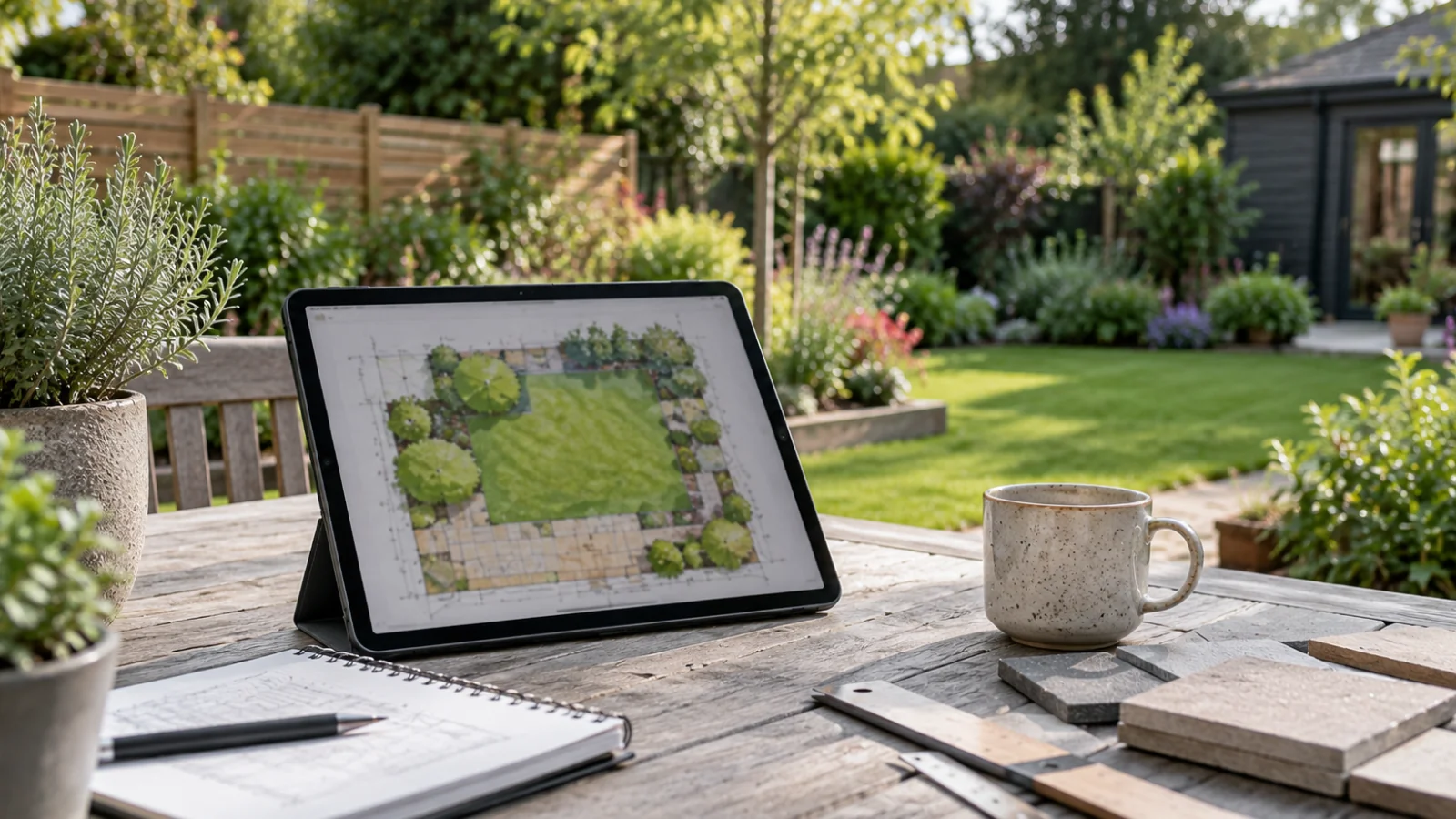
Partly. Free planners and AI tools work as sketchpads. ChatGPT can suggest styles, plant ideas and a first-draft overall layout. That helps when you’re staring at a blank page.
None of them can feel the ground. They don’t know your soil holds water until March, that a drain runs under the spot you’ve picked for the shed, or that your neighbour’s tree shades the back third after lunch. Those facts come from your survey, and a design that skips them is a guess with good graphics.
A 3D model built from accurate site measurements starts from the ground as it is.
When Is the Best Time to Start a Garden Project?
Design in the wet months, build in the drier ones, and plant when the plants are resting.
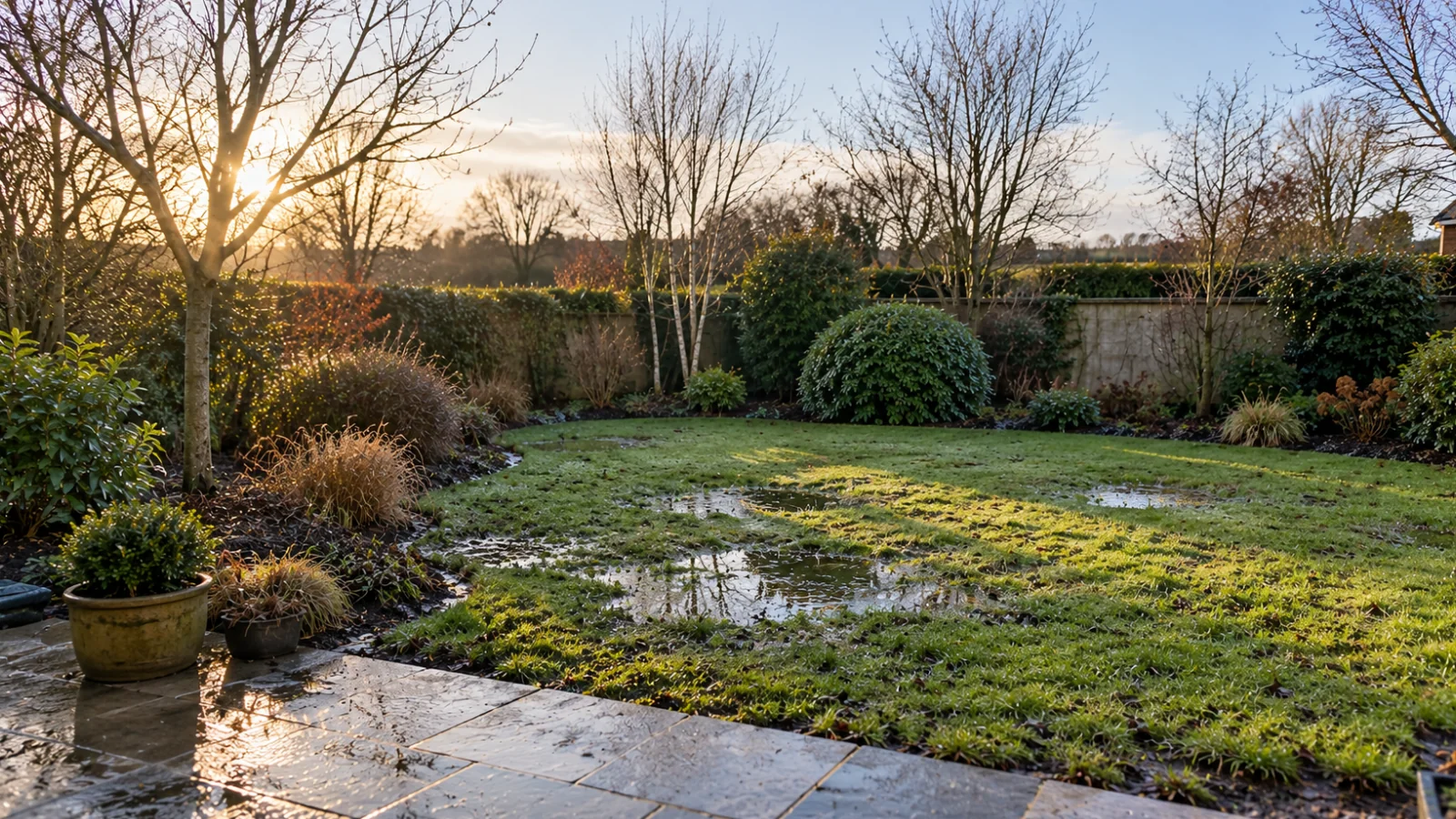
Winter shows you the real site. A survey in July can hide a drainage problem that a December afternoon reveals in minutes.
Build when the ground can take it. Heavy machinery on wet soil compacts it, and compaction is one of the quiet causes of waterlogging later. That’s why spring and summer are the usual building season.
Autumn and early spring are generally kind to trees and woody plants, because the soil is workable and they establish without the stress of summer heat. Bare-root stock is planted while dormant, in the colder months, and grass seed goes in during spring and early autumn.
Settle the survey and layout over winter and you can get growing as soon as conditions allow.
When to Hire a Garden Designer in Clare, Limerick or Galway
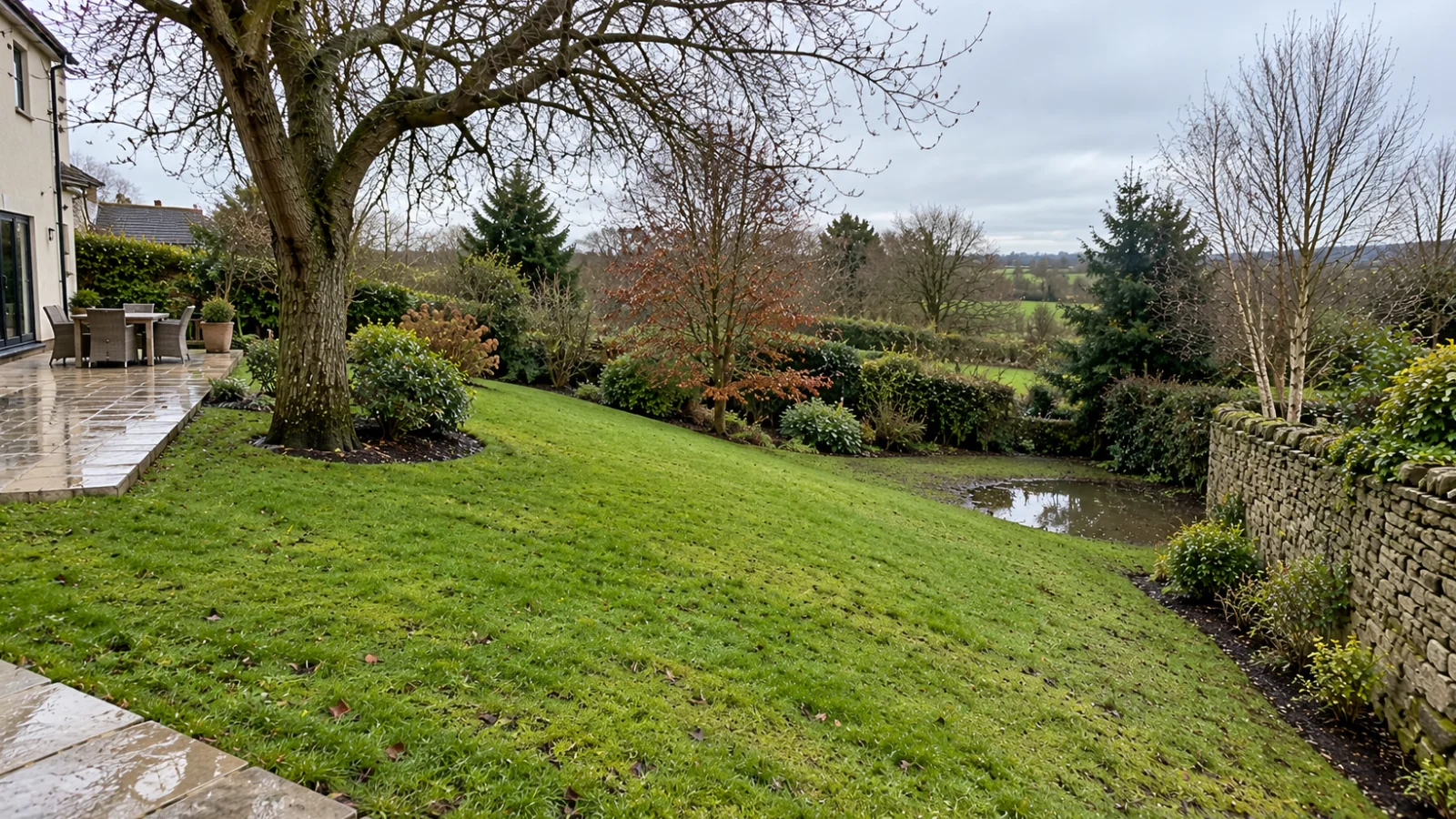
Hire a garden designer when your survey turns up a slope, standing water, mature trees close to the house or several builds that all have to connect. Smaller plots with a clear brief suit a keen gardener.
You get tree advice and the design from the same team. Elm Landscaping has designed and built gardens across Clare, Limerick, Galway and parts of Tipperary since 2008, with its own crews, ISO certification and Arboricultural Association professional membership.
A 3D digital model lets you see the result before any ground is broken. Elm’s garden design service starts with a site visit to build it, and is offered together with a full landscaping project.
If you’re earlier in the process, a 1-hour garden consultation at your property covers layout, drainage and planting, and shows you what your budget can achieve.
A garden is designed once on paper and built once in the ground. Paper is the cheaper place to change your mind.