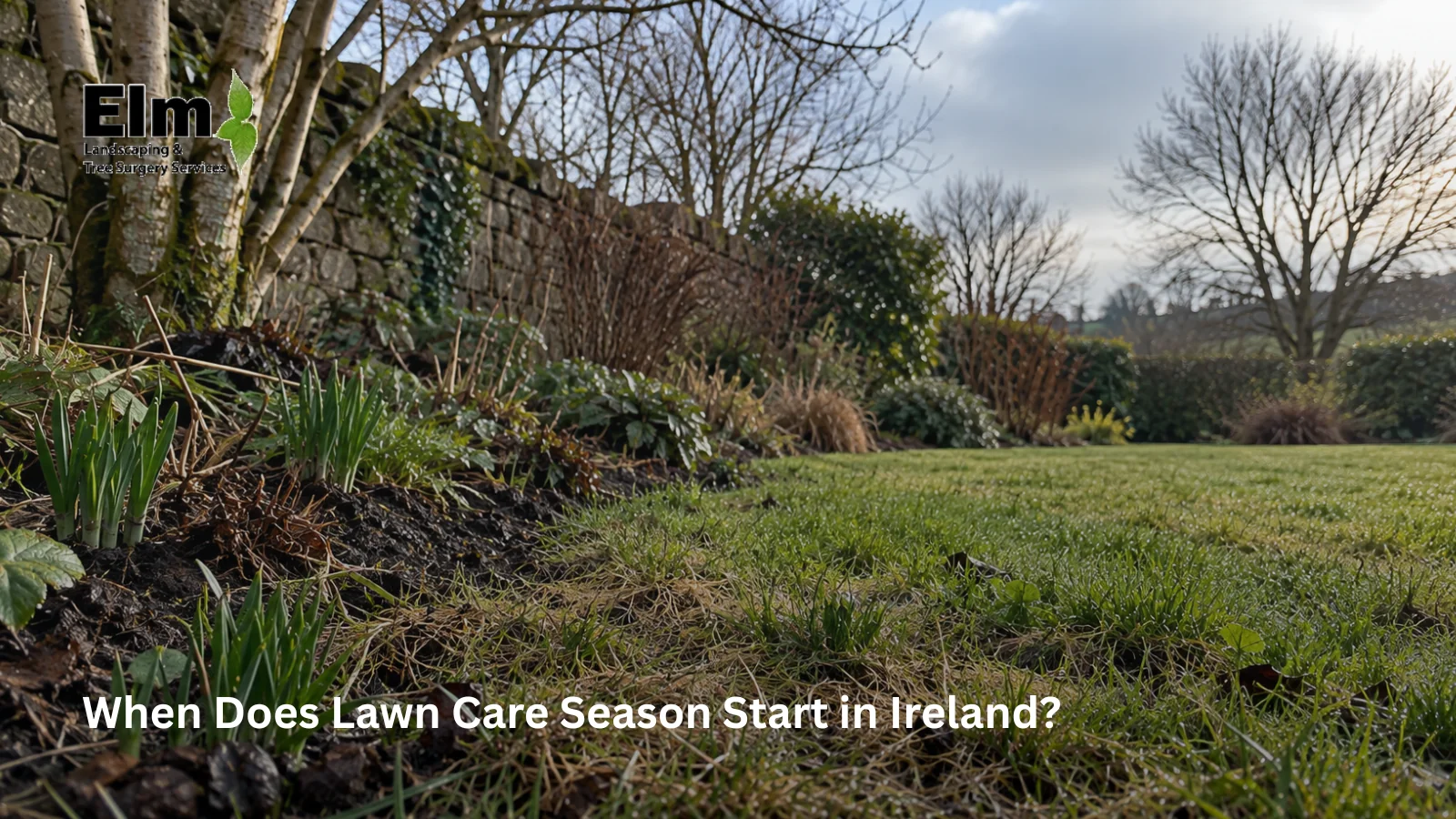
Lawn care season in Ireland starts around the time soil temperature climbs past about 5°C, though sustained growth depends on your grass type, soil and weather. In practice that means spring, and the first trim can come as early as late February or early March in a dry spell.
The harder question is what to do first, because feeding, scarifying and the first cut all compete for the same weekend.
Your grass starts growing before you notice it, so the ground under your feet is a better guide than the date on the calendar.
Get the order right and the lawn thickens through the growing season. Get it wrong and you spend the summer fixing problems you created in March.
When Should You Do the First Mow of the Year?
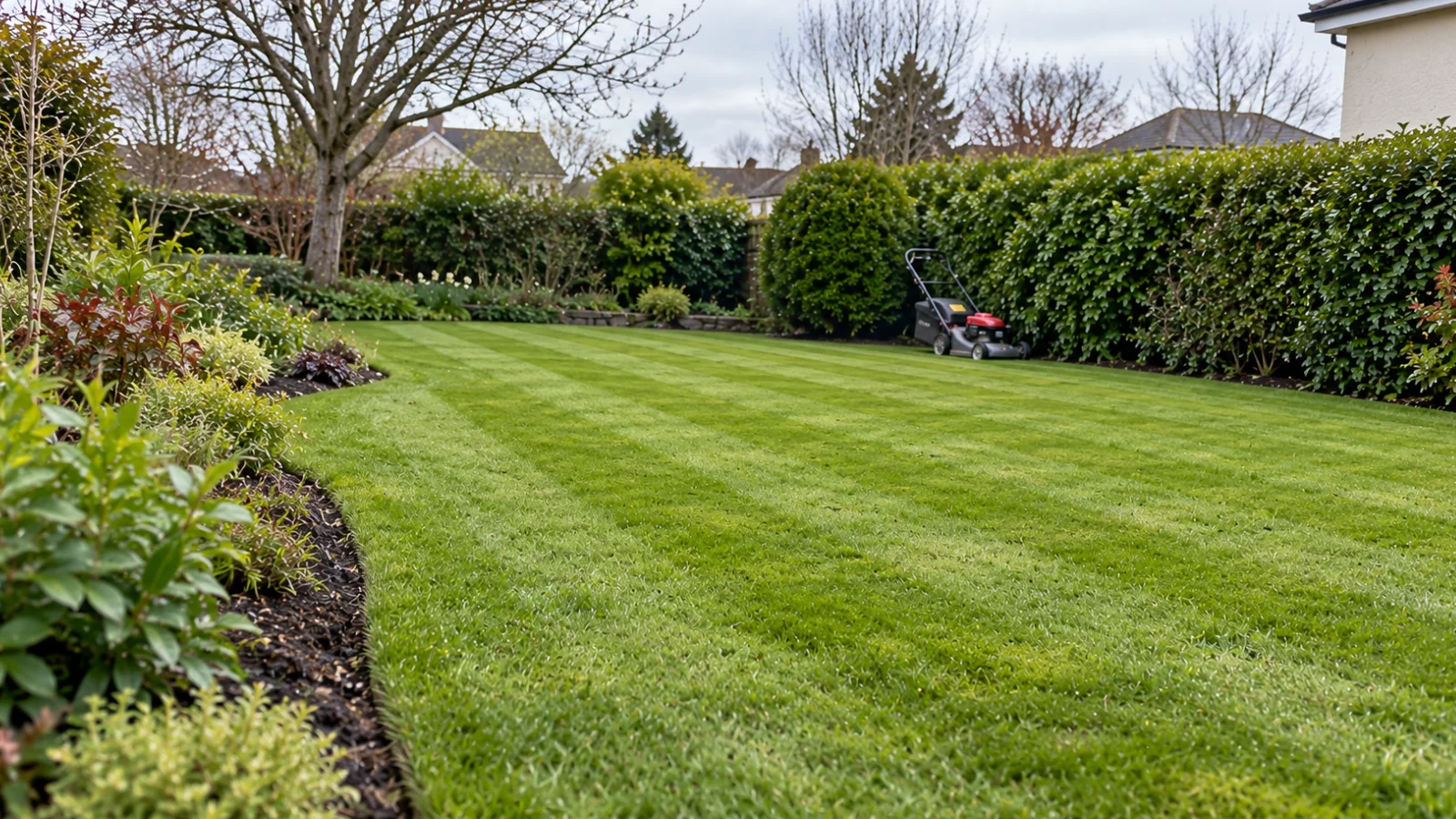
Begin mowing when the grass is growing, the ground is firm enough to walk on and the grass is dry enough to cut. Garden.ie, the website of The Irish Garden magazine, suggests that window can open as early as late February or early March, when a dry spell comes along.
Take the opening cut as a light trim with the mower blades set high, then lower them gradually to the height you want, as Garden.ie recommends. Very tight mowing can weaken the grass.
Garden.ie puts the cutting height at two to five centimetres for most Irish lawns, nearer the top for rough or well-worn ones. Hold your mowing height steady once weekly cuts begin, and raise it during drought spells.
Sharpen the mower blades before the first cut. A dull blade tears the grass as it cuts, so service the lawn mower over winter and the first cut is cleaner.
Frequency follows growth, and the same source suggests fortnightly cuts at first, weekly mowing from May, and fortnightly again in September and October. Treat the dates as a guide, because the weather and the grass set the real pace. Regular mowing matters most, because irregular mowing weakens the grass and invites weeds and moss.
Garden.ie advises collecting clippings in a grass box, which removes seed heads and helps weed control. Mulching can also work well when conditions suit, mainly on dry grass, so keep the box for damp days early and late in the season.
If you would rather hand the whole job over, Elm’s lawn mowing and cutting service, based in Ennis, Co. Clare, assesses your lawn’s condition and growth, then builds a mowing schedule around it.
Mowing sets the shape of the lawn, and feeding supports its growth.
What Should You Put on Your Lawn in Spring?
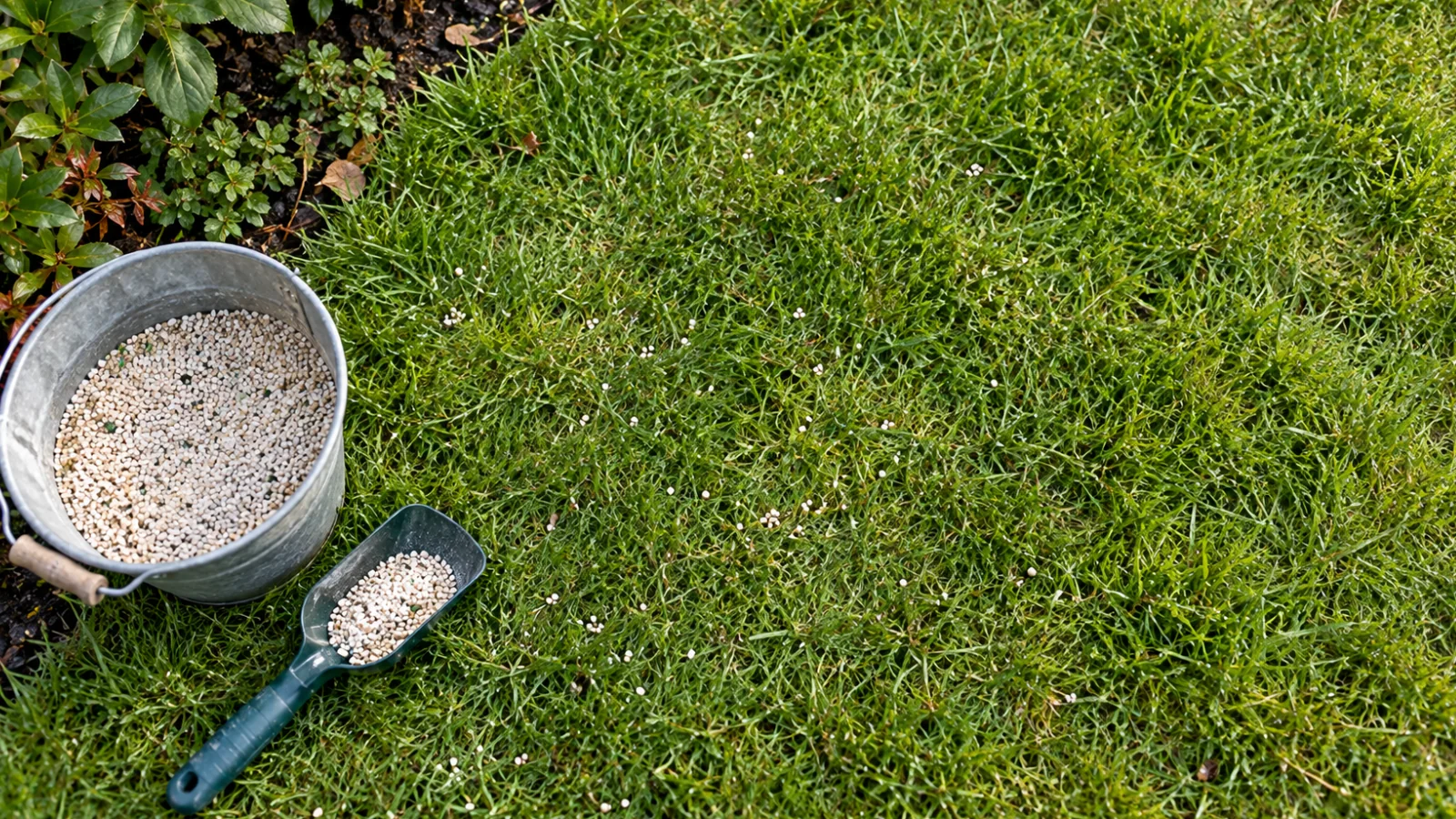
A spring feed is the usual answer once the grass is clearly growing, though not every lawn needs one, because soil condition and how the lawn is used both matter. Teagasc explains that a grass plant takes up more nutrients as it becomes active, so a lawn feed spread on dormant grass has little to work on. The time to apply is once the soil is warm enough for steady growth, and a basic soil thermometer takes the guesswork out.
Follow the rate on the pack, because overfeeding pushes soft, fast growth and can scorch the leaf. Hold off during a hard frost, on waterlogged ground or in a dry spell. Moist ground, or rain in the forecast, gives the feed the best chance of soaking in.
If you only have one weekend, the order that works is rake, mow, then feed. Clear the winter debris first so the granules reach the soil. Mow lightly so the granules settle between the short leaves. Feed last, and you are more likely to get a green lawn that thickens evenly.
Weeds wake up with the grass. Pull or spot-treat each weed early, before it seeds, and read the label on any weed treatment before using it near the lawn.
Feeding strengthens the grass you already have. Whether that grass can keep up depends on what the winter did to the ground.
How Do You Clear Moss After a Wet Irish Winter?
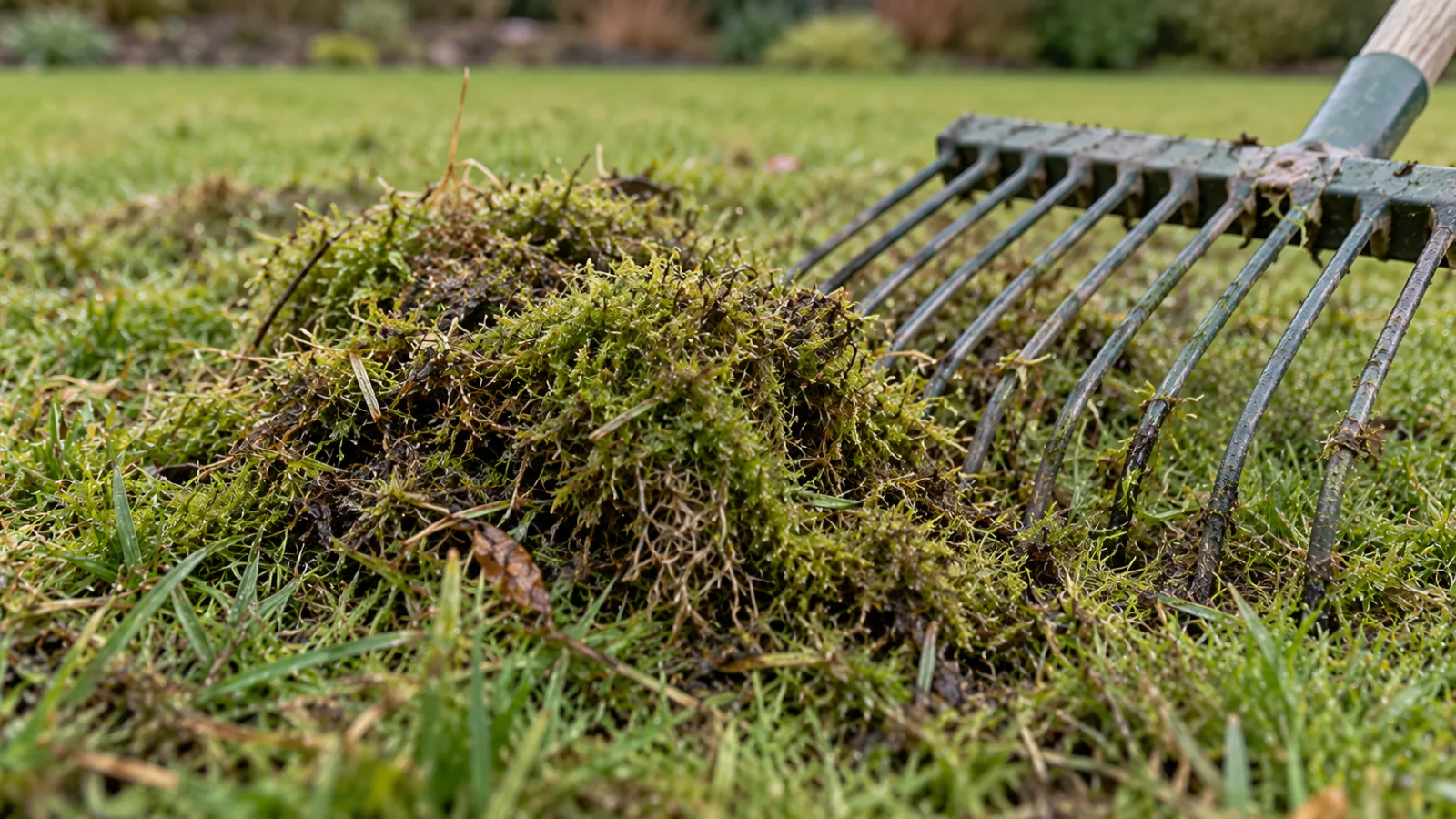
Clear out loose material, scarify the thicker layers, aerate compacted ground, then fix the conditions behind the problem. Many lawns come out of winter with moss and a layer of dead material at the base of the grass, and some also have compacted ground. It all shows up in early spring.
Moss tells you about conditions: shade, poor drainage, compacted soil, thin grass. Pulling it out clears the symptom. Fixing the conditions makes it far less likely to return.
A spring-tine rake pulls out light build-up. Heavier layers call for scarifying with a scarifier or powered rake, once the grass is actively growing and can recover, and with a light hand the first time. Go too hard and you strip healthy grass and leave bare soil for weeds to colonise.
Aeration is mainly needed where compaction or poor drainage is a problem. Spiking or hollow-tine aeration opens channels so air and water reach the grass roots, which matters most on well-trodden lawns and heavy ground. Do it when the soil is workable, neither waterlogged nor baked hard.
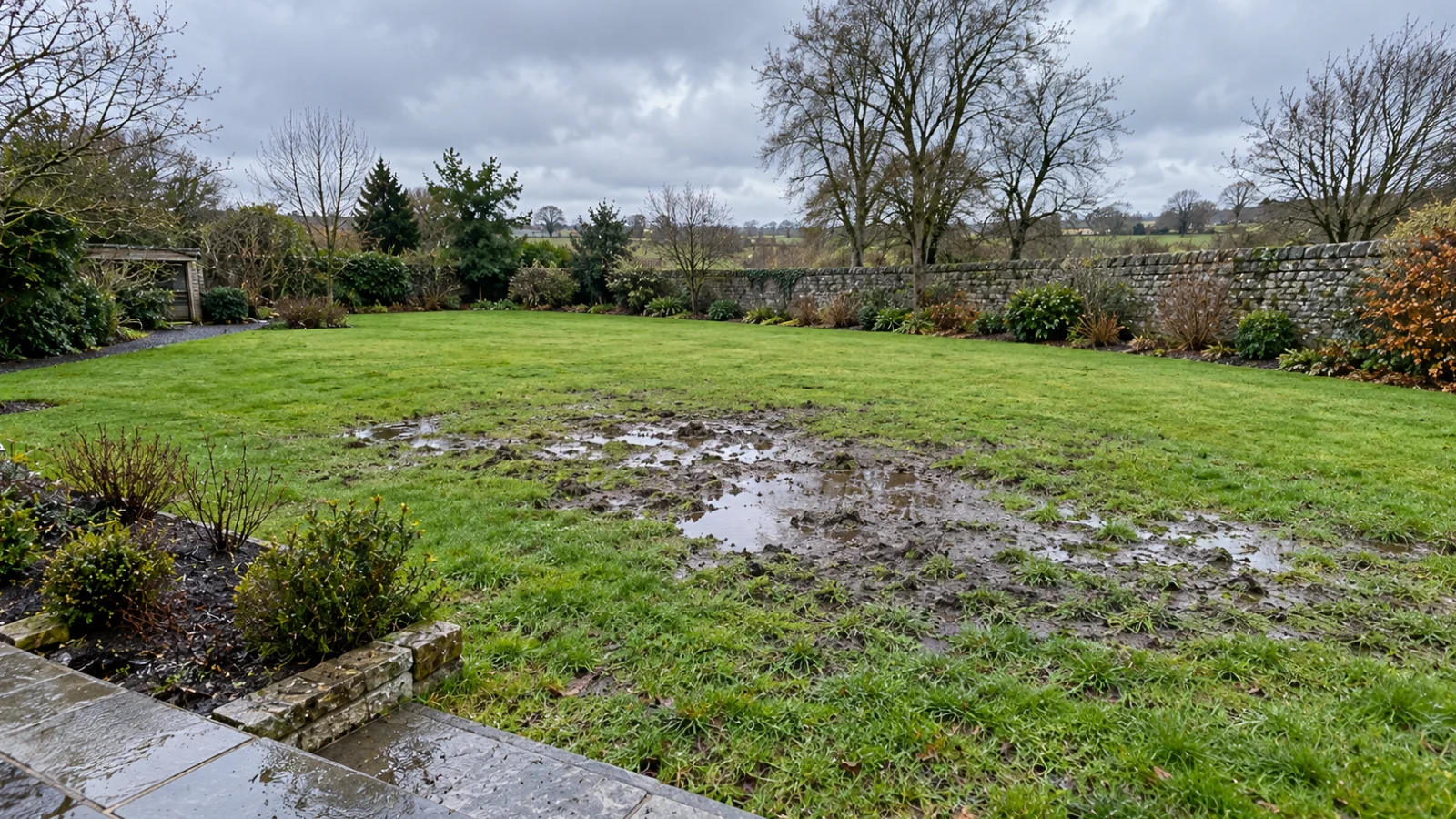
On a waterlogged lawn, wait. Teagasc notes that too much water slows root activity, and Garden.ie ties mowing to firm ground. Hold off mowing, feeding, scarifying and aerating until the ground firms up, and keep foot traffic off it meanwhile.
Scarifying and aeration take more out of the lawn than a mow and a feed, so spread the work over a few weeks. Any bare patch they reveal is the next job.
Is Spring or Autumn Better for Overseeding in Ireland?
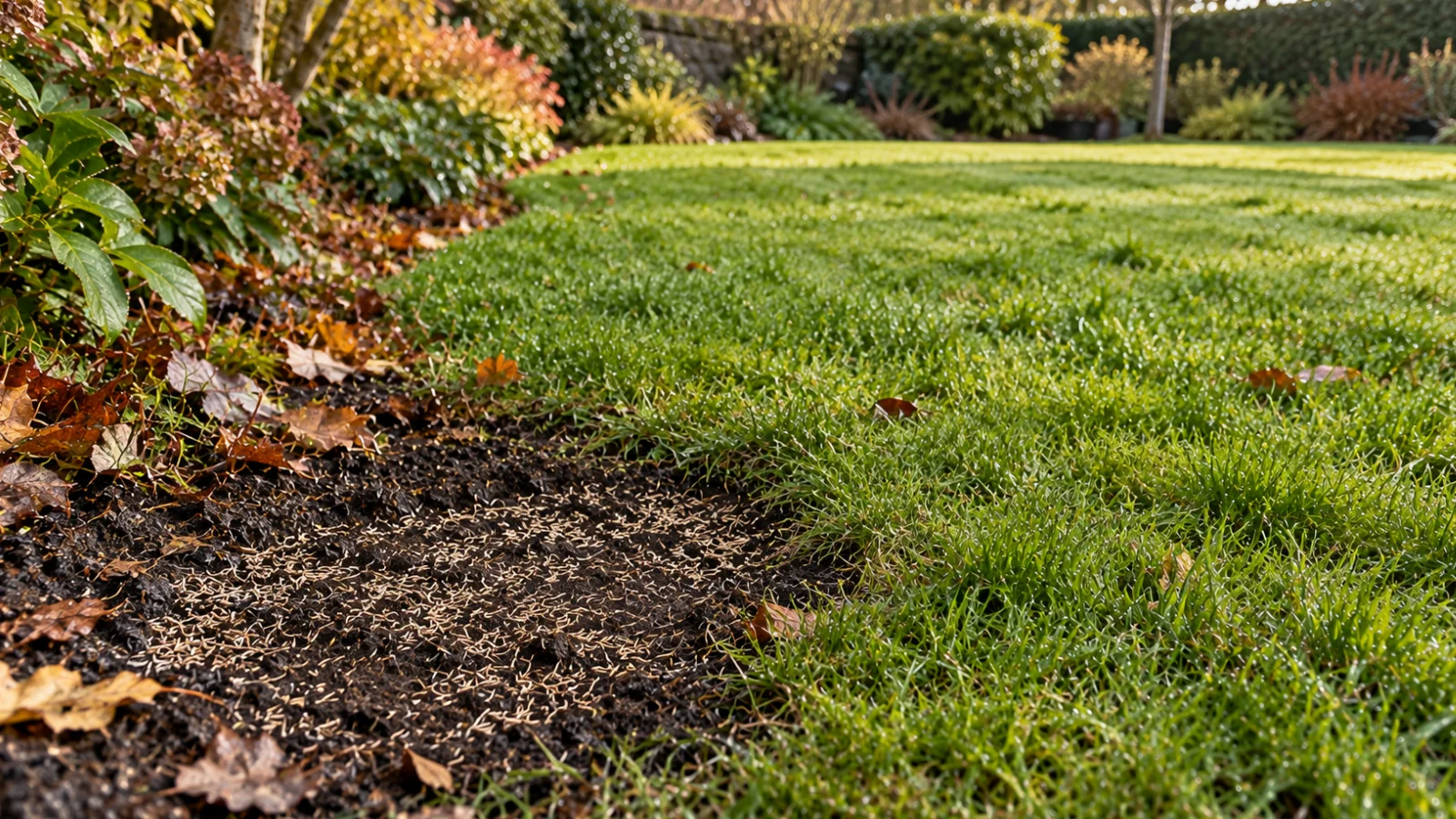
Either season can work for overseeding, and early autumn is a strong choice. Advice on seeding a new lawn from UCD’s Alan Hunter, published in the Irish Farmers Journal in 2017, says autumn may be best because it keeps weed invasion down, and that spring seeding also works. Teagasc’s reseeding advice favours spring and warns that autumn conditions get worse as the season goes on, but it relates to agricultural grassland, not domestic lawns. If you sow in autumn, sow early.
Whichever season you choose, prepare the patch first. Clear out dead grass and debris, loosen the soil surface, scatter the grass seed evenly and keep it moist until it has germinated. Match the seed to your grass type and climate and to how the space is used, because a shaded corner and a family play area need different mixes.
New grass is delicate. Go easy with the mower for the first few cuts and keep foot traffic off it until it has settled in.
If the lawn is severely damaged across most of its area, patching is unlikely to rescue it. Elm prepares the ground and either sows or lays turf for a new lawn, from small gardens to large sites, through its lawn seeding and turf service.
When Does Lawn Care Season End in Ireland?
The mowing season ends when growth stops. Garden.ie says mowing can run into November while the ground is still firm, and that a dry, mild winter spell is a good moment to top the grass at the highest setting. Until then, keep mowing as the grass grows, less often as the days shorten, and raise the setting towards the end of the season. Lawn care is a year-round job, even if the mowing mostly stops.
Early autumn is the other important season for the lawn. How much the grass recovers before winter depends on how early the work is done, so early autumn is the time to scarify, aerate, overseed and apply a lawn feed made for autumn. Read the label first. Clear fallen leaves regularly, because a wet blanket of leaves smothers the grass.
Month-by-Month Lawn Care Calendar for Ireland
Spring is about growth, with cutting and the first feed as the grass wakes up. Autumn is about recovery, with fortnightly cuts and repair work.
Late February or March brings the first light cut, once the ground is firm and dry, and spring lawn care starts with clearing debris. Cuts stay fortnightly until May, with the first feed once growth is steady, then go weekly. Summer asks for steady cutting, with the height raised in dry weather.
September and October bring fortnightly cuts, and early autumn is the repair window: scarifying, aeration, seeding and an autumn feed. Mowing can run into November while the ground is firm. Winter mostly means staying off frozen or soggy grass, apart from topping the grass at the highest setting in a dry, mild spell.
Treat this lawn care calendar for Ireland as a quick guide, then adjust your lawn care schedule after a season of watching your own lawn.
Quick Answers on Cutting Grass and Scarifying in Ireland
What Month Should You Start Cutting Grass in Ireland?
Late February or early March, according to Garden.ie, once a dry spell has firmed up the ground and dried the grass. Soil temperature is the better signal, because growth picks up around 5°C.
When Should You Scarify a Lawn in Ireland?
Scarify when the grass is actively growing and can recover, and go lightly the first time. If the ground is waterlogged, wait until it firms up.
Need a Lawn Care Professional in Clare?
You do if the lawn never catches up, whatever you throw at it. If the same patches turn to mud every winter, the same problems return within weeks, or water lies on the surface for days, the cause sits under the grass. Drainage, compaction or poor ground preparation can beat any lawn care plan.
A local lawn care professional can diagnose these lawn problems on site. Elm Landscaping has worked on gardens since 2008, and its ground preparation covers grading and seedbed preparation. The company is ISO certified for environmental, health and safety and quality, and its garden maintenance crews hold Safe Pass certification, so the people working in your garden are trained.
If your lawn keeps falling behind, I’d like to book a one-hour consultation. Soil type and water flow are part of the on-site assessment.
Start when the soil says so, and the rest of the year gets easier.