If your company falls under the EU’s Corporate Sustainability Reporting Directive, your environmental commitments are no longer a voluntary talking point. From 2024 onwards, large Irish companies are required to report on measurable environmental actions under CSRD. Facilities managers and sustainability leads across Shannon, Raheen, Parkmore, and every other major Irish business park are now being asked the same question by the people above them: what are we actually doing?
Your corporate grounds are one of the most practical and documentable places to start. Landscaping improvements are visible, measurable, and reportable. They produce real data on biodiversity, carbon sequestration, water management, and staff wellbeing that can go directly into a CSRD report or investor update. And unlike many ESG initiatives, the cost is manageable and the results are immediate.
This post covers five specific improvements Irish corporations can make to their grounds, what each one delivers in measurable ESG terms, and what a realistic programme looks like for a commercial site in Clare, Limerick, Galway, or Tipperary.
Why Corporate Grounds Are an Underused ESG Asset
Most ESG programmes focus on energy consumption, supply chain, and governance. The physical site gets treated as maintenance overhead rather than an opportunity.
That is a missed opportunity in two directions. First, the grounds of a corporate campus or industrial facility represent real, tangible environmental impact that can be improved and measured. A site with 10 acres of managed grass, sealed tarmac car parks, and boundary fencing contributes almost nothing to local biodiversity, water management, or carbon sequestration. The same site, managed differently, can contribute meaningfully to all three.
Second, the social element of ESG is increasingly scrutinised. How your physical environment affects the people who work in it is a legitimate reporting consideration. Staff wellbeing, access to green space, and the quality of the outdoor environment all connect to the S in ESG in ways that auditors and investors are starting to measure properly.
The good news is that the gap between a typical Irish corporate site and a genuinely ESG-positive one is not as wide as most facilities managers assume. The improvements are practical, the costs are predictable, and every one of them produces data you can report.
Replacing Traditional Lawns with Wildflower Meadows
The standard corporate lawn requires weekly mowing from March to October, chemical fertiliser, and irrigation in dry spells. It supports almost no wildlife and contributes nothing to local biodiversity. It also costs more than most companies realise to maintain. A typical one-acre corporate lawn costs in excess of €3,000 per year to keep presentable.
Replacing managed grass with native Irish wildflower meadows cuts those costs by up to 50% after the first two years while delivering measurable biodiversity value. Meadows require cutting twice a year rather than weekly. They support native pollinators including bees, hoverflies, and butterflies that are under significant pressure across Ireland. And they produce the kind of visible, photogenic environmental improvement that works well in sustainability reports and on corporate social media.
The critical detail is seed provenance. Native Irish provenance seeds perform reliably in our climate and genuinely support local insect populations. Imported or ornamental seed mixes look similar but deliver a fraction of the biodiversity value. For a CSRD report, the distinction matters – native provenance planting is documentable and verifiable in a way that generic wildflower seeding is not.
Elm Landscaping designs and installs native wildflower meadows for corporate sites across Clare, Limerick, and Galway. We can provide species lists, establishment records, and annual monitoring data that feeds directly into your environmental reporting.
Not every area of a corporate site suits a meadow approach. Car park borders, entrance areas, and high-visibility zones often need a more structured appearance. The most effective approach combines managed planting in high-visibility areas with meadow conversion in the broader site, giving you the professional appearance at the entrance and the biodiversity value across the rest of the grounds.

Sustainable Drainage Systems for Commercial Sites
Climate change is producing heavier rainfall events across Ireland with increasing frequency. Flash flooding in Galway, Ennis, and Limerick has become a genuine operational risk for commercial sites with large areas of sealed tarmac and inadequate drainage. Water that used to percolate into the ground now runs off car parks and warehouse roofs into already-stressed drainage infrastructure.
Sustainable Drainage Systems, known as SuDS, manage surface water at source rather than routing it into the drainage network. Rain gardens, swales, permeable paving, and retention features slow water down, allow it to infiltrate, and filter pollutants before they reach watercourses. Most new planning permissions for commercial development in Ireland now require some form of SuDS. For existing sites, retrofitting sustainable drainage is increasingly expected as part of environmental management.
From an ESG perspective, SuDS deliver on two fronts. Environmentally, they reduce the volume of polluted runoff reaching local rivers and streams – oil, grit, and heavy metals from car parks are among the most common sources of watercourse contamination in Irish industrial areas. On the governance side, demonstrating proactive management of surface water and pollution risk is exactly the kind of measurable action that satisfies environmental auditors.
The plants used in rain gardens and swales – species that tolerate wet conditions and periodic flooding – also contribute to biodiversity value. A well-designed SuDS scheme is not just a drainage solution. It is a reportable environmental asset.
Commercial Tree Management and Carbon Sequestration
Trees are the most straightforward carbon capture asset available to a corporate site. A single mature tree absorbs approximately 22 kg of CO2 per year. A site with 50 mature trees is offsetting over a tonne of carbon annually. That is a real, auditable number that belongs in your CSRD environmental section.
But trees only deliver that value when they are healthy and properly managed. Neglected trees on corporate sites accumulate problems. Deadwood in the crown creates storm hazard. Root systems lift paving and tarmac. Trees too close to buildings affect drainage and foundations. Poorly managed canopy blocks natural light into offices and makes those spaces less attractive for staff.
Professional tree management by a qualified arborist keeps existing trees healthy and productive for decades. Crown reduction maintains safe clearances from buildings. Crown lifting opens up light and vehicle clearance beneath the canopy. Deadwooding removes hazardous limbs before they become a liability issue. None of these operations require removing trees that are structurally sound – they extend the useful life of trees that are already delivering carbon value.
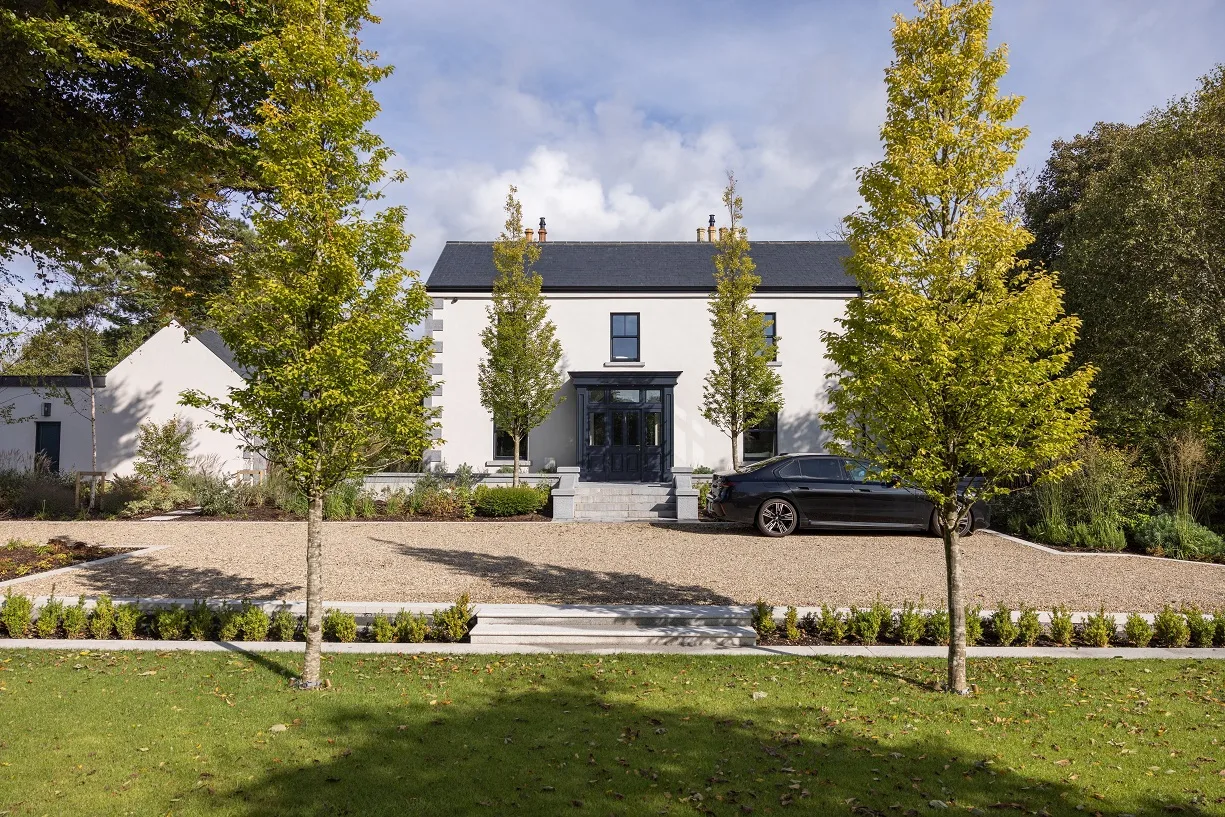
For sites with space to plant, native Irish species deliver the highest ecological value. Oak, birch, alder, and rowan support hundreds of insect species and integrate naturally into the Irish landscape. New planting also generates carbon sequestration data that compounds over time, which is worth recording from day one.
Elm Landscaping carries out commercial tree surveys, risk assessments, and ongoing management programmes for corporate clients including multinational and pharma sites across Clare, Limerick, Galway, and Tipperary. Our arborists hold RQF Level 5 qualifications or higher, which is the professional standard recognised by the arboriculture industry and expected by commercial insurers.
Invasive Species Management
Japanese knotweed, Himalayan balsam, and giant hogweed are present on commercial sites across the west of Ireland, frequently unidentified and unmanaged. This matters for ESG in a way that goes beyond aesthetics.
Japanese knotweed can grow through tarmac and concrete, causing structural damage to buildings, car parks, and drainage infrastructure. Under Irish and EU legislation, allowing invasive species to spread from your property to a neighbouring property or watercourse carries legal liability. Failing to manage a known invasive species infestation is increasingly considered a governance failure by environmental auditors.
The practical issue is that knotweed and similar species are difficult to identify correctly and even more difficult to eradicate without professional intervention. Incorrect treatment – cutting and removing stems without treating the root system – spreads the problem rather than solving it. Certified invasive species management uses approved treatment programmes over multiple seasons to achieve controlled eradication.
For CSRD purposes, documenting an active invasive species management programme demonstrates both environmental commitment and responsible site governance. A site survey that identifies invasive species, followed by a treatment plan and annual progress records, is a straightforward addition to your environmental reporting.
Outdoor Spaces That Support Staff Wellbeing
The social component of ESG reporting includes how the physical workplace environment affects the people in it. Access to quality outdoor space has a documented effect on stress levels, concentration, and staff satisfaction. For corporate sites in business parks where the outdoor environment is typically a car park and a smoking area, there is significant room to improve.
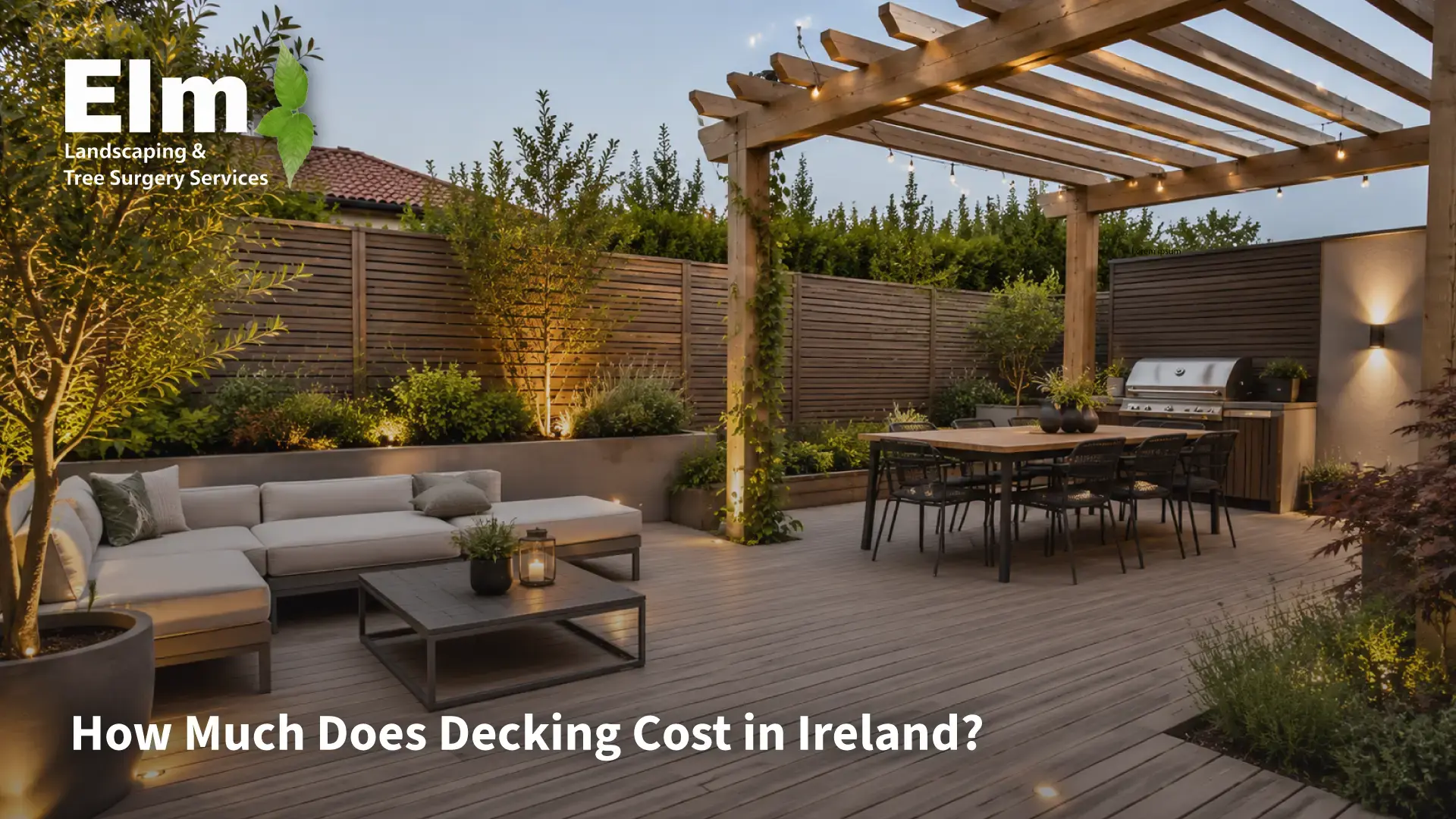
Well-designed outdoor breakout spaces – paved seating areas, planted borders, sheltered zones for informal meetings or lunch – give staff a genuine reason to step outside during the working day. The effect on wellbeing is measurable through staff surveys and absence data, both of which are legitimate inputs to ESG social reporting.
The investment is modest relative to other workplace wellbeing initiatives. A properly designed outdoor seating area with quality paving, planting, and shelter typically costs between €8,000 and €25,000 depending on scale. The return in staff satisfaction and retention is difficult to quantify precisely but consistently reported by facilities managers who have made the investment.
Dense hedging rather than metal fencing as boundary treatment also contributes to this. Hedging reduces wind exposure, lowers ambient noise from surrounding roads and industrial activity, and creates a more enclosed, comfortable environment for people using outdoor spaces.
Turning Your Corporate Grounds Into a Measurable ESG Asset
The five improvements above share one characteristic: they all produce data. Biodiversity surveys, carbon sequestration calculations, water management records, invasive species treatment logs, staff wellbeing metrics. Every one of them generates the kind of documented, verifiable environmental and social evidence that CSRD reporting requires.
The practical starting point for most corporate sites is a grounds assessment that maps what you currently have against what is possible. That assessment identifies the highest-priority improvements, produces baseline data for reporting purposes, and gives you a phased programme that fits your budget and timeline.
Elm Landscaping works with corporate clients across Clare, Limerick, Galway, and Tipperary on exactly this kind of programme. We understand what sustainability auditors look for, what data needs to be recorded, and how to structure a grounds improvement plan that delivers both environmental value and reportable outcomes.
Book a corporate grounds assessment
Frequently Asked Questions
How does landscaping help Irish companies meet CSRD requirements?
The Corporate Sustainability Reporting Directive requires large Irish companies to report on measurable environmental actions. Landscaping improvements including native planting, sustainable drainage, tree management, and invasive species control all produce verifiable data on biodiversity, carbon sequestration, water management, and land use that can be included directly in CSRD environmental disclosures.
What is the most cost-effective ESG landscaping improvement for a corporate site?
Wildflower meadow conversion typically delivers the best return on investment. It reduces ongoing mowing and maintenance costs by up to 50%, produces measurable biodiversity value, and generates the kind of visible environmental improvement that works well in sustainability reporting. Native provenance seeding is essential for the biodiversity value to be auditable.
Can corporate tree management be included in ESG carbon reporting?
Yes. Professionally managed trees produce auditable carbon sequestration data. A site with 50 mature trees is offsetting over a tonne of CO2 annually. New native planting generates sequestration records that compound over time. Both existing tree management and new planting programmes can contribute to your environmental reporting.
Are Irish companies legally required to manage invasive species on their sites?
Irish and EU legislation prohibits allowing invasive species to spread from your property to neighbouring land or watercourses. Failing to manage a known infestation carries legal liability and is increasingly treated as a governance failure in environmental audits. A documented invasive species management programme is both a legal protection and an ESG reporting asset.
How do outdoor staff spaces contribute to ESG reporting?
Access to quality outdoor space has a documented effect on staff wellbeing, stress levels, and satisfaction. Staff survey data and absence records connected to outdoor space improvements are legitimate inputs to the social component of ESG reporting. Most CSRD frameworks include employee wellbeing as a reportable social metric.