
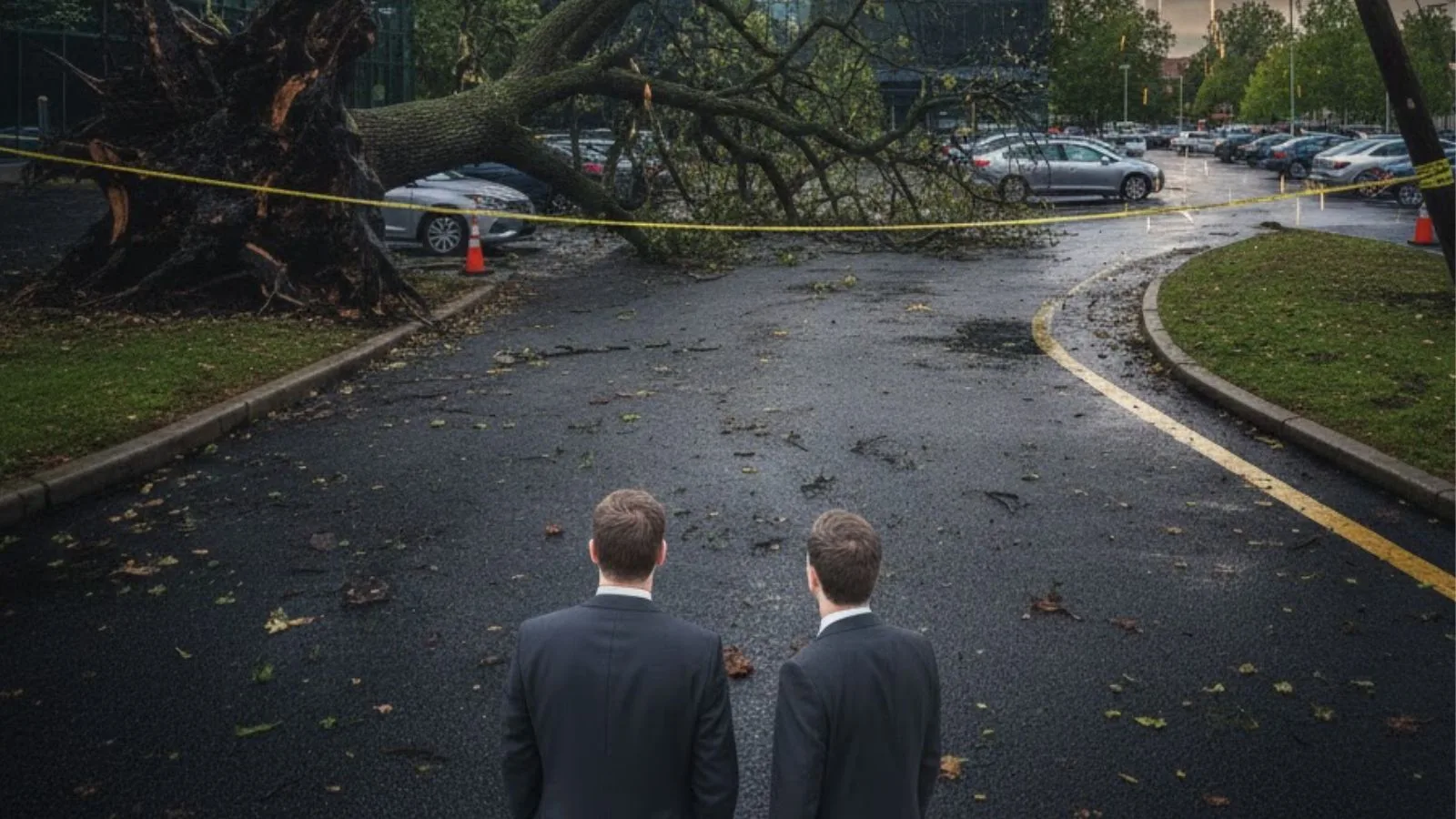
Storm Éowyn hit Ireland in January 2025 with winds exceeding 180 km/h in parts of the west. Trees came down on cars, buildings, roads, and power lines across Clare, Galway, Limerick, and beyond. Some of those trees were on private commercial property. Some of those owners had no idea they were liable.
Is your property storm-ready? In this guide, you’ll learn exactly what your legal obligations are as a business owner or commercial property manager when it comes to trees, what happens when something goes wrong, and what steps you can take right now to protect yourself.
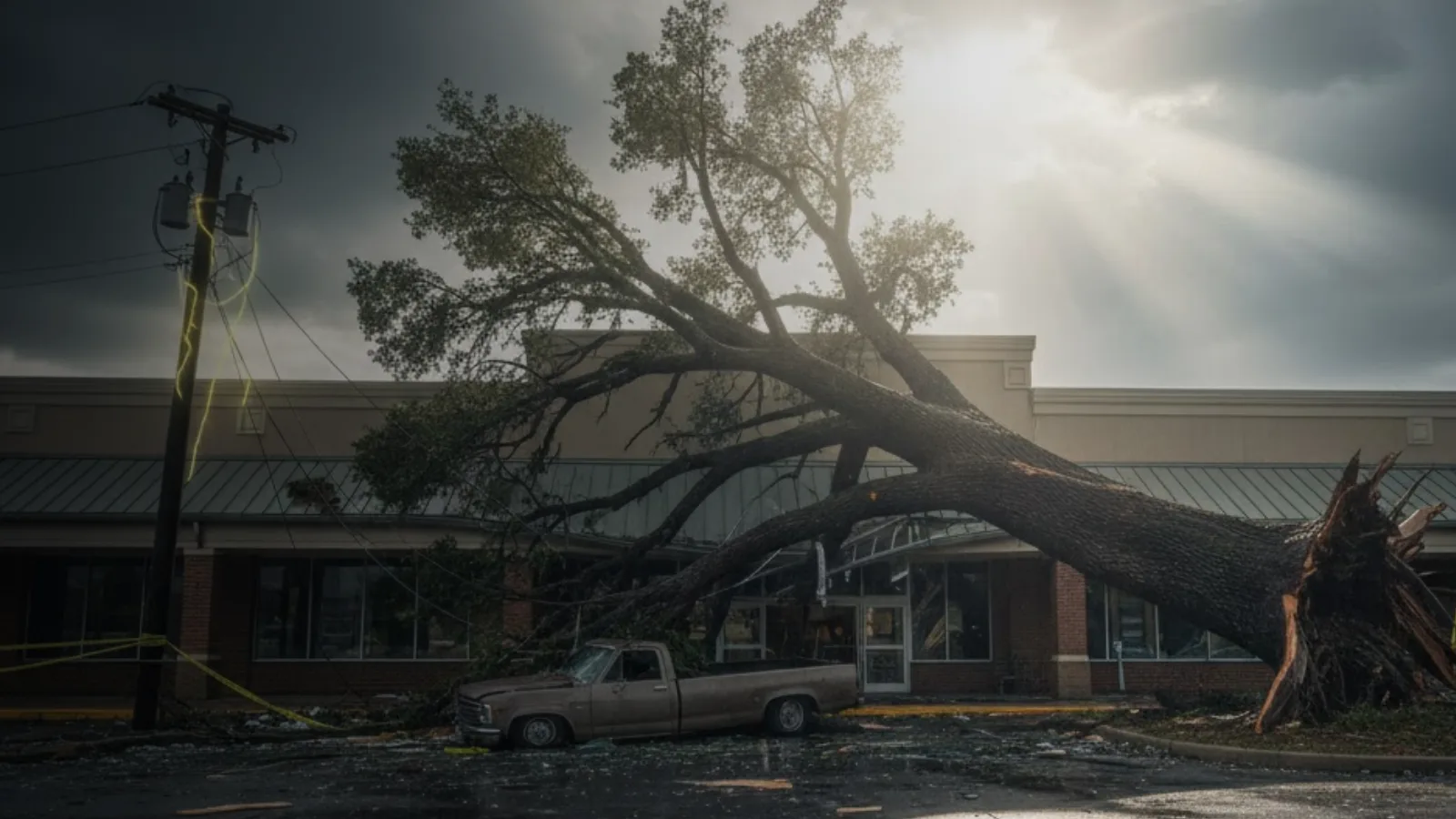
Is Your Property Storm-Ready? Understanding Tree Liability in Ireland
Tree liability in Ireland is not a straightforward area of law, but the core principle is clear. If a tree on your property falls and causes damage or injury, and you knew or should have known the tree was a risk, you can be held liable.
The key phrase there is “knew or should have known.” You don’t have to have been warned specifically about a tree to be held responsible. A court can find that a reasonable property owner would have identified the risk through proper inspection. Ignorance is not a defence.
This matters most for business owners, commercial landlords, and anyone managing a property with significant tree coverage. A hotel in Clare with mature trees along its driveway, a retail park in Limerick with oaks along its perimeter, a business park in Galway with trees near the car park. All of these carry exposure. The question is what Irish law actually requires of you, and where the line between reasonable and negligent sits.
Tree Liability and the Occupiers’ Liability Act 1995 in Ireland
There is no single piece of Irish legislation that covers tree liability specifically. It falls under general occupier’s liability law, primarily the Occupiers’ Liability Act 1995.
Under this Act, you owe a duty of care to visitors on your property. That duty extends to keeping the property reasonably safe, which includes managing trees that pose a foreseeable risk. If a visitor is injured by a falling branch or tree that you should have identified as dangerous, you are exposed to a civil claim.
The standard applied by Irish courts is that of a “reasonable person” in your position. A business owner with a large commercial property is expected to take reasonable steps to assess and manage tree risk. That typically means periodic professional inspection, documentation, and action on identified hazards.
Not sure when your commercial site was last surveyed? Request a professional tree risk assessment with no obligation to proceed.
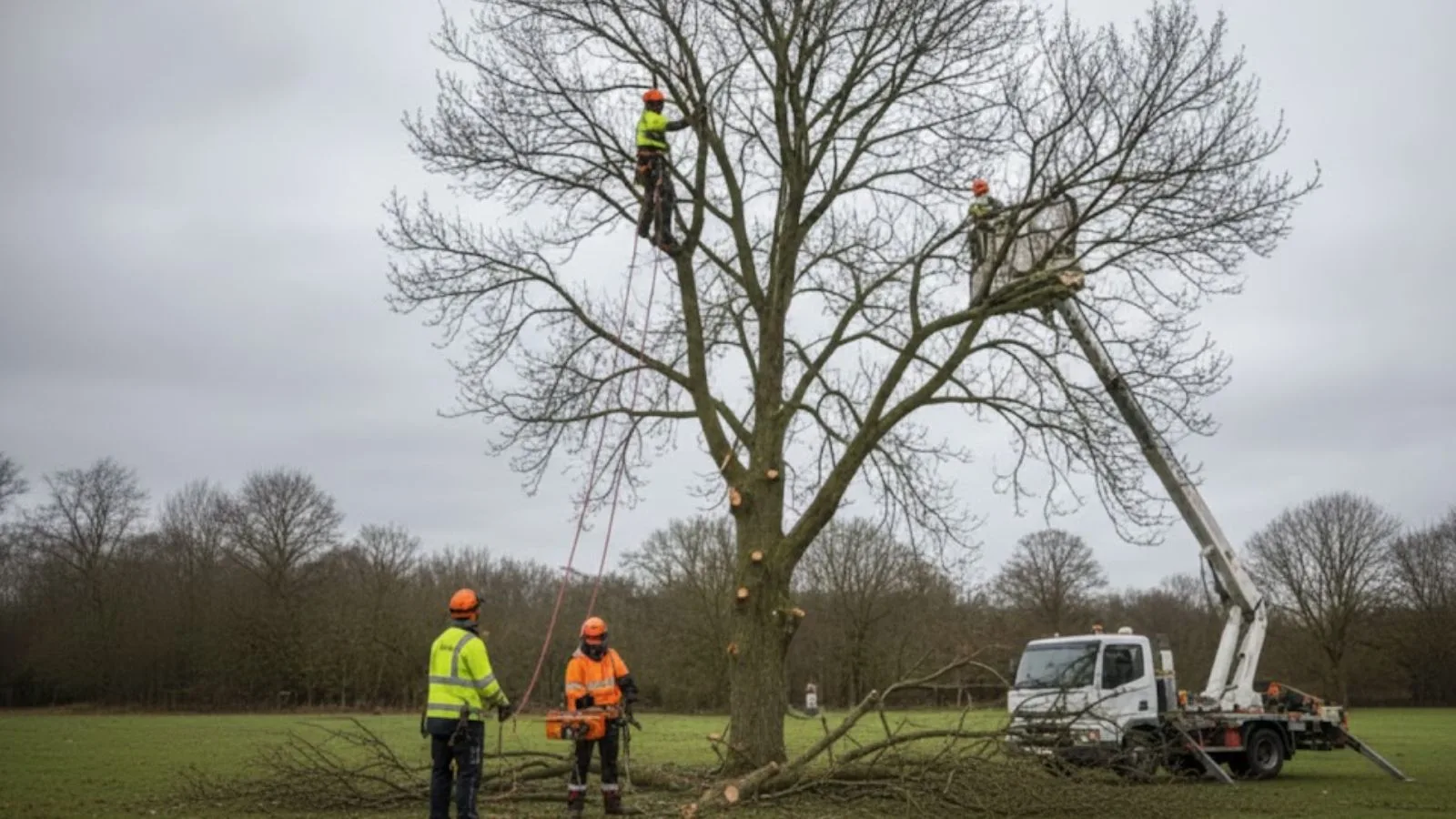
When Is a Business Owner Liable for Tree Damage?
Liability usually hinges on one of three situations.
The first is where you had prior notice of a problem. A tree surgeon, a council inspector, or an employee told you a tree was dangerous and you did nothing. That’s the clearest route to liability.
The second is where a professional inspection would have identified the risk. Even without a specific warning, if a qualified arborist would have spotted the hazard during a standard survey, a court may find you should have commissioned that survey.
The third is where the tree was obviously in poor condition. A tree that was visibly dead, heavily leaning, or decayed at the base presents an obvious risk. Property owners are expected to notice these things. What catches most property owners off guard is what happens when a storm is involved.
Storm Damage: What Happens After a Tree Falls?
If a tree on your property falls during a storm and damages a neighbouring property or vehicle, the storm itself does not automatically absolve you of responsibility. This surprises a lot of business owners.
Irish courts have found that where a property owner was aware of a tree’s poor condition, they remain liable for storm damage even when the weather was severe. The storm is considered a foreseeable event, not an unforeseeable act of nature that removes liability.
The situation is different if you had no notice of a defect and a structurally sound tree came down in an exceptionally severe storm. In that scenario, you have a much stronger defence. But you need evidence to support it, including inspection records.
Knowing the right frequency is one thing. Knowing what to do right now is another.
Why a Commercial Tree Risk Assessment Is Your Best Legal Protection
A professional commercial tree risk assessment is your single most important protection against liability. It documents the condition of every tree on your property, identifies hazards, and gives you a written record that demonstrates you met your duty of care It documents the condition of every tree on your property, identifies any that are hazardous, and recommends action.
If you commission a survey, act on the recommendations, and keep records, you demonstrate that you took reasonable steps. If a tree then fails in a storm, you have evidence that you met your duty of care. Without a survey, you have nothing.
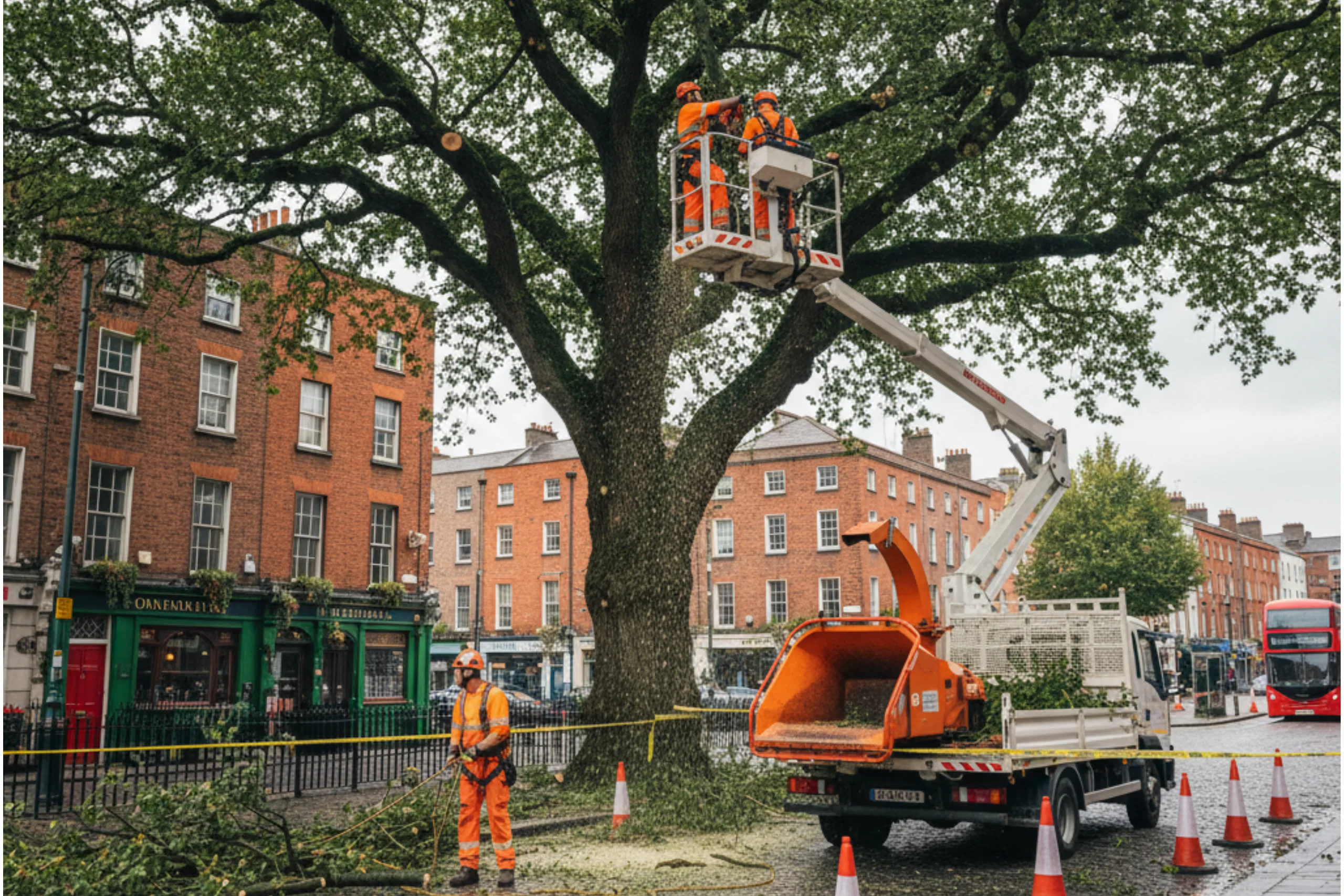
Elm Landscaping and Tree Surgery carry out professional tree surveys and risk assessments for commercial clients across Clare, Limerick, Galway, and Tipperary. Their arborists hold RQF Level 5 qualifications or higher, which is the professional standard recognised by the arboriculture industry in Ireland.
Frequently Asked Questions
Are property owners liable for trees falling in a storm in Ireland?
Not automatically, but not automatically exempt either. If the tree was structurally sound and failed in an exceptional storm with no prior warning signs, you have a strong defence. If it showed signs of disease or decay that a reasonable inspection would have identified, the storm does not remove your liability. The key protection is evidence – a professional survey carried out before the event, with documented action taken on any recommendations.
What is the Occupiers’ Liability Act 1995 and how does it apply to trees?
The Occupiers’ Liability Act 1995 requires property owners to take reasonable steps to keep their premises safe for visitors. Trees fall under this duty. If a tree on your property fails and causes injury or damage, and a court finds that a reasonable owner would have identified the risk through proper inspection, you can be held liable. Commercial properties with high footfall carry greater exposure because more people are present.
How often should commercial properties have their trees inspected in Ireland?
There is no fixed legal requirement, but industry guidance recommends every three years for standard commercial premises, every two years for high-footfall sites like retail parks and hotels, and annually for sites with mature trees. Post-storm inspections are recommended after every significant weather event, as storms can cause structural damage that is not visible externally.
Does commercial property insurance cover tree damage in Ireland?
Most policies cover sudden storm damage. However, if an insurer can show you were aware of a tree’s poor condition and failed to act, they may contest the claim. A professional survey with documented follow-up action protects both your liability position and your insurance position. Check the specific exclusions in your policy with your broker.
What should I do if a tree on my commercial property looks dangerous?
Commission a professional assessment immediately. In the interim, restrict access to the area beneath the tree and document that decision. If the risk is obvious and immediate, do not wait. Restricting access while arranging an inspection demonstrates you took reasonable steps to manage a known risk, which matters for both liability and insurance.
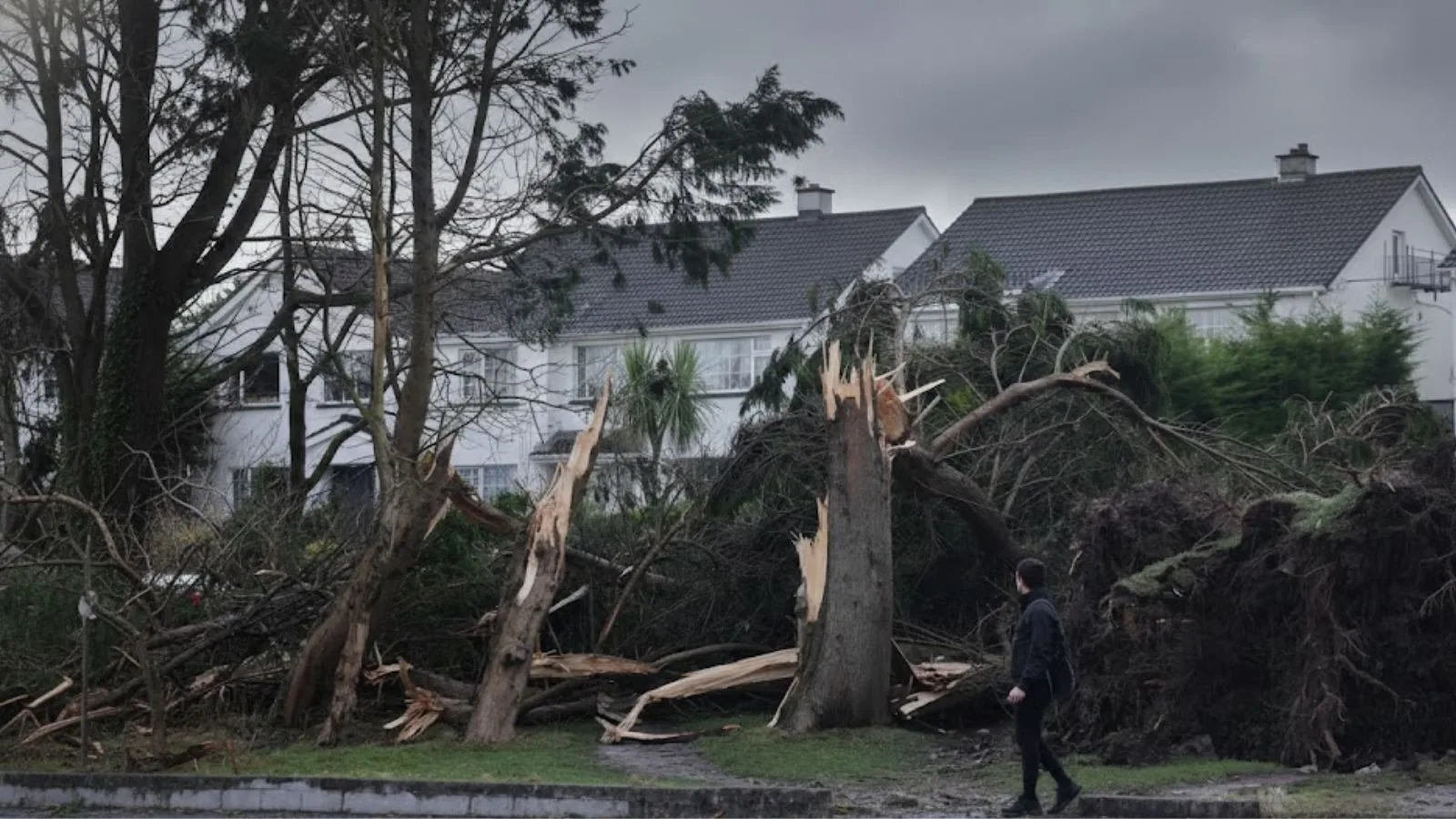
How Often Should Commercial Properties Survey Their Trees?
There is no fixed legal requirement specifying a survey interval. Industry guidance from arborist bodies typically recommends the following.
| Property Type | Recommended Survey Frequency |
|---|---|
| Low-risk sites with young trees | Every 5 years |
| Standard commercial premises | Every 3 years |
| High-footfall sites (retail, hotels) | Every 2 years |
| Sites with mature or veteran trees | Annually |
| Post-storm inspection | After every significant storm event |
High-footfall sites like retail parks, hotels, and business campuses carry higher liability exposure simply because more people are on the property. A Dunnes Stores car park in Ennis or a hotel driveway in Kilaloe needs more regular attention than a low-footfall industrial unit.
Post-storm inspections are just as important as routine surveys. A storm can damage a tree structurally without knocking it down. A tree that looks fine after a storm may have root damage, basal cracking, or crown failure developing that makes it a serious hazard in the following months.
How to Protect Your Business Before the Next Storm Season
Storm season in Ireland runs broadly from October through March. That gives you a window now to get on top of any tree issues before the next serious weather event arrives.
Here’s a practical checklist for commercial property owners.
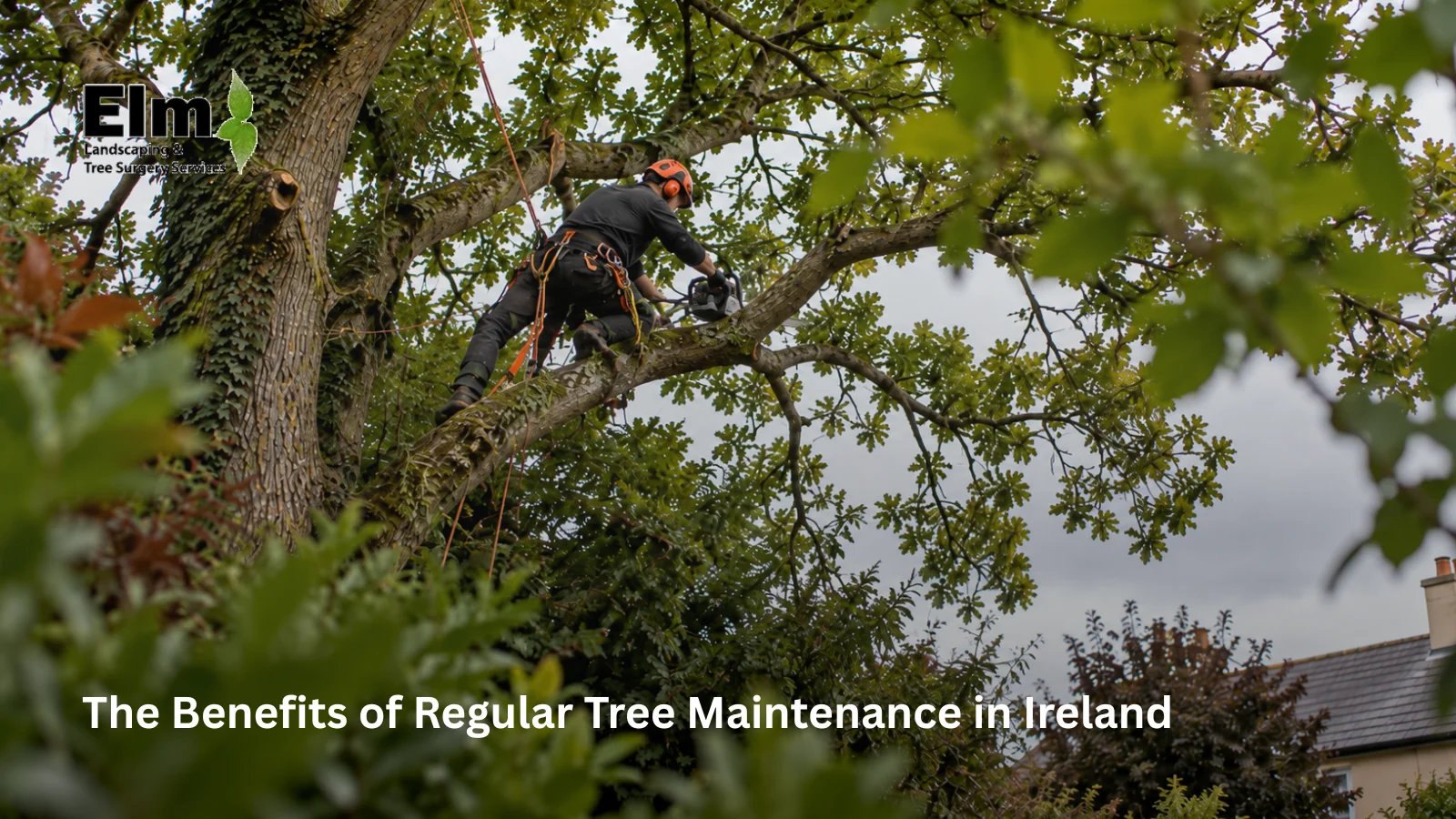
Walk your site and make notes on any trees that are visibly dead, leaning abnormally, have major dead branches, show signs of fungal growth at the base, or are in close proximity to buildings, car parks, or walkways. These are your priority risk areas.
Commission a professional tree survey if you haven’t had one in the last two to three years. Make sure you get a written report with recommendations, not just a verbal walkthrough.
Act on the recommendations. If a tree surgeon recommends crown reduction, removal, or cabling, arrange that work before storm season. Documented action is your defence.
Review your insurance policy. Check whether your public liability cover includes tree-related incidents and what documentation your insurer requires in the event of a claim.
Keep all records. Survey reports, correspondence with tree surgeons, invoices for completed work, and site inspection notes should all be stored and accessible.
What Does Tree Surgery Work Cost for Commercial Properties?
Getting the work done is the part that most business owners put off. Here’s a realistic picture of 2026 costs in the Munster and Connacht market.
| Service | Typical Cost Range |
|---|---|
| Professional tree survey (full site) | €300 to €1,000+ depending on site size |
| Crown reduction (per tree) | €250 to €600 |
| Tree removal (small to medium) | €300 to €800 |
| Tree removal (large or dangerous) | €800 to €3,000+ |
| Stump grinding (per stump) | €100 to €300 |
| Emergency storm callout | €500 to €2,000+ |
| Ongoing maintenance contract | €1,500 to €5,000 per year |
Emergency callout after storm damage is consistently the most expensive way to manage trees. A planned removal carried out before a storm costs a fraction of an emergency response, and it eliminates the liability exposure entirely.
Elm Landscaping works with major commercial clients including IDA Ireland, Regeneron, Aramark, and NUI Galway. They offer commercial maintenance contracts that cover regular inspection, reactive work, and documentation. For a business owner managing a large site, a contract arrangement is usually more cost-effective than ad hoc callouts.
Trees on Boundary Lines: A Common Source of Disputes
Boundary trees cause a specific set of problems for commercial property owners. If a tree sits on or near a boundary between your property and a neighbouring one, ownership and responsibility can be contested.
In Irish law, a tree belongs to whoever owns the land on which the trunk stands. If the trunk straddles the boundary, ownership is shared. That means liability is also potentially shared, and disputes between neighbours or adjacent commercial landowners over tree responsibility are not uncommon.
If you have boundary trees and you’re unsure of the ownership position, get it clarified before there’s a problem. A tree survey from a qualified arborist that documents the exact position of the trunk, the spread of the canopy, and any identified hazards creates a clear record that protects you in a dispute.
Get a Professional Tree Survey Before the Next Storm Season
Storm Éowyn was a reminder that storm damage and personal liability are not abstract risks for commercial property owners in Ireland. They are real, they are foreseeable, and Irish courts treat them accordingly.
A professional tree survey is the one document that puts you on the right side of that. It demonstrates you identified the risks, took qualified advice, and acted on it. Without one, you have no defence if a tree on your property causes damage or injury during a storm.
Elm Landscaping carries out commercial tree surveys and risk assessments across Clare, Limerick, Galway, and Tipperary. Our arborists hold RQF Level 5 qualifications and above, which is the standard recognised by the arboriculture industry and expected by commercial insurers. You receive a written report documenting the condition of every tree on your site and clear recommendations on any action required.
If a storm is forecast next week and you have mature trees near your car park, your building, or a public boundary, the time to act is before it arrives, not after.