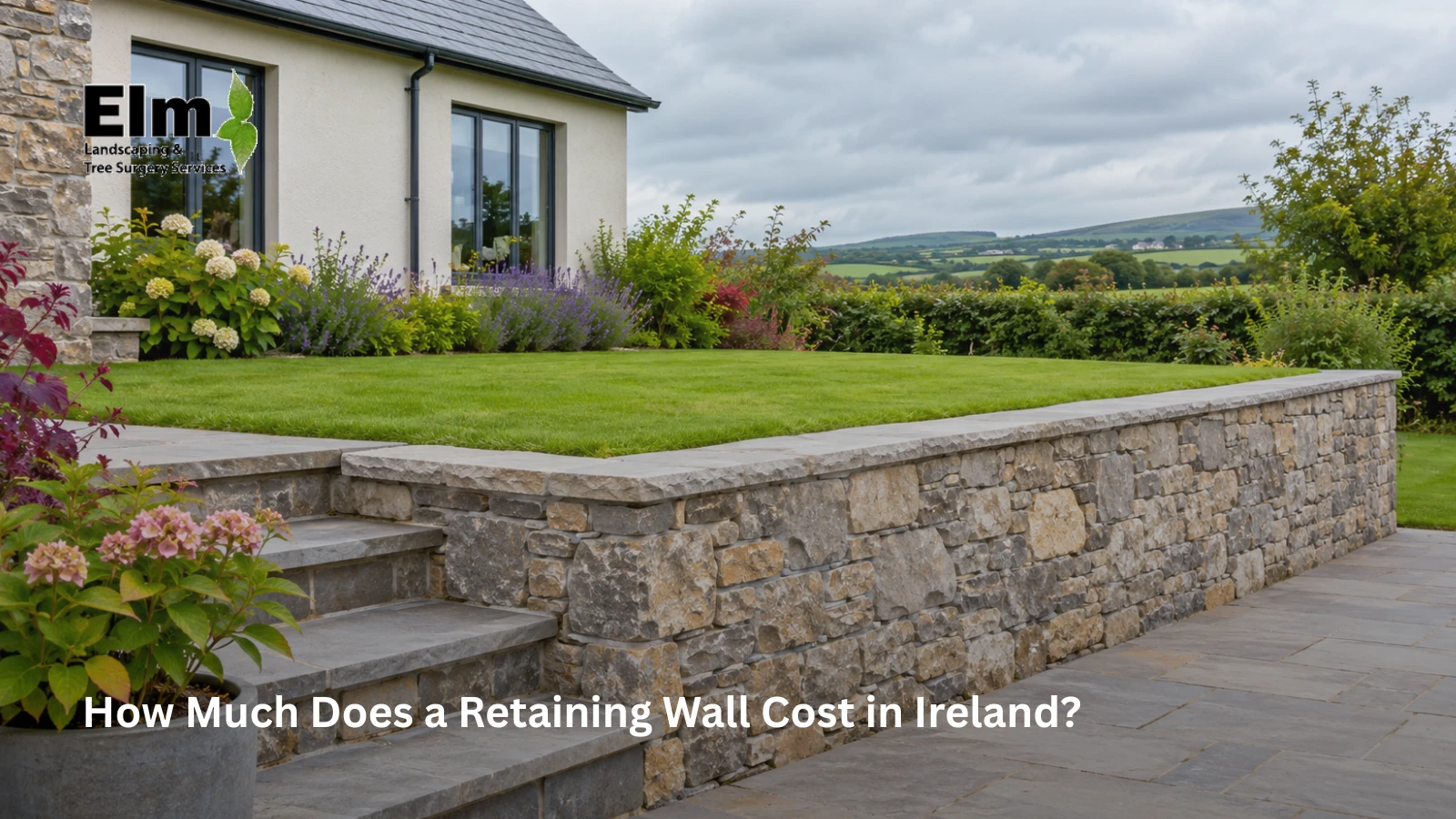
Retaining wall cost in Ireland typically runs from about €150 to €450 per square metre of exposed face, which puts a 6 metre wall at 1.2 metres high (7.2 square metres) at roughly €1,100 to €3,200.
But those numbers alone won’t help you budget. Published Irish figures for the same wall sit several times apart. Some are per square metre of face, some are per linear metre with no height attached, and the lowest can leave out the drainage and excavation.
That is how a cheap quote turns expensive.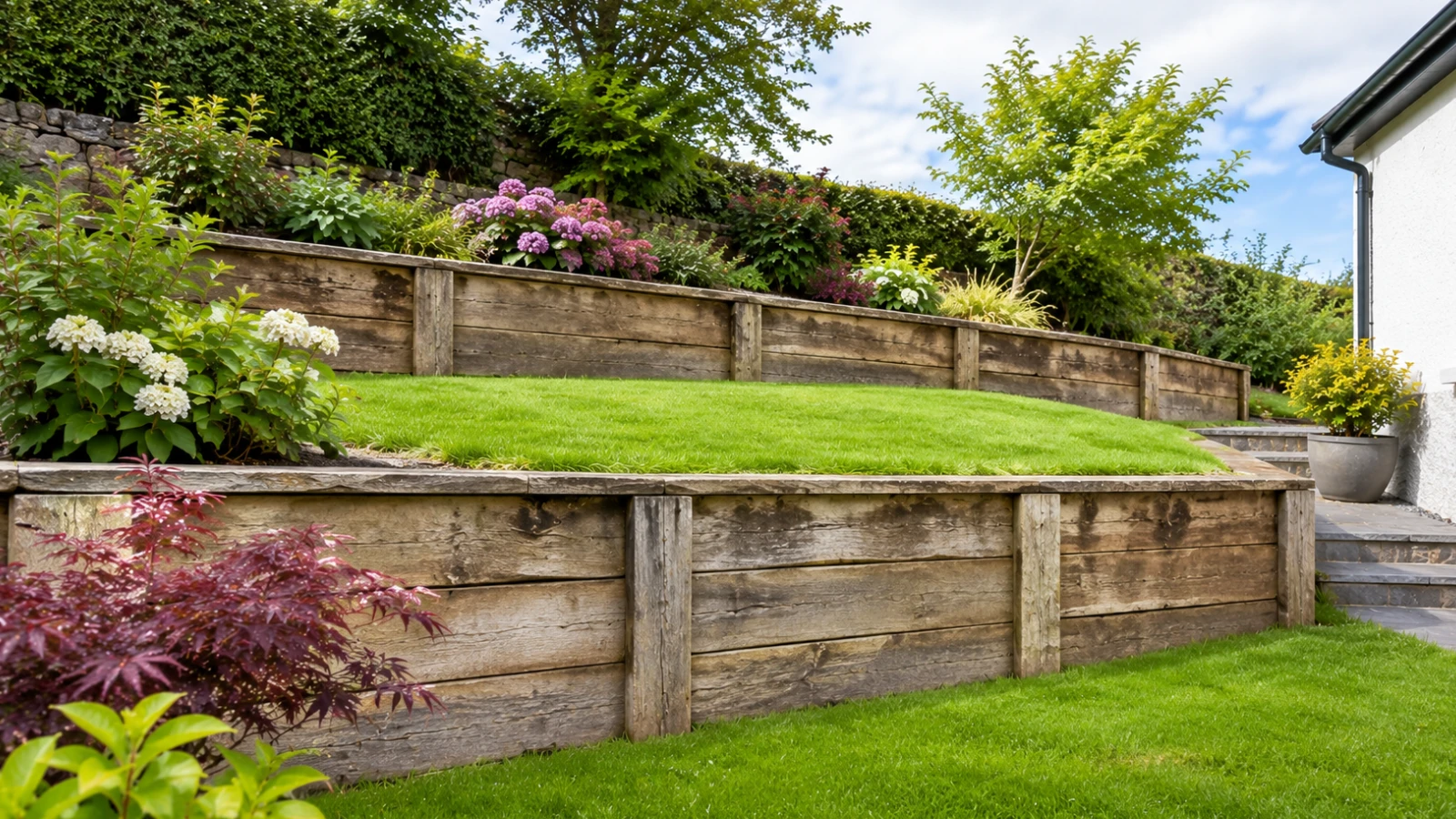
What Affects the Cost of a Retaining Wall in Ireland?
A retaining wall holds soil back on one side. It is the structure behind a terraced lawn, a raised patio or a driveway cut into a slope, and it carries a load that a boundary wall never does.
That’s why retaining walls generally cost more than a boundary wall of the same length: a plain block boundary wall runs about €50 to €80 per square metre, against €150 or more for a retaining wall.
Five things set the final price: the size of the exposed face, the material, the foundation behind it, how easily machinery can reach the site, and the finish on top. Costs vary greatly depending on how those five combine, so what you should expect to pay cannot be read off a fixed price per metre.
Without a site visit, that figure is a guess. At Elm Landscaping, established in 2008, retaining wall installation sits within our stonework and brickwork service.
Size comes first, because it multiplies everything else.
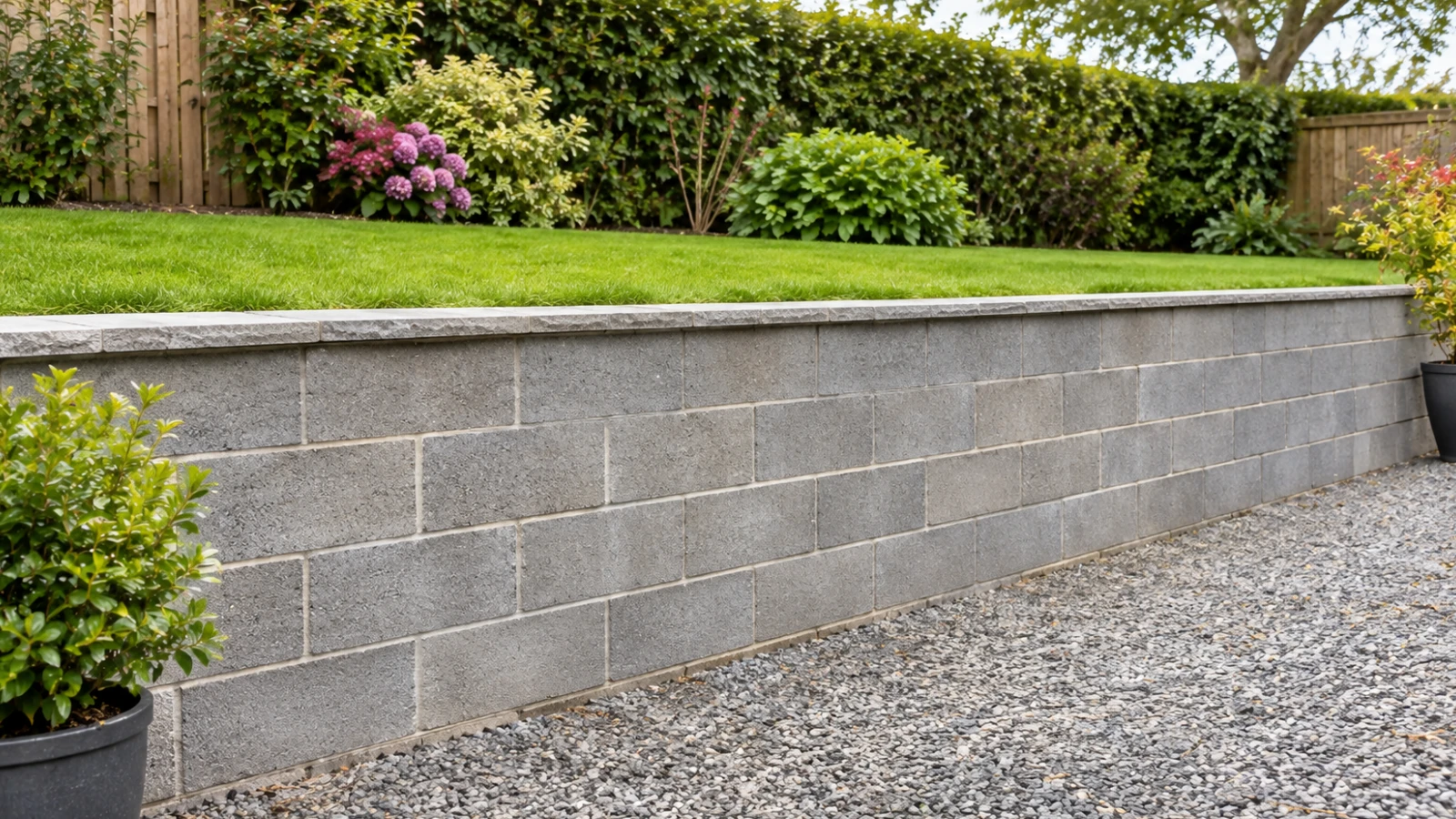
Retaining Wall Cost Per m² and Per Metre
Retaining wall cost is priced either per square metre of exposed face or per linear metre.
When costing a wall, contractors measure that face as the length multiplied by the height above ground, in square metres.
A wall 6 metres long and 1.2 metres high (about 4 feet tall) has 7.2 square metres of face. The same 6 metres at 2.4m high has 14.4 square metres, double the face area.
At €150 to €450 per square metre, the 1.2 metre wall comes to roughly €1,100 to €3,200 for a block or small concrete wall on level ground with machine access. Treat it as a starting figure and confirm whether a quote also covers engineering design, removal of an existing wall, spoil disposal and capping.
A quote written as a price per sqm normally means per square metre of exposed face, but check, because some guides use the footprint instead.
A retaining wall cost per metre in Ireland is only meaningful when the height is stated beside it. At 1 metre high the two units give the same number, while at 2 metres the price per linear metre is double the price per square metre.
Without the height, the same number could describe a knee-high planter wall or a head-high structure.
Guides written for the US use the square foot, and a square footage figure from another country’s labour market tells you little about a garden in Clare or Galway.
One square metre is roughly 10.8 square feet, so convert before comparing.
Face area also drives material quantity. The number of blocks per square metre depends on the block size, so ask your supplier for the figure on your chosen block.
Many online figures also come from Dublin projects, and labour and access conditions can differ on a rural site in Clare or Limerick.
Once you know the area, the material decides what each square metre costs.
Retaining Wall Cost by Material
Retaining walls are made from five common materials, with timber sleepers generally at the low end of upfront cost, structural concrete and precast systems at the high end, and block, stone and gabion in between.
Each trades upfront cost against lifespan and appearance. Local Irish suppliers matter here, because the materials available locally affect both price and finish.
Indicative Irish garden retaining wall cost ranges, 2026
| Wall type | Typical Irish range |
| Block garden retaining wall | €150 to €250 per m² of face |
| Small residential concrete retaining wall | €250 to €450 per m² of face |
| Structural concrete or precast retaining wall | €500 to €850 per m² of face and above |
| Natural stone retaining wall, up to 600mm high | €150 to €250 per linear metre |
| Natural stone retaining wall, 600mm to 1m high | €200 to €350 per linear metre |
| Natural stone retaining wall, 1m to 1.5m high | €300 to €500 per linear metre |
| Timber sleeper or gabion wall | Priced on site |
These are indicative ranges for Irish residential walls from published market guides, and they vary by source. The guides behind them don’t all say what they include, so ask any quote to show labour, materials, foundations, drainage and excavation separately.
The final figure depends on the site.
Concrete Blocks and Block Wall Construction
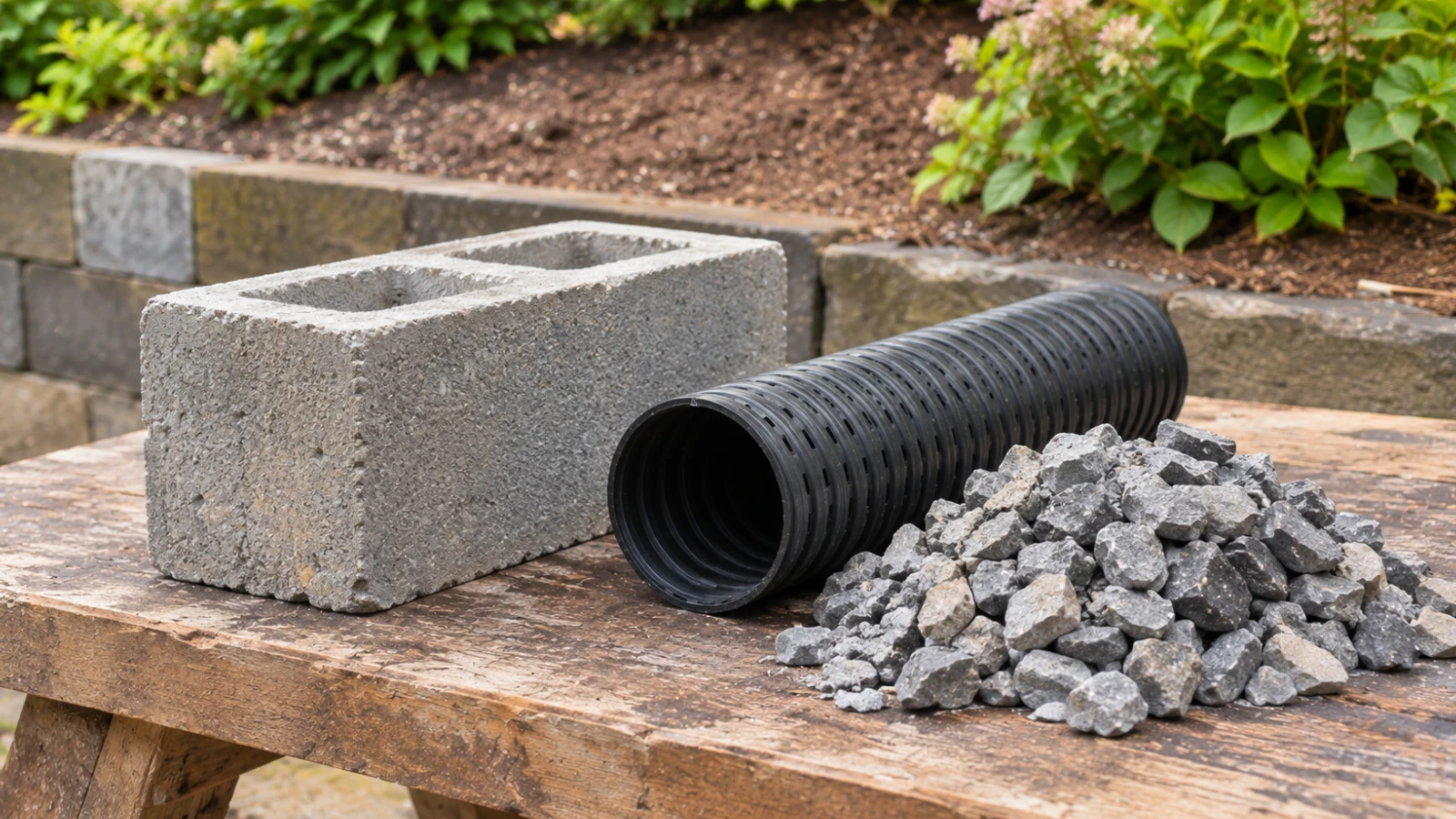
A block wall is the standard residential build. Concrete blocks go onto a concrete footing, bonded with cement mortar, reinforced where the height, ground conditions and loading call for it, sometimes to an engineer’s design, and finished in render, stone facing or a coloured capping.
The block is the cheap part of block wall construction. Footing, reinforcement, finish and colour choice explain most of the gap between one quote and another.
Precast Concrete Panels and Systems
Precast moves cost from site labour into the product: panels are cast off site and delivered ready to place.
A precast panel system can suit a tight garden, where a slimmer, space-saving profile leaves more usable ground. Panels are heavy, though, and may need lifting equipment, so restricted access can rule them out.
Concrete retaining wall cost rises when walls are poured in place, because they need shuttering and standard concrete cured on site, which adds labour that precast avoids. A durable finish is the selling point.
Natural Stone and Stone Walls
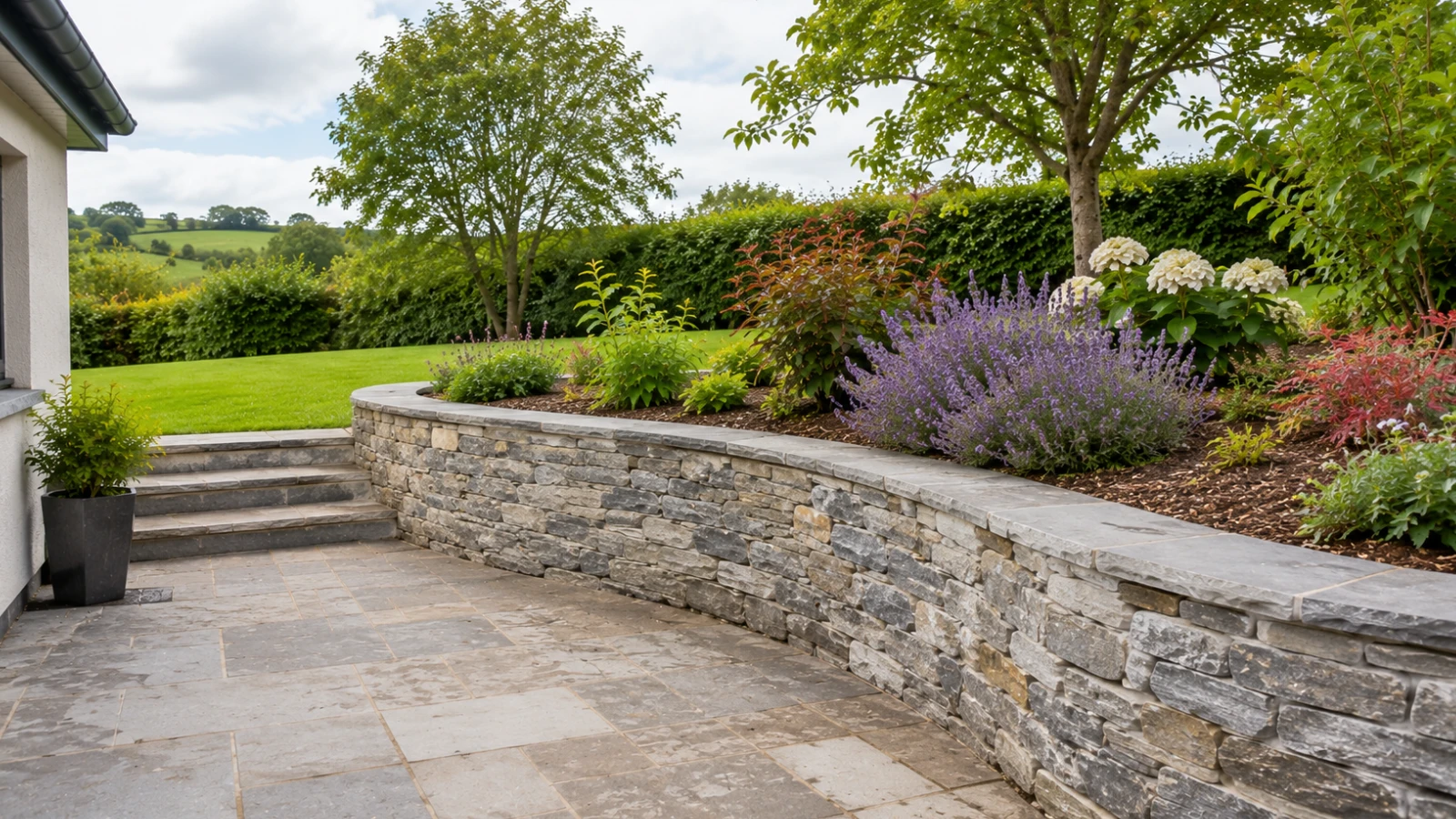
Each piece of natural stone is placed by hand, which makes it the slowest wall to build and the most aesthetically distinctive.
A rustic dry-stone face and a mortared granite face are different jobs with different labour. Stone is heavy, so the base matters as much as the face. Stone retaining wall cost is quoted per linear metre by height, so convert it with the face area method above before comparing.
Timber Sleepers and Wood Retaining Walls
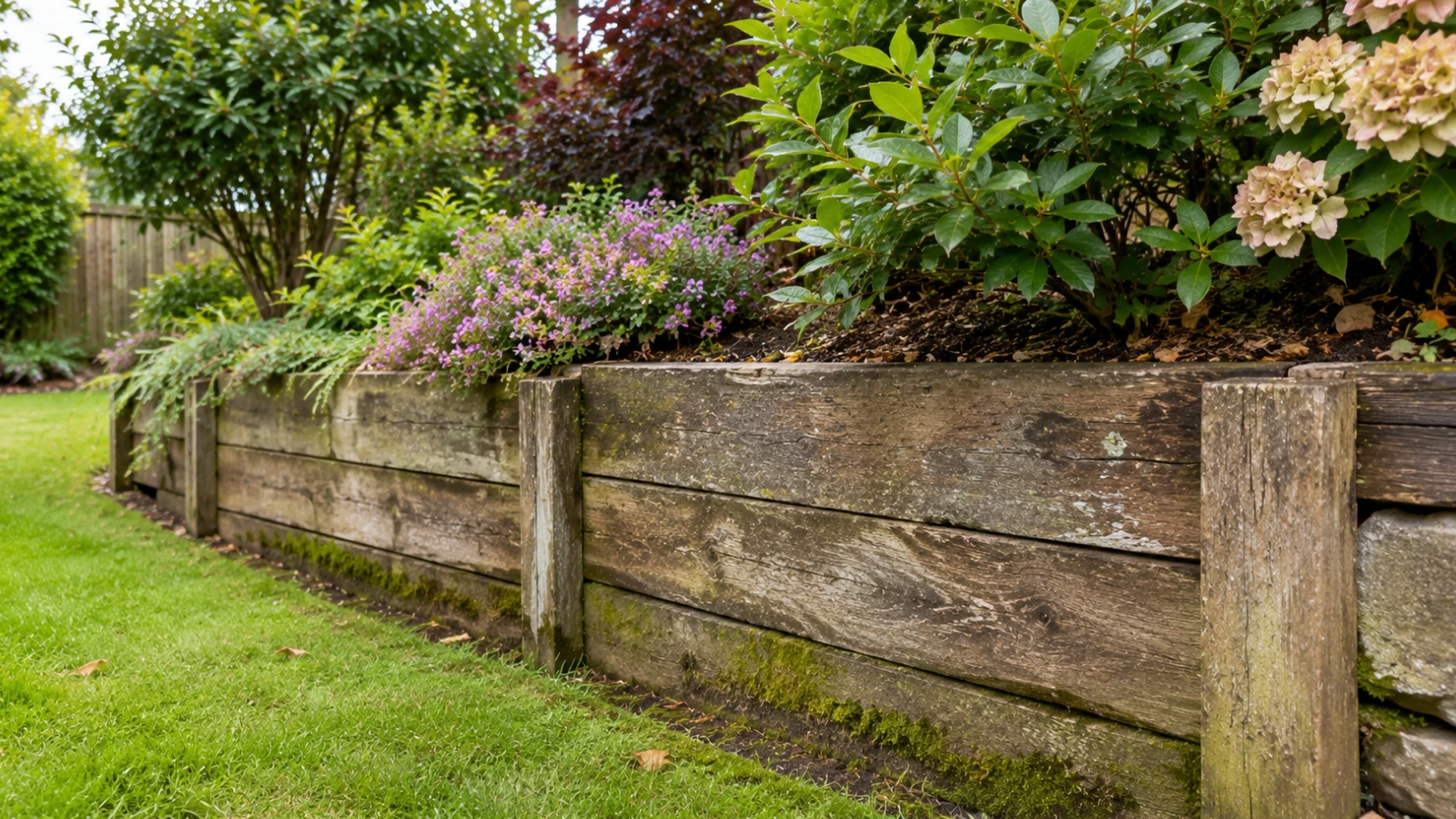
Sleeper walls and other wood retaining walls suit low walls, planter edges and softer planting borders. They need free-draining stone behind them, because trapped water is what shortens their life.
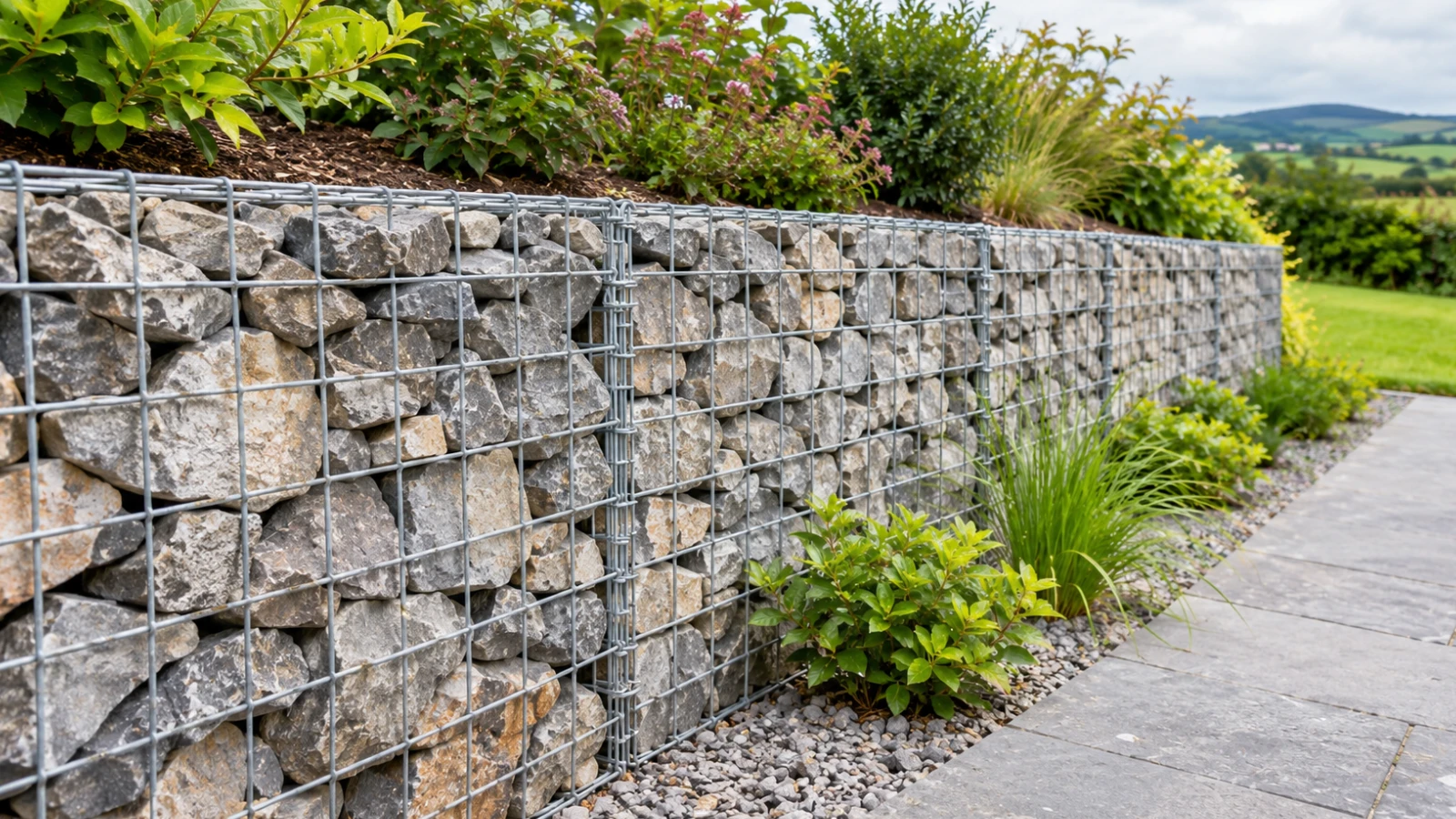
Gabion Baskets
Fill a wire cage with stone and you have a gabion, typically in galvanised or powder coated steel. Water passes through them, so they suit slopes where water movement is a concern, and the fill stone is a large share of the cost.
Gabions still need a suitable base and drainage behind them. They give a modern, industrial look that not every garden wants.
Material sets the baseline cost.
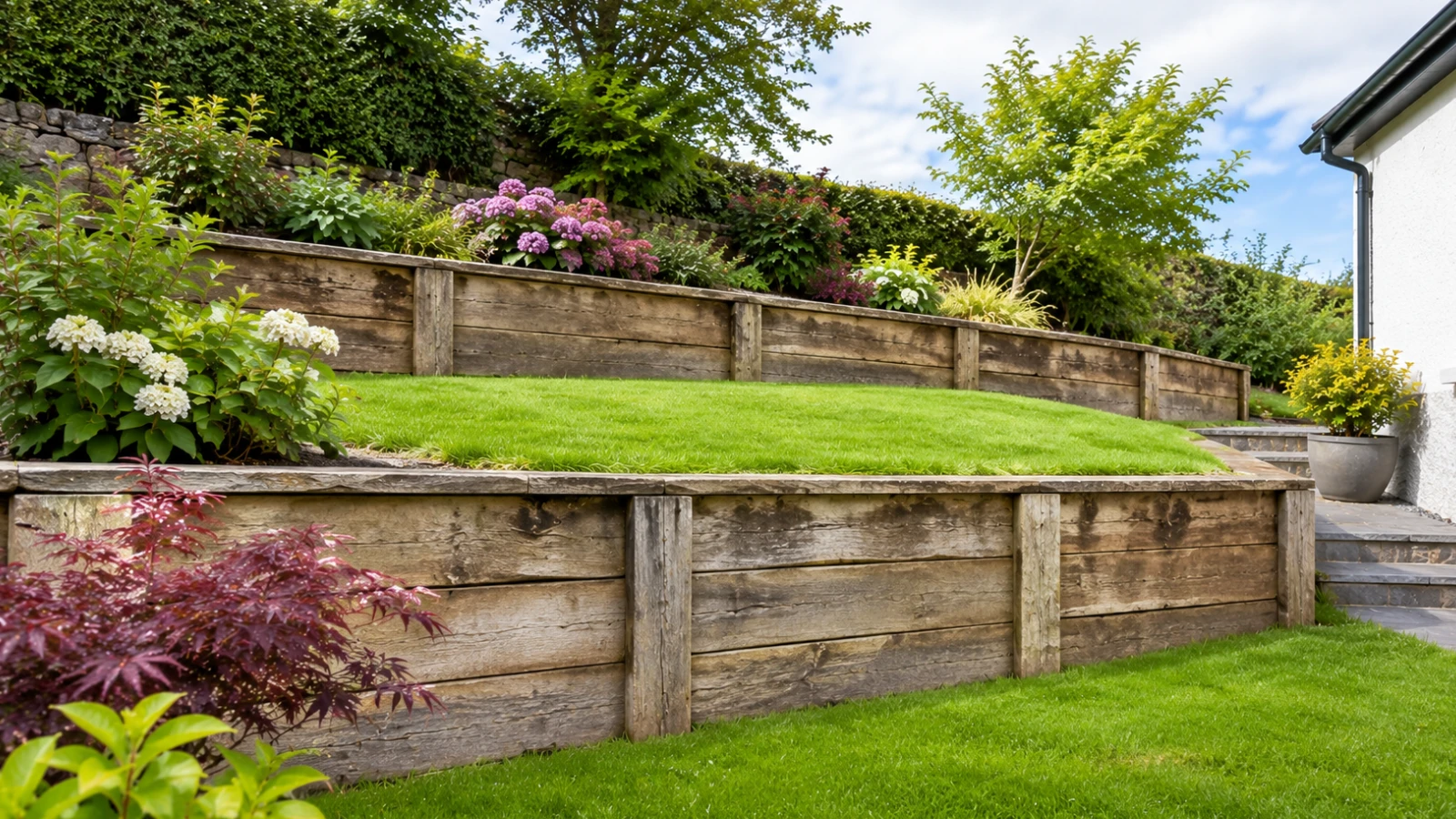
How Wall Height Affects Retaining Wall Cost
Height is the fastest way to raise retaining wall cost, because each extra bit of wall height widens the footing and brings in reinforcement, and the load on the wall climbs with it.
That is why a price per square metre is not constant: a taller wall costs more per square metre than a low one.
A wall that retains a planting bed is a landscaping job. A wall that holds back a slope, a driveway or a path is a structure.
On complex sites, a landscape architect or engineer may set the specification, which adds a fee but costs less than rebuilding a wall that has moved.
Before pricing a tall wall, ask whether you need one. Two lower walls with a terrace between them, or a planted slope with a short wall at the foot, can reach the same level change with less structure.
A terrace is also useful ground: level enough for a patio and simple to pave. If the wall sits beside a sloping driveway, the surface above and below it is a separate budget line.
Our new driveway cost guide covers it, and driveways and kerbing is the service that builds it.
Retaining Wall Foundations and Drainage
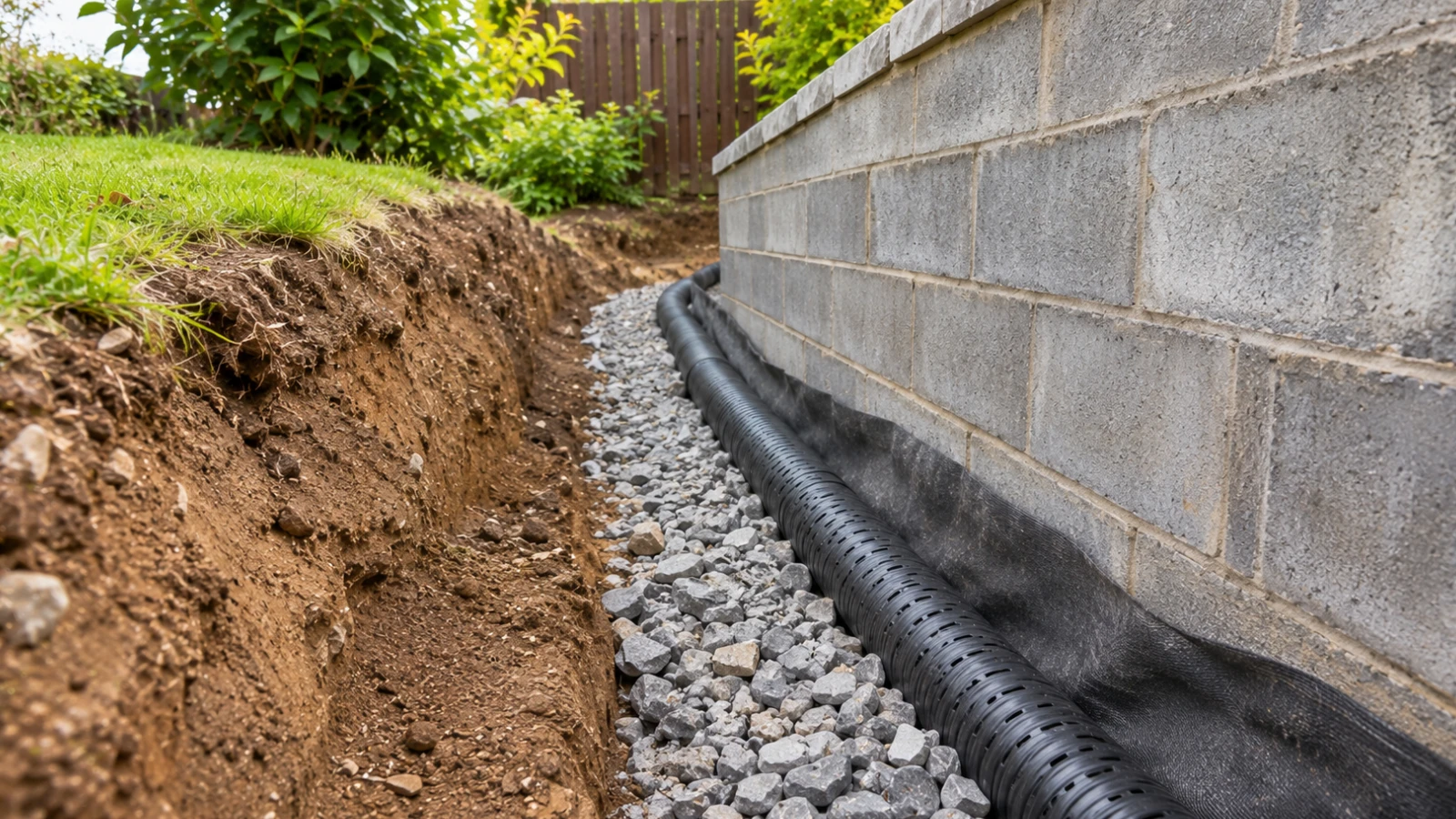
Foundations and drainage are the hidden part of retaining wall cost. Under and behind the wall are the compacted base and footing, free-draining backfill, and a drainage system that carries water away through a perforated pipe to an outlet.
This groundwork stops water pressure building up behind the wall, a common cause of failure, and helps prevent soil erosion around the base.
Rainfall in Ireland is trending upwards, which makes this a bigger issue. Met Éireann’s 1991 to 2020 climate averages show annual rainfall about 7% higher than in 1961 to 1990, with the largest increases in the west and north.
Heavy rainfall on a wall with poor drainage turns a sound-looking structure into a wall that slowly leans, bulges or cracks.
A cheap quote that skips the pipe and the stone backfill hasn’t saved you money. It’s moved the cost to a future rebuild.
Site Access and Excavation Costs for Retaining Walls
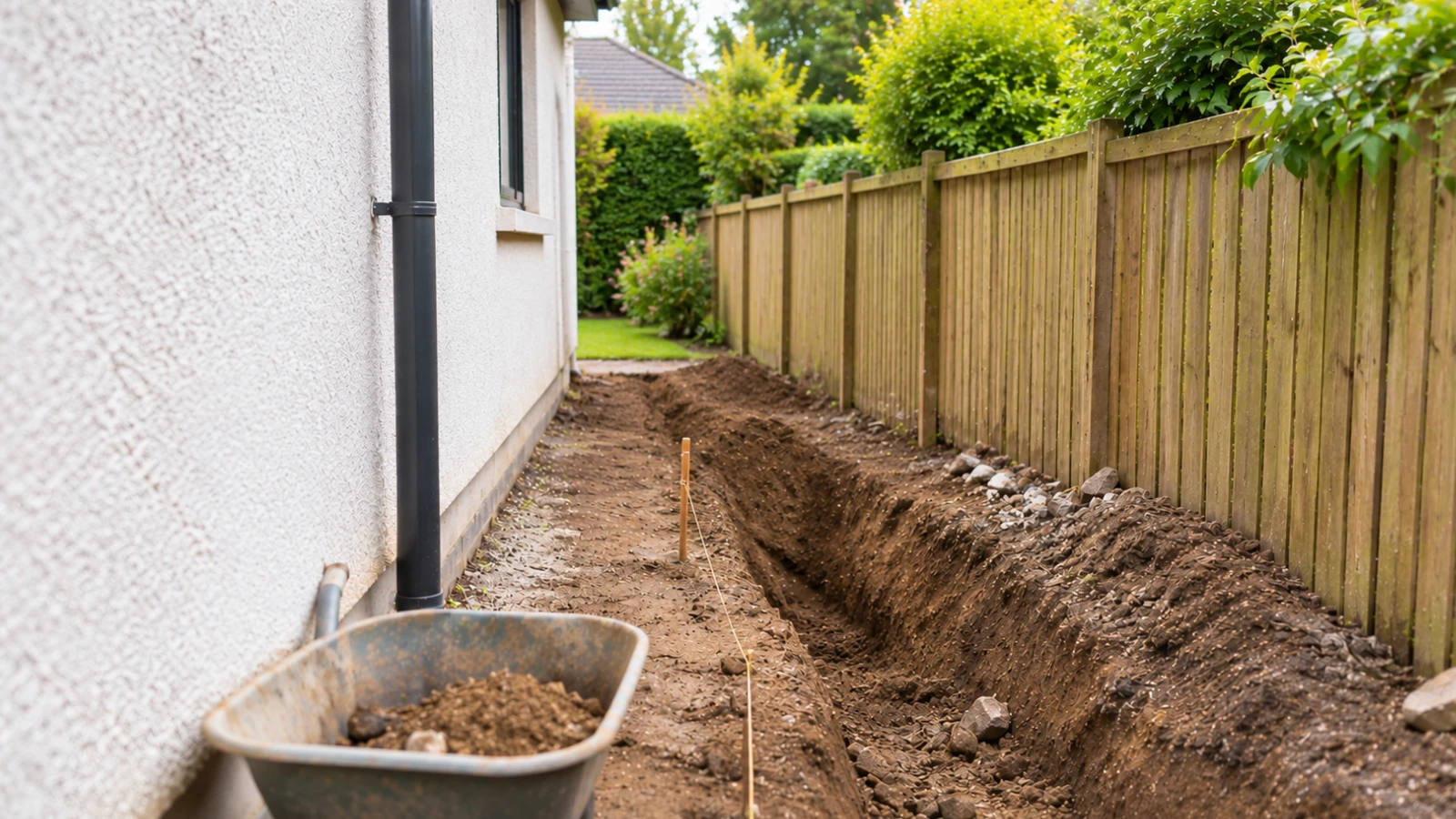
Every hour a mini-digger cannot work becomes an hour of hand labour, which is how restricted access and heavy excavation raise retaining wall cost.
Where machinery can reach the wall line, excavation is quick. Where the only route is a narrow side gate or through the house, blocks, stone and soil are moved by hand.
Elm’s machinery needs a minimum access width of 5 feet (about 1.5 metres) for landscaping projects, which is worth measuring at your gate or side passage before a quote is discussed.
Cutting into a slope also produces spoil, the excavated soil, which has to be reused on site or taken away. Removing an old wall, a stump or surplus soil adds disposal on top, a groundworks and site clearance job in its own right.
A landscaper who has seen the access in person can price these items. One working from a postcode can’t.
How Long Do Retaining Walls Last by Material?
Timber sleepers are generally the cheapest wall upfront and the shortest-lived, particularly in wet ground.
Block, precast and natural stone cost more at the start and last far longer when the build is right. Lifespan is the line most price guides leave out, and it changes which wall is cheaper: a wall that costs less now but needs a rebuild sooner can cost more per year of use.
Weighing the overall cost across the years you plan to stay in the house is a fairer test than comparing day-one quotes.
What a Proper Retaining Wall Quote Should Include
A low timber or block planter wall around a flower bed is the realistic limit for DIY, and even that is worth a professional’s check against the load and any path, fence or building nearby. Beyond that, the groundwork decisions justify a retaining wall contractor.
If you are getting a retaining wall priced, a proper quote should take into account each of the items below, written down:
| Quote item | What it should state |
| Wall size | The length, and the height at the tallest point |
| Material and finish | The material and its specification, including capping, piers, colour and edge finish |
| Footing and base | Footing depth, base preparation and any reinforcement |
| Water management | The drainage layer, pipe, backfill and outlet |
| Excavation and access | Excavation, spoil removal and the access assumed |
| Ground conditions | What happens to the price if the ground proves worse than expected |
A lump sum with none of this behind it doesn’t show which items were priced at all.
Put two quotes side by side, line by line, and the gap between them usually explains itself: one includes the drainage and the other does not. A good installer itemises all of this without being asked.
Retaining Wall Services in Clare, Limerick and Galway
Elm Landscaping builds retaining walls as part of its landscaping services across Clare, Limerick, Galway and Tipperary, and prices start with a site visit, because the ground sets the number.
We have worked this way since 2008, and we are ISO certified in health and safety, quality and the environment, with in-house machinery, so excavation isn’t waiting on hired equipment.
A retaining wall quotation can be requested by phone on 065 686 6773, and a 1-hour consultation covers the slope, the access, the water movement, foundations and levels for anyone who wants a realistic view of what their budget can achieve before any groundwork starts.
A retaining wall is the one part of a garden you want to forget about. Priced properly, it stays forgotten.