The hedge cutting cost for most Irish homeowners falls somewhere between €60 and €130 for a standard job. That figure comes from hourly rates of €35 to €70, the going rate for most reputable, insured landscapers across Clare, Limerick and Galway. What most guides do not tell you is how quietly that number can double before anyone has lifted a blade.
Hedge Cutting Prices in Ireland: 2026 Breakdown
For residential garden hedges in Clare, Limerick and Galway, expect rates in the following ranges:
| Hedge size and type | Estimated time | Typical cost (incl. disposal) |
|---|---|---|
| Small garden hedge, up to 1m tall, 10m length | 30 to 60 minutes | €35 to €70 |
| Standard boundary hedge, 1.5 to 2m tall, 20 to 30m length | 1 to 2 hours | €60 to €130 |
| Tall hedge over 2m, 20 to 30m length | 2 to 4 hours | €100 to €220 |
| Large overgrown hedge or clearance work | Half to full day | €200 to €400+ |
Prices correct as of 2026. Figures are indicative for Clare, Limerick and Galway.
These figures are for a single professional gardener or landscaper with the correct equipment. Clipping disposal is usually included, but confirm this before work begins. If you have a large volume of cuttings and no composting area, removal adds time and therefore cost.
Most professionals also apply a minimum call-out charge of €50 to €80, even for a small job. This covers travel and setup time. If you are in a rural part of Clare or east Galway, factor in that a contractor travelling from a town will often price this into the visit.
How Much Do Gardeners Charge Per Hour in Ireland?
Hourly rates for hedge cutting and garden hedges in Ireland currently run from €30 to €70 per hour depending on the type of work and equipment required.
At the lower end, €30 per hour typically applies to straightforward residential hedge trimming with standard handheld equipment. At €50 to €70 per hour, you are usually looking at a more experienced landscaping company with proper machinery, full insurance, and clipping disposal included.
Specialist work involving tall hedges that require a platform, or large hedgerow cutting with tractor-mounted flail equipment, moves into a different pricing bracket entirely.Flail cutting on a tractor runs from €40 to €60 per hour plus VAT for agricultural work, based on current contractor rates across Munster and Connacht.
That is a different market from residential garden work, aimed primarily at the farmer and landowner rather than the homeowner.
Hedge cutting rates in Clare and Limerick sit broadly in line with the national average. You are unlikely to find reputable, insured work significantly below €35 per hour in the current market. Anyone quoting substantially less is worth questioning on what is and is not included.
Is €200 Too Much to Pay for Hedge Cutting in Ireland?
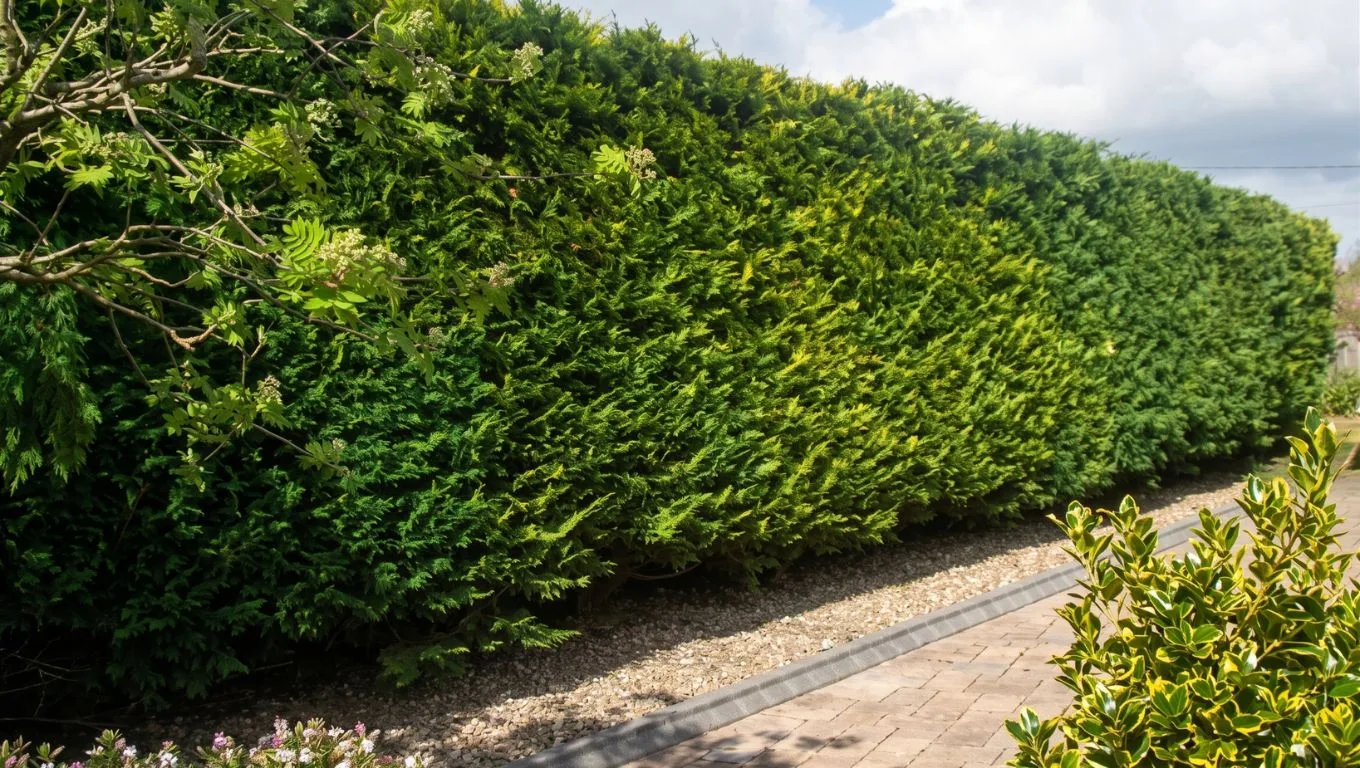
Not necessarily. Whether €200 is fair depends entirely on what the job involves.
For a standard semi-detached garden hedge at 1.5 metres tall and well maintained, €200 would be high. That job should take under two hours and sit closer to €80 to €120 all in.
But for an overgrown hedge that has not been cut in three or four years, or a taller boundary hedge running along multiple sides of a property, €200 is a completely reasonable figure.
Larger hedges require more passes, heavier cutting, greater cleanup, and sometimes specialist equipment to reach height safely. If overhanging branches extend over a fence line or toward a neighbour’s property, the work takes longer and requires more care.
To make this concrete: a well-maintained 20-metre laurel hedge at 1.8 metres tall, cut and cleared in two hours by a single gardener, should come in around €90. A 25-metre leylandii left uncut for three years is a different job entirely. Saw work to reduce the bulk, chipping the cuttings, and a second visit to finish the shape can push that to €250 or more across two visits. Same question on the phone. Very different job on the ground.
A good rule of thumb: if the quote sounds high, ask for a breakdown. A professional will explain exactly what is driving the cost.
Why Is Hedge Trimming So Expensive?
You look at a tidy hedge and think: how hard can it be? The answer is that what you see takes about an hour. What you do not see is the insurance, the equipment maintenance, the fuel, the disposal run, and the years of skill that stop your hedge looking worse after the cut than before it.
Labour is the largest single cost. An experienced landscaper in Ireland is running a business, not just a pair of hands. They carry public liability insurance, maintain and replace equipment, pay for fuel, and spend time travelling between jobs. At €45 per hour, a two-hour hedge job returns around €90 gross before any of those costs are deducted.
The equipment cost is also higher than most people expect. A professional-grade hedge cutter costs significantly more than the DIY version from a hardware store, and maintaining blades sharp enough to produce a clean cut rather than a ragged one adds ongoing expense.
For taller hedges, a track machine, excavator arm, or elevated platform may be required for safe access. Disposal adds more again. A large mature hedge produces a substantial volume of cuttings, and chipping, bagging, and removing that material takes time. Mulching back into the ground reduces this, but is not always practical in formal garden settings.
Skill level affects the outcome. A poorly cut hedge does not just look bad in the short term. Incorrect cutting angle encourages uneven regrowth, waterlogging of the cut surface, and long-term thinning of the hedge. A professional cut by someone who understands plant growth protects the hedge’s health for years.
Seen enough? If you already know what your hedge involves and want a straight quote, get in touch with the Elm Landscaping team. We cover Clare, Limerick and Galway and offer free on-site assessments.
Which Type of Hedge Costs the Most to Cut?
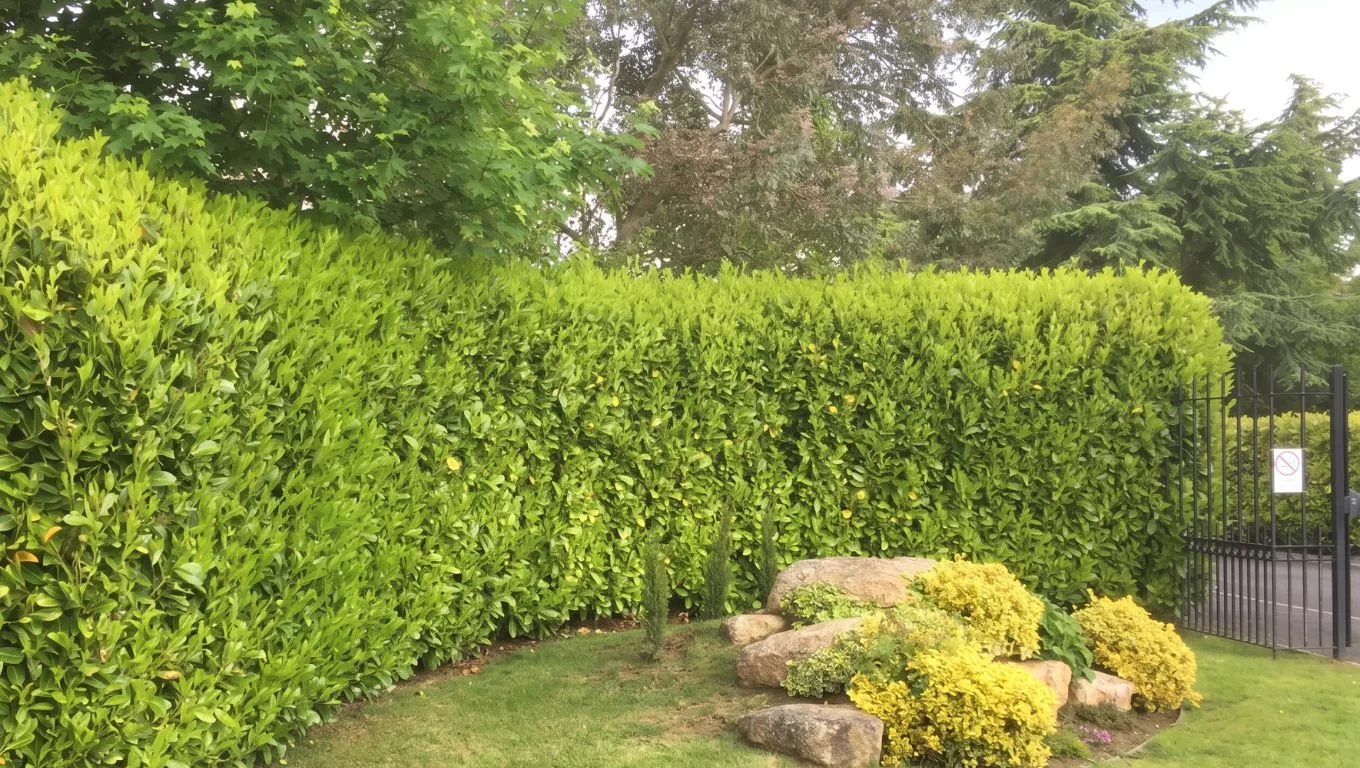
Leylandii is one of the most labour-intensive hedges to maintain. It grows fast, produces large volumes of cuttings, and requires cutting back to a hard line to prevent it from spreading. A leylandii hedge that has been left for two or three years may need heavier saw work to reduce it before it can be trimmed to shape.
Beech and hornbeam need more precision work to maintain their clean seasonal appearance, which adds time relative to their size.
Laurel is dense and produces large leaf cuttings that do not reduce in volume easily, making it harder on blades and heavier on disposal. Yew sits at the other end of the scale: slower-growing, more forgiving, and one of the few species where a single annual cut is genuinely sufficient without the hedge getting ahead of you.
Native Irish mixed hedges of the kind that run along field boundaries and older residential boundaries across Clare, Limerick and Galway typically include hawthorn, blackthorn, ash and elder. These are harder on blades, require care around wildlife and nesting habitat, and are often wider than formal garden hedges. If you have a native hedgerow boundary, expect the quote to reflect that complexity.
Why Does an Overgrown Hedge Cost More to Cut?
If your hedge has been left for several years, the first cut will almost always cost more than subsequent visits. As a working figure, expect to pay 1.5 to 2 times the cost of a normal maintenance visit on that first job.
Not a contractor being opportunistic. Just the reality of what the work involves.
An overgrown hedge has more volume to remove, harder stems, greater cleanup requirements, and sometimes structural issues that a maintained hedge does not. In some cases, removing too much in a single cut damages the plant, which means a responsible contractor will advise a staged approach across two visits over a growing season.
Before booking, check when the hedge was last cut, how much it has spread beyond its original line, and whether there are overhanging branches encroaching on paths, neighbouring land, or overhead lines. All of these add complexity and therefore cost.
The best approach with a neglected hedge is an honest site assessment. Any reputable landscaping company will visit, look at what is there, and give you a realistic picture of what the first season of restoration will involve, including a clear timeline and what it will cost to get the hedge back under control.
Hedge Cutting Dates in Ireland: What the Law Says
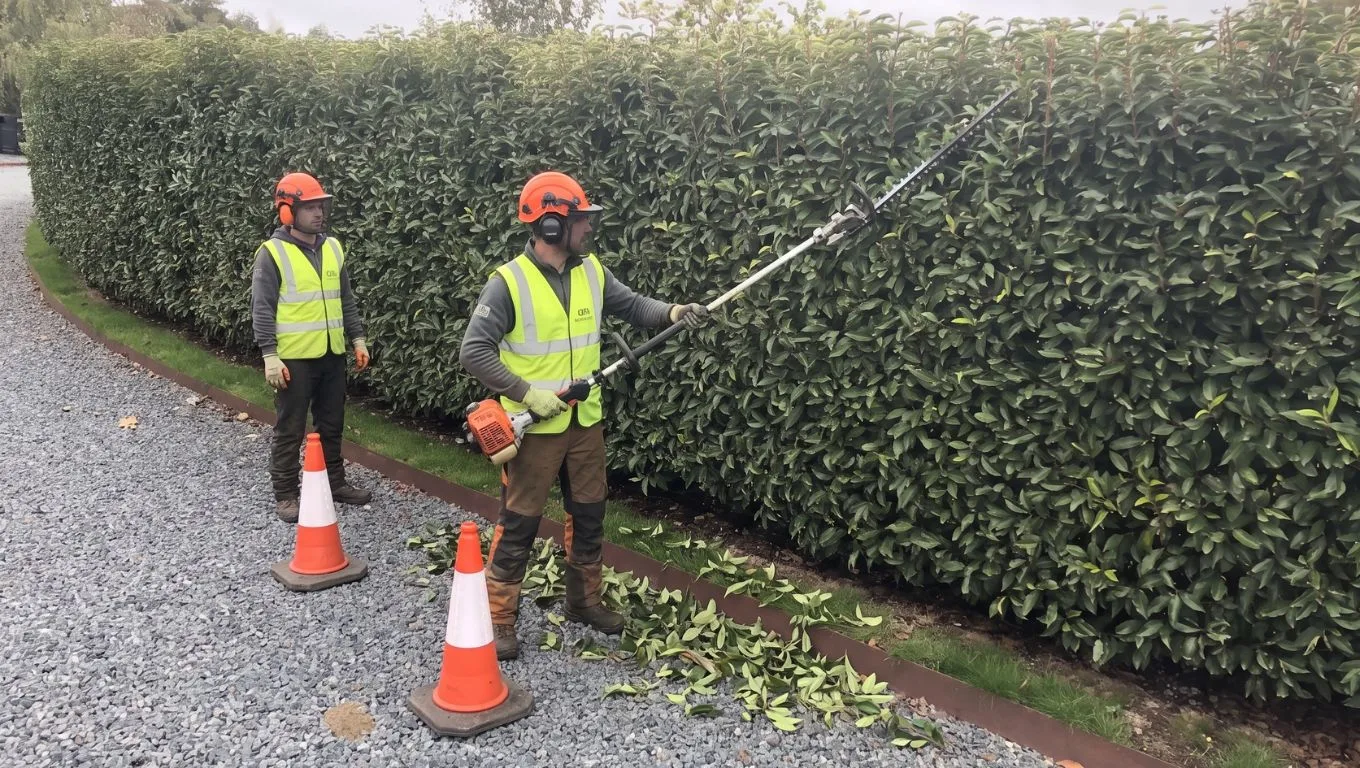
Under Ireland’s hedge cutting rules, routine trimming must take place between 1 September and the end of February. Cutting between 1 March and 31 August is illegal, with the restriction applying to all hedgerows across the country to protect nesting birds during the breeding season. There is a legal exemption for works essential to safety, but this does not cover standard garden maintenance.
If a contractor offers to cut your hedge in June or July for a regular trim, that is a legal issue worth flagging.
The two main cutting windows for Irish gardens are September to October and January to February. September is often the busiest period, so booking early in the season generally gives you more flexibility on scheduling. During peak weeks in September, lead times of two to four weeks are common for non-urgent residential jobs, so early contact is worth it.
How Often Should Hedges Be Cut in Ireland?
The right frequency depends on the type of hedge you have.
Once a year is sufficient for slow-growing species: yew, box, and most native hedgerow plants. Autumn after the nesting season ends is generally the best time.
Faster-growing hedges, particularly leylandii and beech, need two cuts a year to stay manageable. Cutting in early autumn and again in late winter keeps growth under control and maintains a clean line through the season. Formally clipped hedges in larger gardens, or hedges on commercial properties where presentation matters all year, may need three or more visits.
Cutting more frequently is almost always more cost-effective over time.
A hedge trimmed twice a year stays manageable, takes less time per visit, and costs less annually than one cut every two years that requires heavier work each time. If you would like to put a regular schedule in place, our garden maintenance service covers ongoing hedge trimming as part of a full programme.
Hedge Removal vs. Hedge Trimming: The Cost Difference
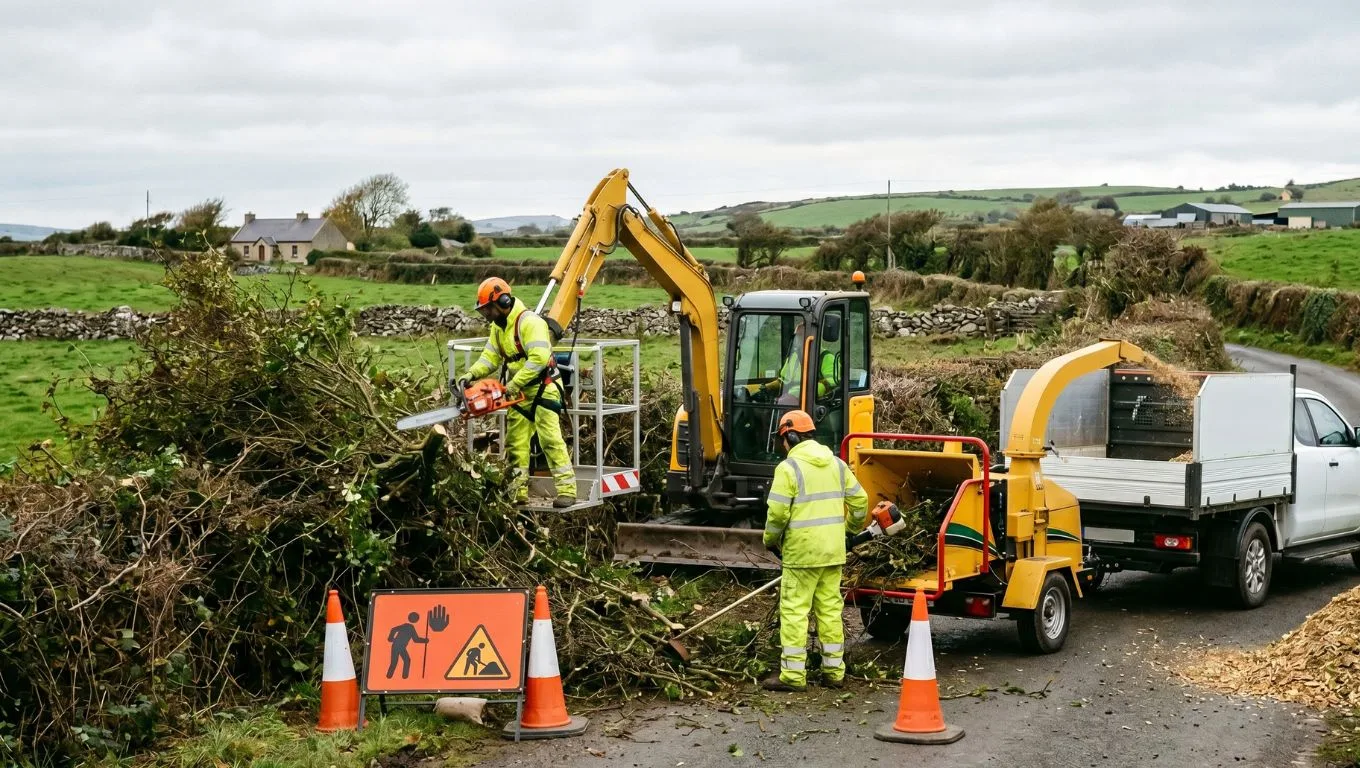
If you are not sure whether your hedge needs trimming or removing entirely, the cost difference between the two will help you decide.
Hedge removal means cutting the entire plant back to the base or ground level, and in most cases digging out the root system entirely. This requires significantly more labour, heavier equipment, and a plan for disposing of considerably more material.
The cost of removing a hedge typically starts at €200 and rises depending on length, plant type, and whether stump grinding is required after removal. A large established hedge running along a full garden boundary, with deep root systems, can run to €600 or more for a full removal and disposal job.
If you are unsure whether to trim or remove, a site visit from an experienced landscaper will give you a clear answer. In many cases, a hedge that looks beyond saving can be restored over one or two seasons at significantly less cost than a full removal and replanting.
Commercial Hedge Cutting: Costs and What to Expect
For apartment complexes, business parks, schools, and industrial sites, hedge cutting is usually quoted on a contract basis rather than by the hour.
Commercial maintenance contracts bring the cost per visit down in exchange for a committed programme of visits across the year.A landscaping company managing a commercial site will assess the total hedge length, species, access conditions, and required standard, then provide a fixed annual contract price covering all agreed visits.
The advantage for the client is cost certainty and grounds that look presentable every week of the year, without anyone having to chase a booking or manage a schedule. For larger commercial sites across Clare, Limerick and Galway, this is typically the most cost-effective approach.
Hedge Cutting in Clare, Limerick and Galway: Request a Quote
Before picking up the phone, it helps to know a few basics about your hedge:
| What to know before you call | Why it matters |
|---|---|
| Approximate height and length | Determines how long the job will take and whether specialist equipment is needed |
| When it was last cut | Sets expectations on first-cut pricing and whether a phased approach is needed |
| Whether you need clippings removed | Affects time and disposal cost, especially for large or dense hedges |
| Whether the hedge borders a neighbour’s property or a public boundary | Adds complexity around access, care, and overhanging branches |
With this information, a professional can give you a meaningful quote rather than a wide ballpark range. Be cautious of quotes given without a site visit for larger or more complex hedges. The difference in cost between a straightforward job and a complex one can be significant, and no responsible contractor will quote accurately without seeing the hedge first.
Elm Landscaping has been cutting and managing hedges across Clare, Limerick and Galway since 2008. That means we have seen everything this part of Ireland can throw at a hedge crew. We are ISO certified and members of the ISA (International Society of Arboriculture), which means the advice you get is backed by professional standards, not guesswork.
If you would like a straight answer on what your hedge will cost, get in touch to arrange a site assessment.