
Most patio pricing guides online quote a figure, surround it with vague disclaimers, and leave you none the wiser. This one won’t do that.
If you’re a homeowner in Clare, Limerick or Galway trying to work out what a new patio will actually cost you in 2026, you’ll find specific, honest answers here: what’s a realistic budget, where the money goes, and what separates a €5,000 job from a €20,000 one. Not ballpark ranges so wide they’re useless. Numbers grounded in what materials, labour and project complexity actually cost across the west and mid-west of Ireland right now.
What You’re Actually Paying For (Before We Talk Numbers)
Before quoting any figure, it’s worth understanding what drives patio pricing in Ireland. Two patios that look similar in photos can differ by €8,000 in cost, and without knowing why, you can’t evaluate a quote properly.
Four things determine price above everything else: the material you choose, the size of the area, the complexity of the groundwork required, and the level of finish you want. A level back garden with good drainage and clean access will cost noticeably less to pave than a sloped site with heavy vegetation, restricted access, or existing concrete that needs lifting.
This is why any company that quotes you a fixed price per square metre without seeing your site is either being optimistic or planning to revise the number later. A proper assessment considers the full scope, not just the flagstones you’ll stand on.
Patio Costs in Ireland in 2026: The Honest Breakdown
These figures reflect real project costs across Clare, Limerick and Galway in 2026. They include supply of materials, full labour, bed preparation, edging and pointing. They do not include optional extras covered further down.
Entry-level patio (standard concrete or budget natural stone, straightforward site): €3,500 to €6,500
This covers a modest to medium-sized patio (roughly 20 to 35 sq metres) on a relatively level site using a reliable but cost-effective material. Suitable for homeowners who want a clean, functional outdoor space without over-capitalising on the project.
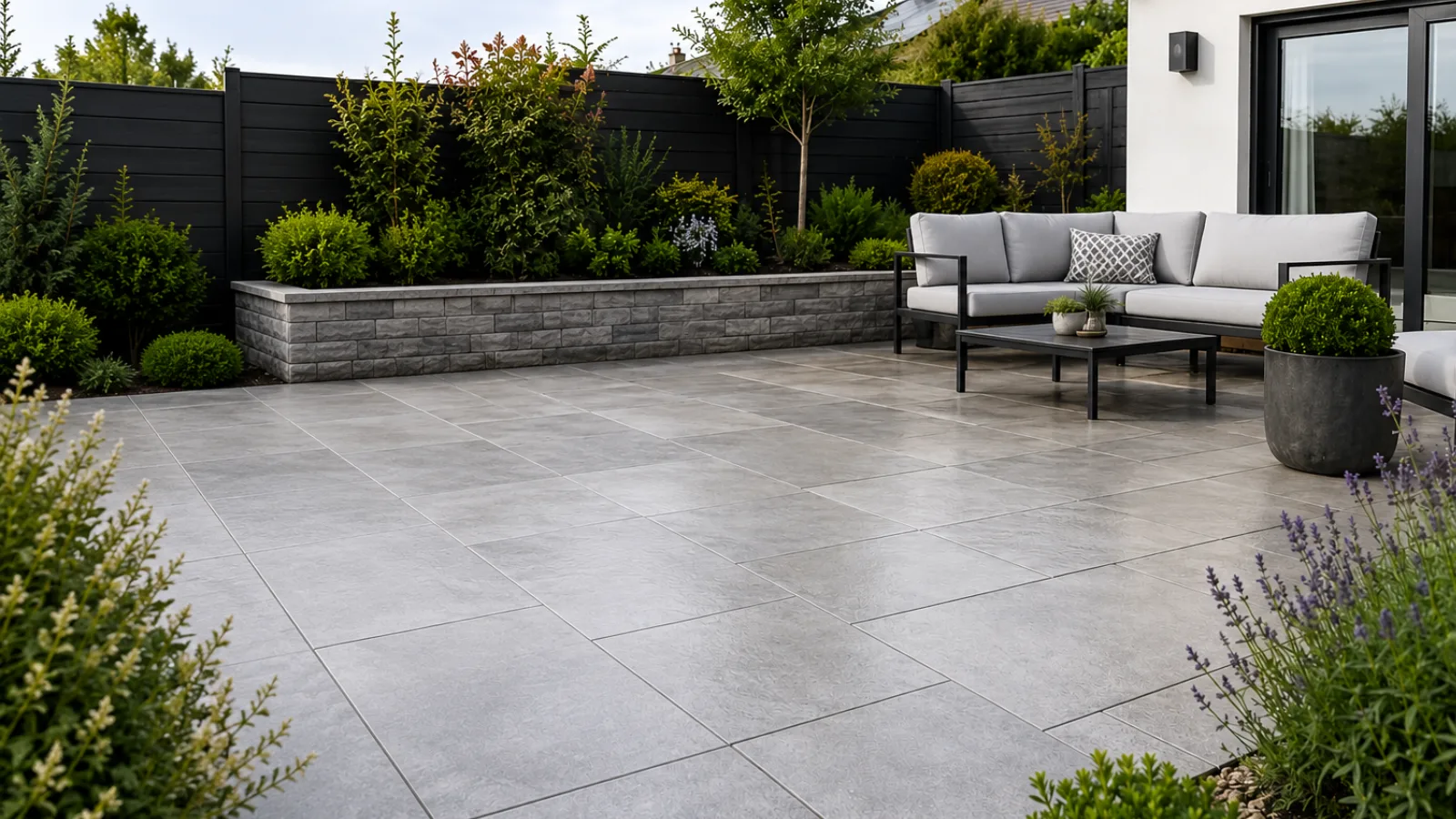
Mid-range patio (quality natural stone or porcelain, standard site): €7,000 to €14,000
Most residential projects in Clare, Limerick and Galway land in this range. Quality materials, professional groundwork, a neat finish with proper drainage considered. A 40 to 60 sq metre patio using Indian sandstone, limestone or a quality porcelain tile will typically sit here.
Premium patio (high-end natural stone, granite, large format porcelain, complex design or challenging site): €15,000 to €30,000+
At this level you’re looking at large outdoor entertaining spaces, premium materials such as granite or large-format porcelain, bespoke edge treatments, steps, raised sections, integrated planting beds or additional design elements. Projects with restricted access, significant levels to address, or extensive excavation will also land here regardless of material choice.
The Material Question: What’s the Difference in Practice?
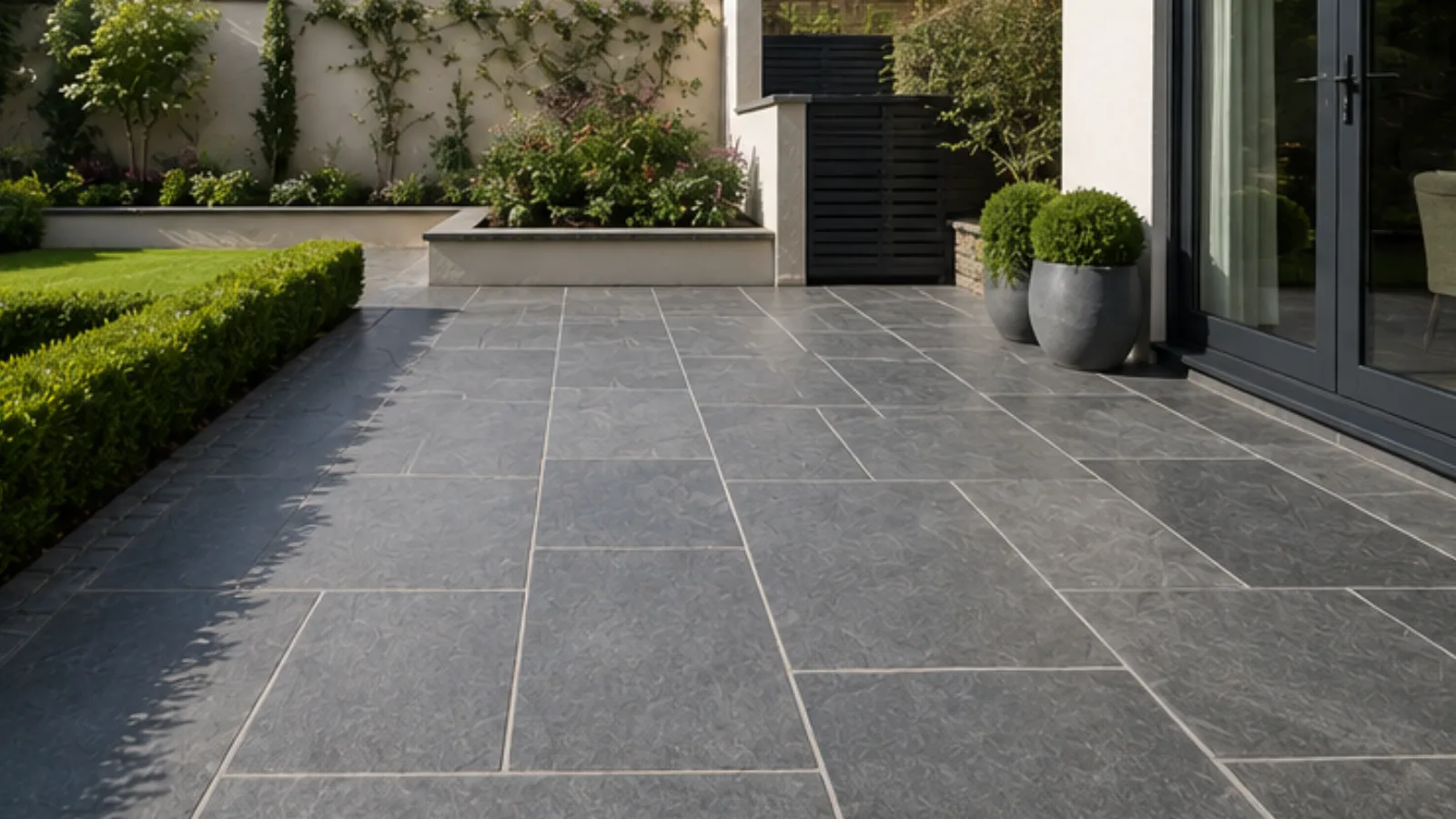
The material you choose affects not just cost but how the finished space looks and performs over time. Here is what each major option means for your budget and your garden.
Concrete paving (pre-cast slabs): The most affordable option. Durable and low-maintenance, but limited in terms of aesthetic appeal. A sensible choice for utility areas, side passages or projects where budget is the primary constraint. A proper concrete base beneath remains essential regardless.
Indian sandstone: One of the most popular choices in Irish residential gardens. Warm tones, natural variation, excellent value for the aesthetic it delivers. Weathers well in the Irish climate when properly sealed. Supply costs have risen in recent years, but it remains a strong mid-range choice.
Limestone: A natural Irish stone option that suits traditional and contemporary gardens alike. Slightly more expensive than imported sandstone but provides a very clean, timeless finish that ages well under Irish weather conditions.
Porcelain: Growing steadily in popularity due to its low maintenance, consistent finish and excellent durability. Quality porcelain tiles are frost-proof and resist staining well, both of which matter for the Irish climate. More expensive than natural stone in most cases, and the installation is more technically demanding, which affects the overall labour cost.
Treated timber decking: Not a paved surface, but worth including here because many homeowners are choosing between a patio and a deck, or combining both. Timber offers warmth and a different aesthetic appeal, at a comparable mid-range price point. The key for longevity is treated timber of sufficient grade. Irish weather will find the weak point in anything that isn’t specified correctly.
Granite: At the higher end of the natural stone range. Extremely durable, very refined appearance, and genuinely long-lasting. Frequently used in high-end residential and commercial landscape projects across Ireland.
The honest advice: don’t choose material on price alone. A natural stone patio installed correctly will last decades. A cheaper job done poorly will lift, crack and discolour within a few years, and the cost of fixing it often exceeds what you’d have paid to do it right the first time.
Designing the Space: More Than Just Choosing Stone
Many homeowners come to a patio project thinking primarily about material. The contractors who deliver the best results approach it differently, starting with how the space will actually be used and working backwards from there.
A patio that extends your living spaces into the garden needs to account for how people move through it, how it connects to the rest of the garden design, whether it needs to accommodate a table for eight or a quiet seating corner for two, and whether you want it to feel like a destination or a transition. These decisions shape the layout long before material is selected.
Outdoor living has changed significantly in Ireland over the past decade. What was once a practical slab outside the back door is now expected to function as a proper extension of the home, usable for more of the year than people assumed possible. Good design makes that achievable. Poor design creates a space that looks fine in September and gets ignored by October.
If the brief involves a complete garden transformation (patio, pathway, fencing, planting, lighting and potentially a garden room) it’s worth treating that as an integrated project rather than a series of separate decisions. A garden design consultation at the outset tends to save money overall, not add to it, because decisions made in isolation often have to be undone later.
What’s Not Included in a Standard Quote
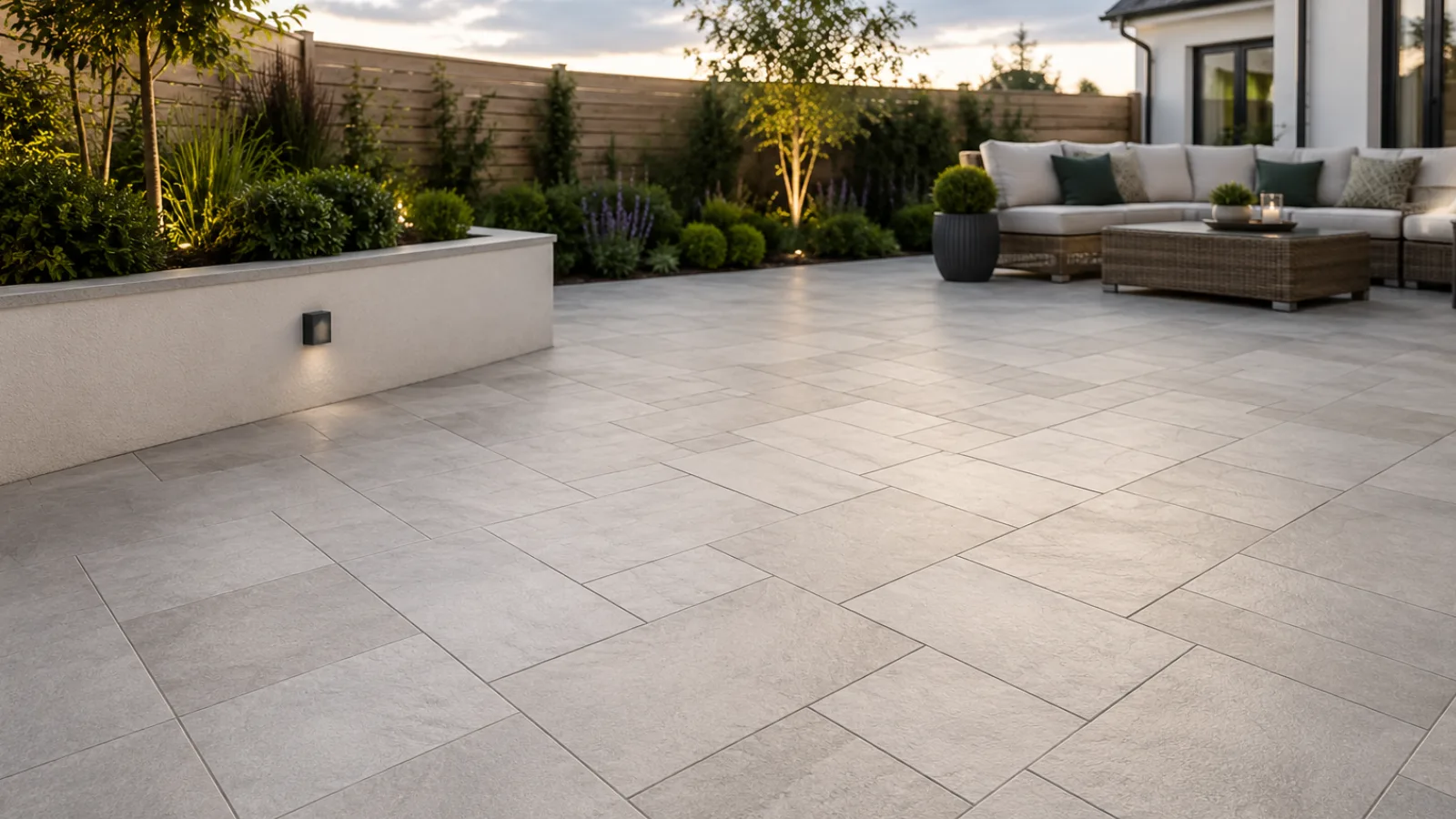
A number of items are frequently absent from base patio quotes. Being clear on what’s included versus extra before you compare figures will save you from a late surprise.
Lighting: integrated ground lights, step lighting or decorative outdoor lighting such as fairy lights wired to a timer are popular additions and typically quoted separately. Expect to add €500 to €2,500 depending on scope. If you want permanent outdoor lighting that isn’t on a trailing cable, factor in an electrician for the supply side.
Drainage channels and gullies: Irish weather makes drainage a functional requirement, not an optional upgrade. If your site requires additional drainage infrastructure to prevent water pooling, this adds to groundwork cost.
Steps: any change in level will add to the overall figure. Stone steps range from €500 to €2,000+ depending on material and construction method.
Removal and disposal: lifting existing concrete, paving or hard landscaping carries a labour and waste management cost that is not always included in initial estimates. Ask specifically.
Fencing or boundary changes: if the patio project involves updating a fence line or adding new fencing panels, this is a separate line item.
Furniture: obvious, but worth stating. The patio installation cost and your outdoor furniture budget are not the same thing.
The Irish Climate and Why It Changes Specification Decisions
Ireland’s weather is the reason patio specification matters more here than in many other countries. Consistent rainfall, regular freeze-thaw cycles in winter, and the occasional burst of summer heat create conditions that test materials and workmanship in ways that warmer, drier climates simply don’t.
Water pooling on a poorly drained surface will cause problems regardless of how good the stone looks on day one. A concrete base that hasn’t been laid with appropriate falls will hold water. A natural stone that hasn’t been sealed will absorb moisture, which then expands during a frost and begins to break the surface down from underneath.
None of this is intended to complicate the decision. It’s intended to explain why two patios that look identical on paper, same material and same size, can perform very differently over five years, based purely on whether the groundwork and specification accounted for Irish weather conditions properly.
When you’re comparing quotes, pay attention to whether the contractor has specified drainage correctly, whether they’re using a frost-resistant tile or sealing appropriately, and whether they’ve set out what the groundworks specification involves. That attention to detail, the part no one photographs, determines the professional finish. It’s true in Dublin, and it’s equally true on a site in Galway or rural Clare.
Sloped Sites, Restricted Access and Other Factors That Will Change Your Price
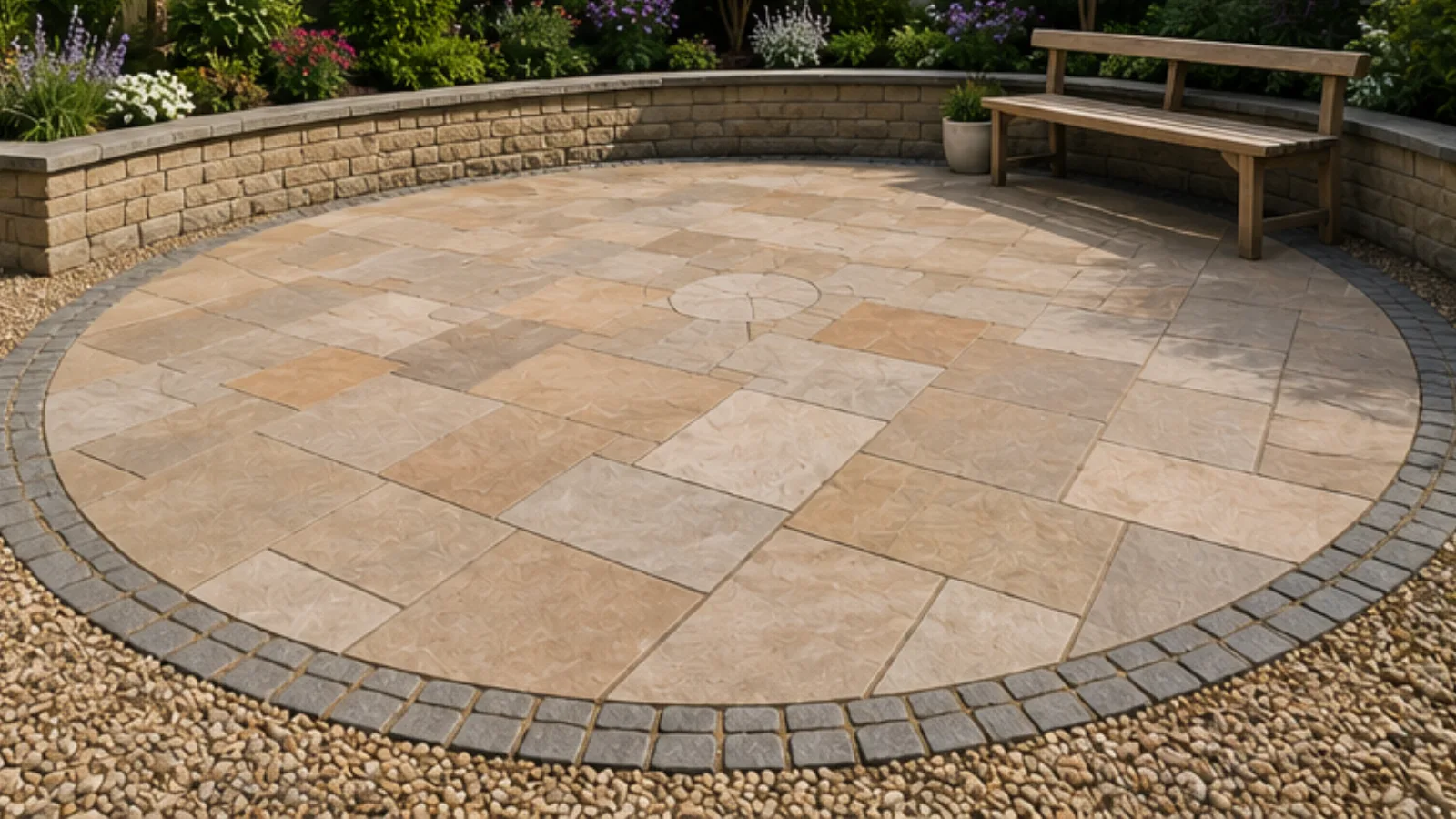
In the west and mid-west of Ireland, site conditions vary enormously. A Galway homeowner in a newer estate with clean access and a flat back garden is working with a very different project scope than a Clare homeowner on a rural site with a sloped garden, limited machinery access and mature vegetation to remove first.
If your garden slopes, the groundwork required to create a level patio surface, whether through excavation, building up, or a combination of both, adds labour and material cost that can be significant. Do not assume your project sits at the lower end of any price range until a contractor has seen the ground.
Similarly, restricted access that prevents a mini-digger or barrow being used efficiently adds to labour time. That’s not a premium the contractor is choosing to charge you. It’s a real cost of the job.
A quick test before you get quotes: walk your site with fresh eyes. Note where the ground drops, where access is tight, and whether there’s existing hard landscaping that needs to come out. The more of that you can tell a contractor upfront, the more accurate your first quote will be, and the less likely it is to change once work begins.
The Questions to Ask Before You Sign Off on a Quote
Getting good value doesn’t mean finding the lowest price. It means understanding what you’re buying and choosing a contractor who will still be proud of the work in five years.
The quality of the bed preparation beneath the paving is invisible once finished but critical to everything above it. Paving installed on poorly prepared ground, without adequate depth of sub-base or proper compaction, will move. It may look fine for a year or two. It won’t look fine in five.
Ask any contractor you’re considering about their groundwork process, not just what material they’re proposing on top. How deep is the sub-base? How is it compacted? What bedding system do they use? A contractor confident in their craftsmanship will welcome these questions. A poor one will be vague.
If phasing the project makes financial sense, that’s a genuinely viable route. Starting with the main patio area and extending into additional features in a second phase (steps, lighting, a garden room, a driveway upgrade) is a sensible approach that can significantly enhance the overall result without overcommitting at the outset. It’s one we discuss openly with clients at Elm Landscaping rather than pushing everyone toward the full scope upfront.
Installing in phases also gives you time to live in the space, see how you actually use it, and make better decisions about what comes next.
Why Patio Quotes Vary So Much in Clare, Limerick and Galway
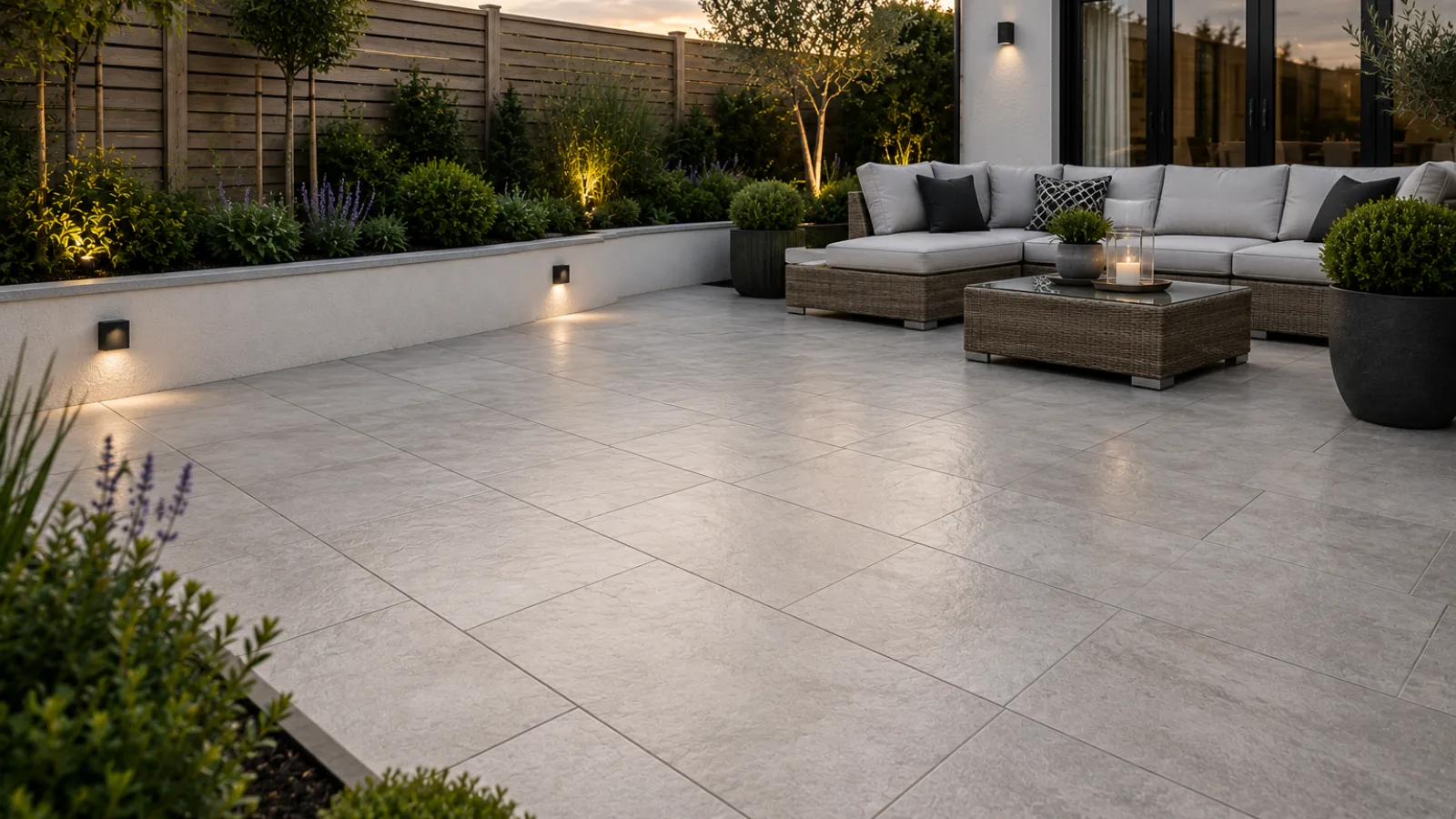
Getting three quotes and finding they span €4,000 is not unusual. It’s also not necessarily a sign that one contractor is wrong and another is obviously right.
Quotes vary because of genuine differences in material specification (even within the same material category, quality ranges significantly), groundwork depth and method, whether drainage has been properly considered, whether the labour rate reflects real skill and experience, and whether the price fully accounts for the site conditions.
The lowest quote often excludes things that will need to be added later. The highest isn’t automatically the best. What you’re looking for is a detailed, site-specific quotation from a contractor who has looked at your ground, can explain their process clearly, and has a track record of completed projects you can actually see. Customer satisfaction over the lifetime of a project, not just at handover, is the measure that matters.
What to Expect From the Process at Elm Landscaping
A typical residential patio project with Elm Landscaping begins with a consultation, either at our showroom on the Quin Road in Ennis or on-site at your property. We look at the space, discuss the design options, consider your materials and budget, and from there we provide a detailed quotation.
Where it’s useful, we use 3D garden design to show you how the finished outdoor space will look before a single slab is laid. Most clients find this removes a significant amount of uncertainty from the decision-making process.
We specialise in patio installation and landscaping across Clare, Limerick and Galway. Projects are completed by our own crews, not subcontracted. Our team has been doing this work since 2008. That continuity matters for quality of finish and for how issues are handled if they arise. We’re a family-run business, and customer satisfaction is not a marketing phrase here. It’s how we’ve built our reputation over 17 years.
To discuss your project or get a realistic sense of what your specific site and requirements would cost, book a consultation directly on our website, call us on 065 686 6773, or visit our showroom.
A Final Thought
The best patio is the one you still love ten years from now. That’s not a luxury standard. It’s what good groundwork, the right material and proper installation actually delivers.
The difference in cost between a patio that lasts and one that doesn’t is rarely as large as people expect.
The difference in outcome is.
If you’re pricing this up and comparing options across Limerick, Galway or county Clare, you’re probably closer to a decision than you realise. The next useful step isn’t another hour of research. It’s a conversation with someone who’s stood on sites like yours before.