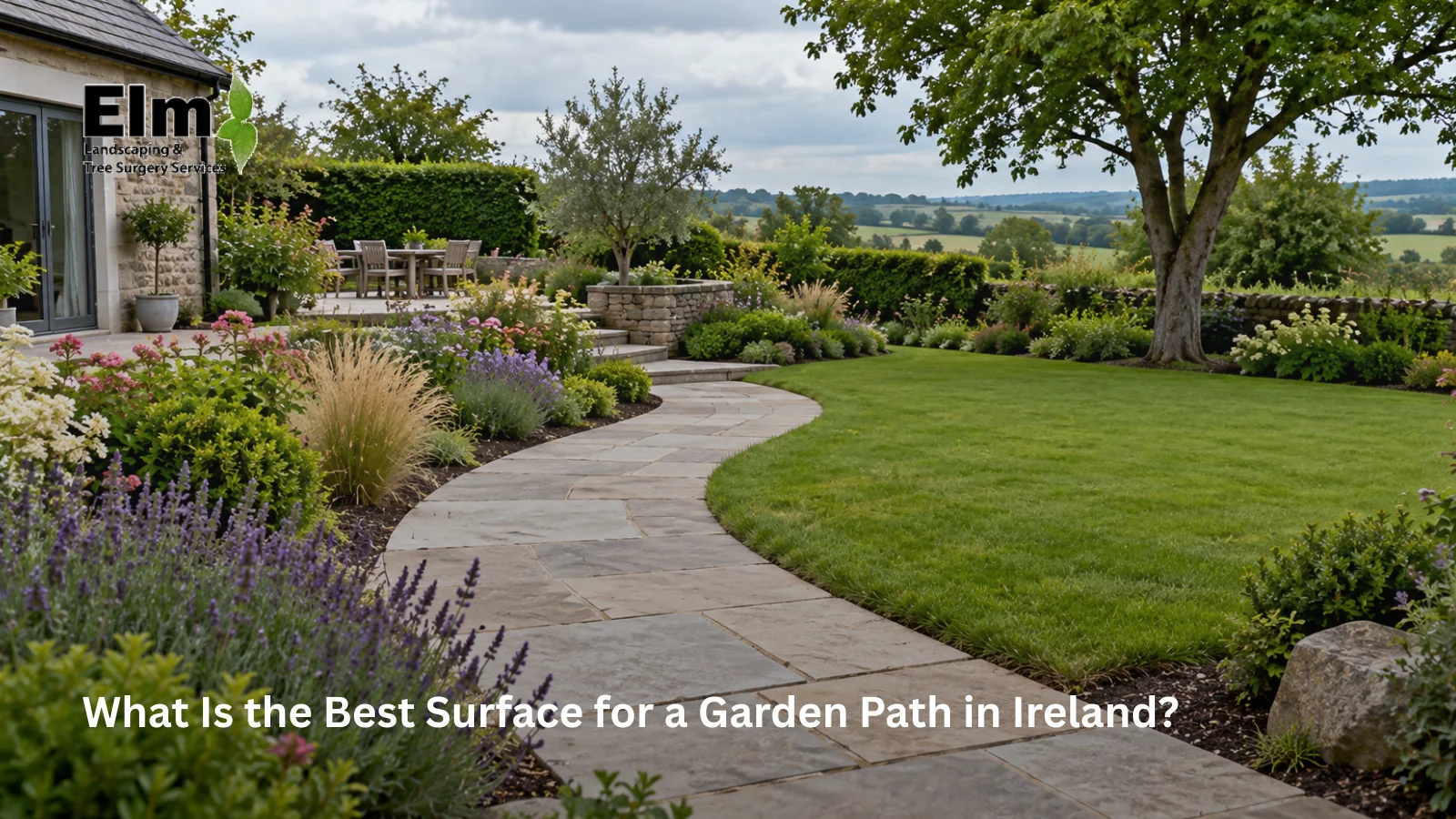
The best surface for a garden path in Ireland is paving or porcelain for the routes you walk every day, and angular gravel for the quiet ones. Choose either well and the path can still be rocking, rutting or holding a puddle by its first wet January, because the part that fails is the base underneath, the one nobody sees.
What Is the Best Garden Path Surface by Use?
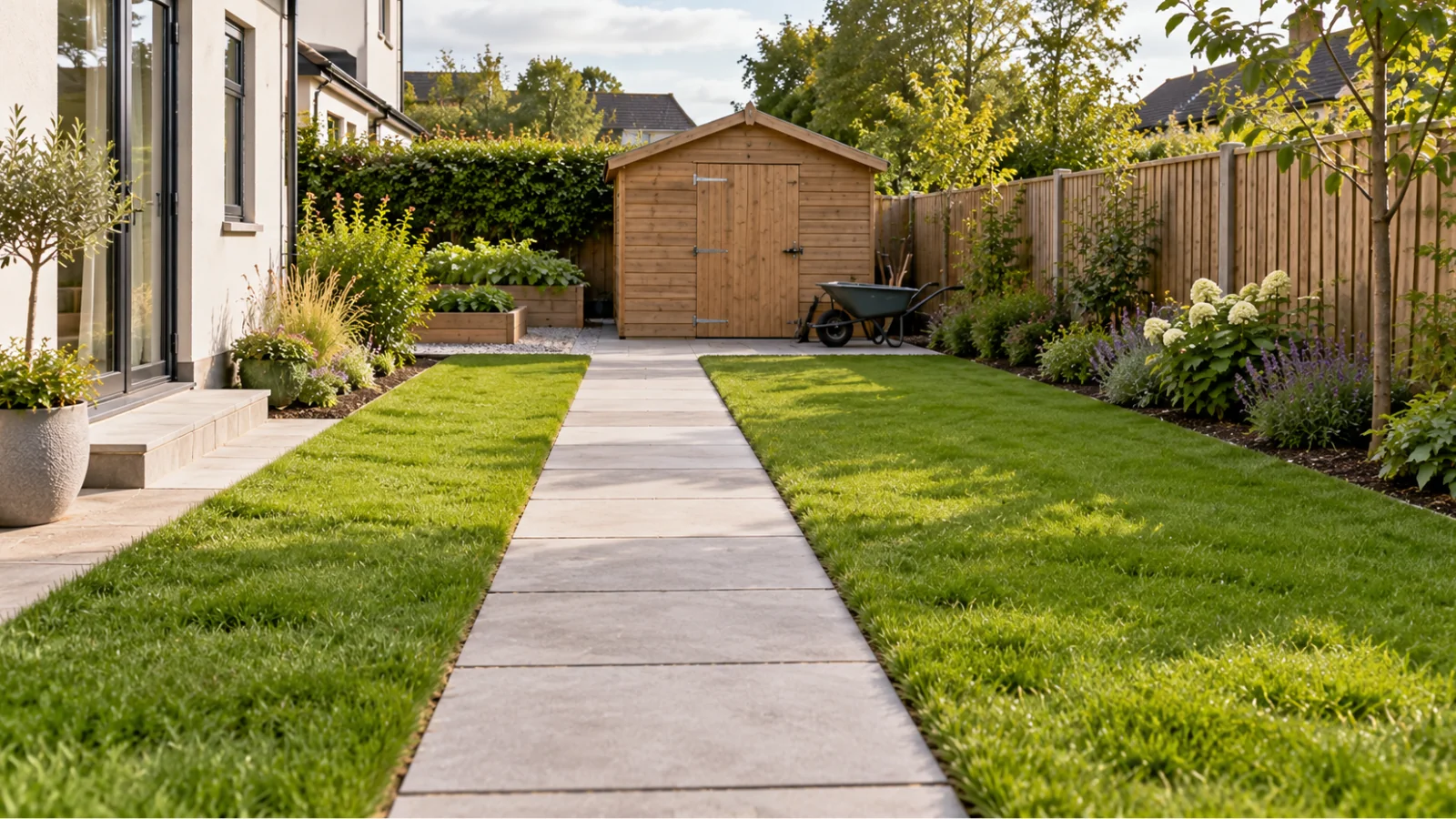
Paving, porcelain or natural stone suit the routes that carry the most traffic, and gravel suits the quiet ones. A route to the back door that handles bins, prams and wet boots every day needs a different surface from a quiet loop around a flower bed.
| How the path is used | Surface that suits | Why it works | Relative cost (surface only) |
| Main route to the door, daily foot traffic | Paving slabs, porcelain or natural stone | Firm and flat, and easy to keep clear in winter | Middle to higher |
| Bins, prams and wheelbarrows | Paving slabs or porcelain on a solid base | Wheels need a hard, even surface that won’t rut | Middle to higher |
| Secondary route through the garden | Angular gravel or self-binding gravel (stone mixed with fine dust) | Crunches softly underfoot and costs little to lay | Lower |
| Shaded or damp corner | Textured porcelain or riven (split-faced) natural stone | Grip when the surface is wet or mossy | Higher |
| Woodland or informal route | Bark or stepping stones | Soft underfoot and easy to move when the beds change | Lowest |
| Sloping ground | Paving with steps, or gravel held in a grid | Loose stone travels downhill | Middle to higher |
Relative cost compares the surface only and leaves out site-specific groundwork.
For wheelchairs, walking aids and prams, a firm, flat surface with tight joints matters most. Laid paving, porcelain and resin-bound surfaces suit best, and well-compacted self-binding gravel can work. Loose gravel, bark and stepping stones are hard going.
What Are the Best Paving Slabs for Garden Paths?
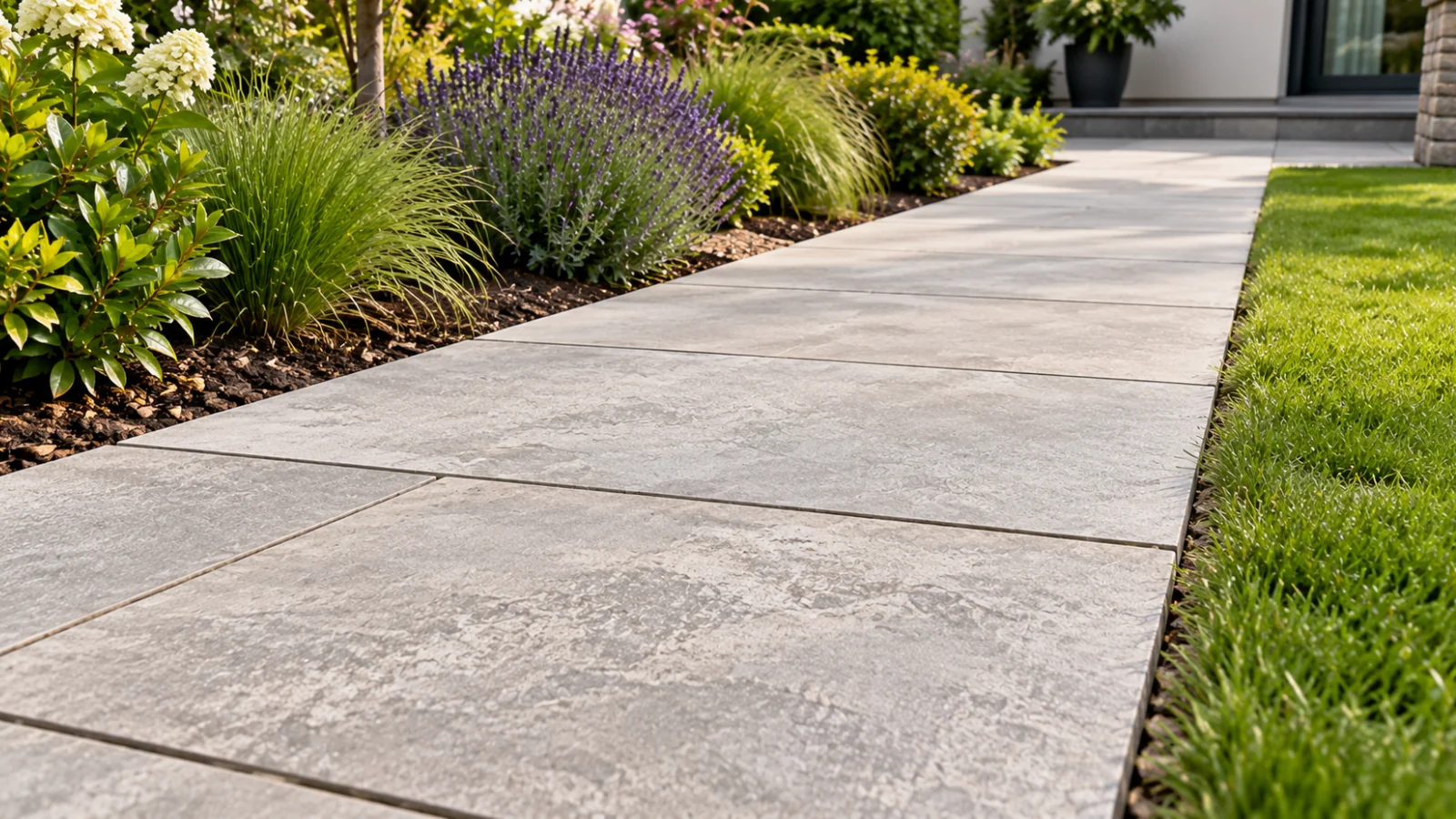
Porcelain and natural stone are the best paving slabs for garden paths, with concrete slabs as the cheaper choice. Once the base is right, all three need little upkeep.
Porcelain is the low maintenance favourite for Irish weather. Outdoor-rated porcelain is dense and shrugs off frost, so moss and algae find it harder to take hold, though a shaded, damp surface can still turn slippery. Choose a textured finish, because a smooth, polished one is slipperier still. It’s also less forgiving to lay than stone, so the installer’s workmanship is part of what you’re buying.
Natural stone ages well. Granite is the hardest wearing. Limestone settles into a quiet, timeless grey, and Indian sandstone brings warmth and natural variation. Riven stone, with its split, textured face, grips better in the wet than honed stone. Slate adds a deep charcoal finish and, like other stone, grips best with a riven face. Shaded paths still pick up moss and need an occasional scrub, and sandstone may need sealing against winter water, depending on the stone and how it is laid, so check with your installer.
Concrete slabs are plainer, but laid on a proper base they stay flat and firm. Clay brick paviours suit older and cottage-style houses, while setts, cobbles and block paving suit short runs and edging, and individual blocks can be lifted and relaid if a section settles.
Slabs sit on a bedding layer over the compacted base, and whether that is mortar or sand depends on the slab and the load, so it is worth asking before you buy. Fill the joints with a jointing material suited to the slab, because open joints let weeds in and the bedding wash out.
Elm Landscaping’s guide to how porcelain, sandstone, limestone and granite compare for a patio carries over to a path almost entirely.
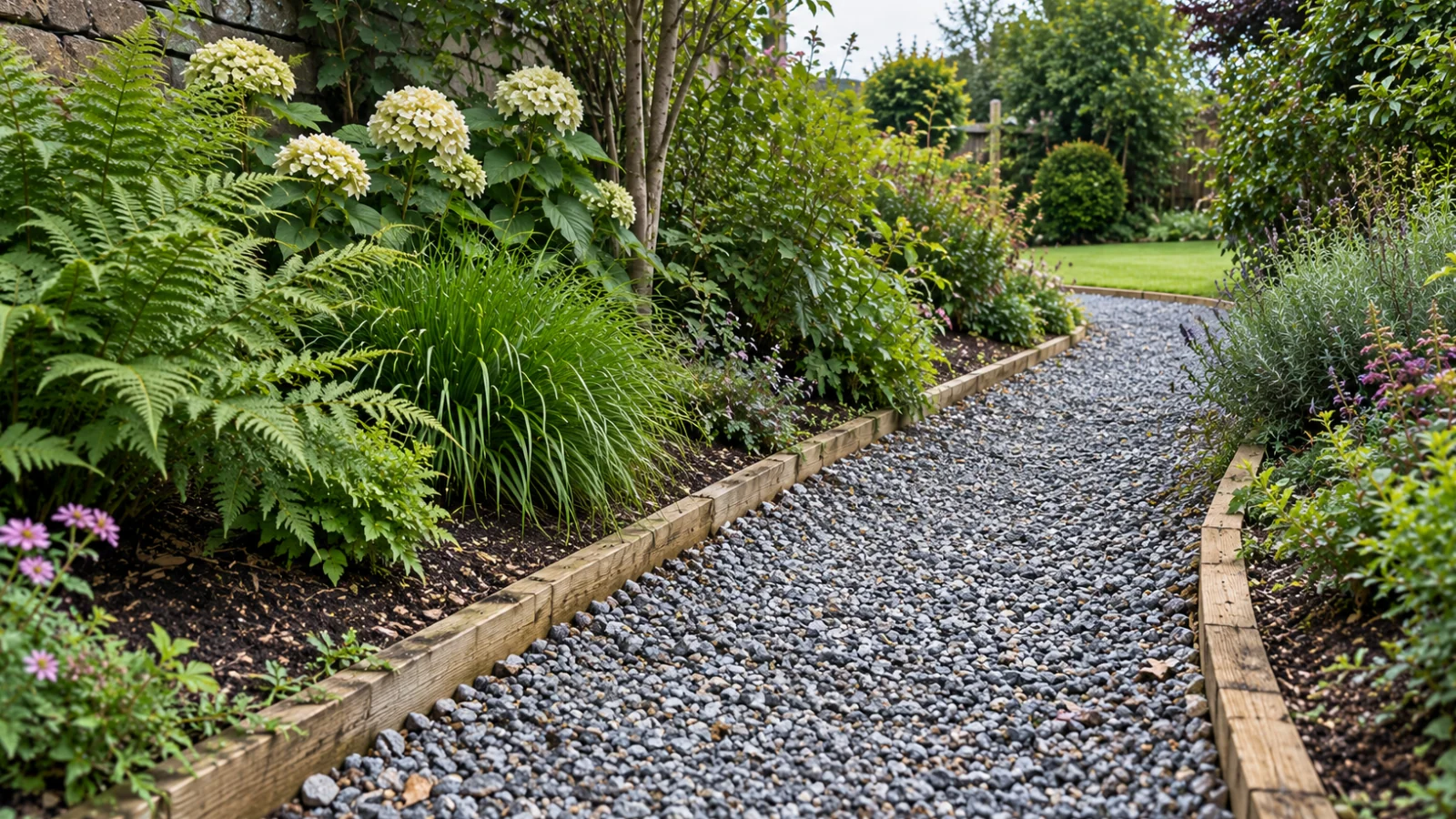
What Is the Best Gravel for a Garden Path?
Angular, crushed gravel at around 10mm is the best gravel for a garden path. It’s quick to lay and kind to a tight budget, but loose stone moves, so how it is held in place decides how long it looks right.
The sharp faces of angular stone lock against each other underfoot, while rounded pea gravel rolls like ball bearings and ends up on the lawn. Rounded pebbles work as decoration around a feature.
Compared with 20mm stone, 10mm knits together better and is easier to walk on and to push a wheelbarrow across. The larger stone drains freely but suits a driveway better than a garden path.
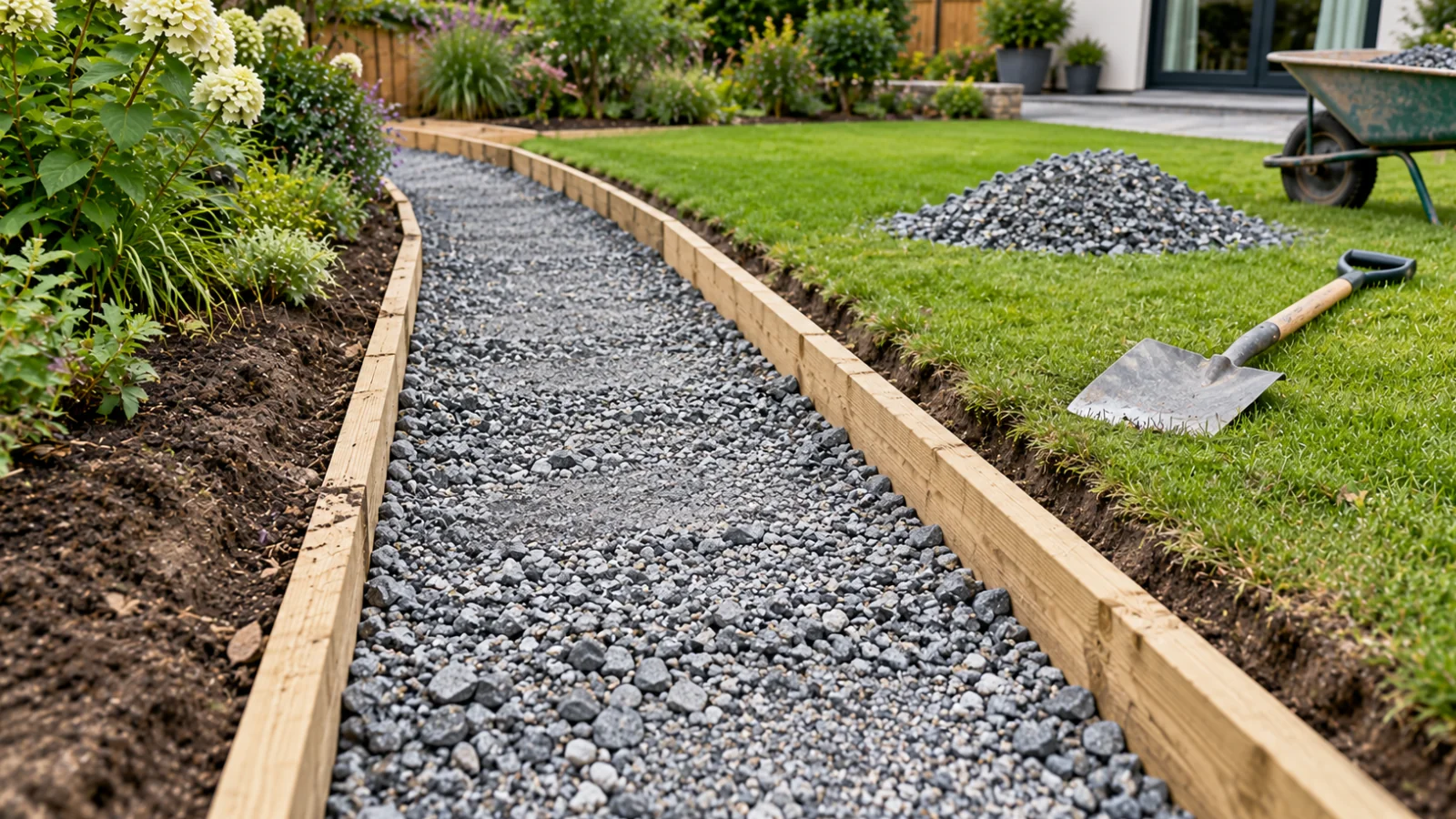
Three things keep gravel where you put it: firm edging along both sides, a water-permeable membrane underneath to hold back weeds, and, on busier or sloping routes, a plastic grid that holds the stone in place.
Gravel needs occasional topping up and a quick rake after heavy rain, and a membrane suppresses weeds from below but can’t stop them rooting in debris that collects on top.
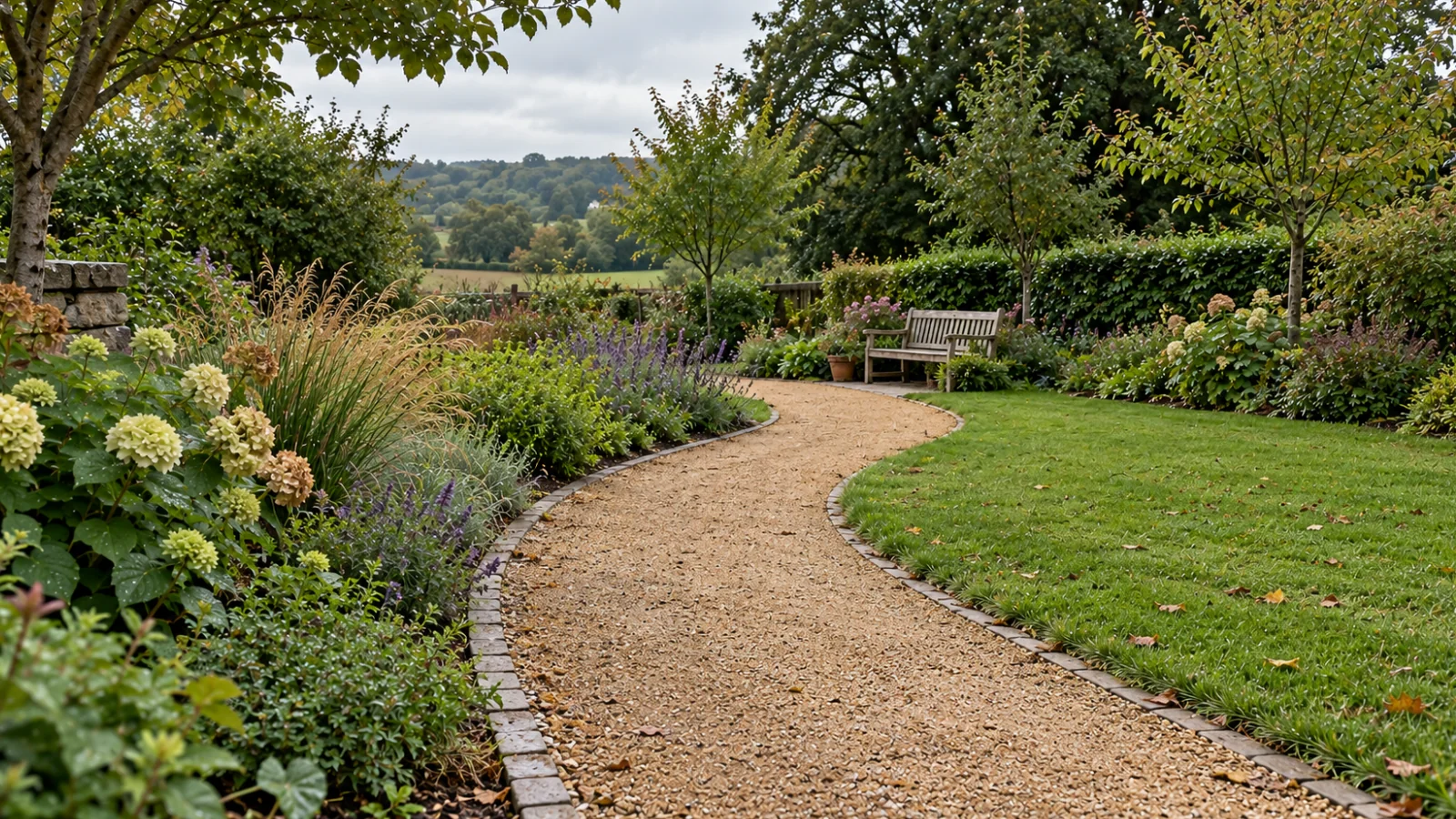
Is Self-Binding Gravel Good for a Garden Path?
Yes, self-binding gravel works well for a walking path on level or gently sloping ground, as long as it is laid properly. It is crushed stone mixed with fine dust, and when it is wetted and compacted the fines lock the stones together into a firm, natural-looking surface with none of the looseness of ordinary chippings.
Loose gravel lets rain through; self-binding gravel mostly sheds it, though how much depends on the product and how it is laid. That means it needs a slight fall, either a gentle camber along the middle or a cross fall to one side, and somewhere for the water to go. Laid flat, it holds water in the surface and turns to rutted mud.
It also dislikes steep ground, because heavy rain can wash the fines out and leave loose stone behind. Expect to top up the surface now and then.
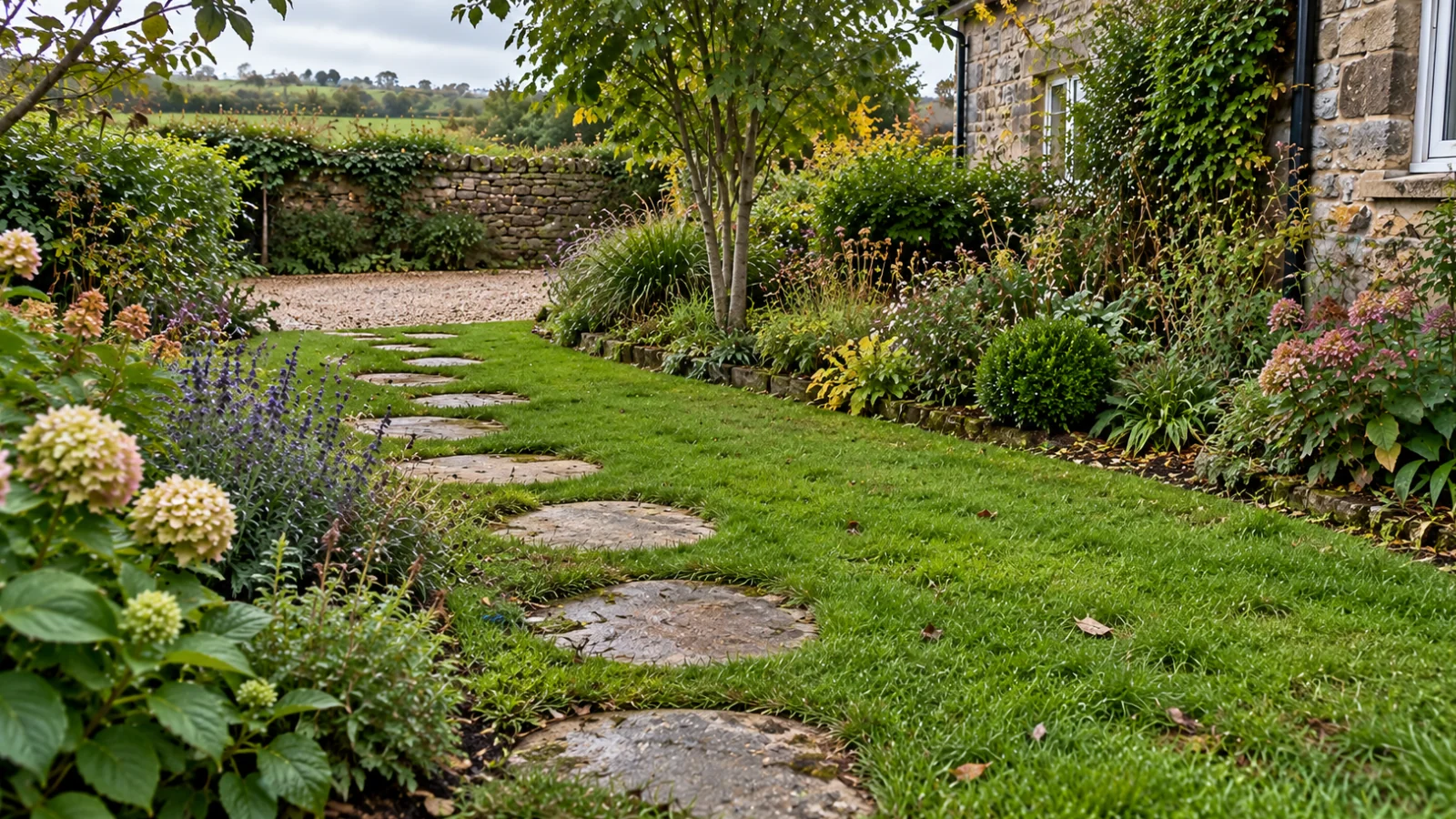
What Are the Best Alternatives to Paving Slabs for Garden Paths?
Beyond gravel, stepping stones, bark and resin-bound surfaces are the best alternatives to paving slabs for garden paths. Stepping stones suit a lawn crossing or a planted border, and they still need to be bedded on compacted material. A stone set straight onto soil settles unevenly and starts to tilt, and a tilted stone in wet grass is a slip waiting to happen.
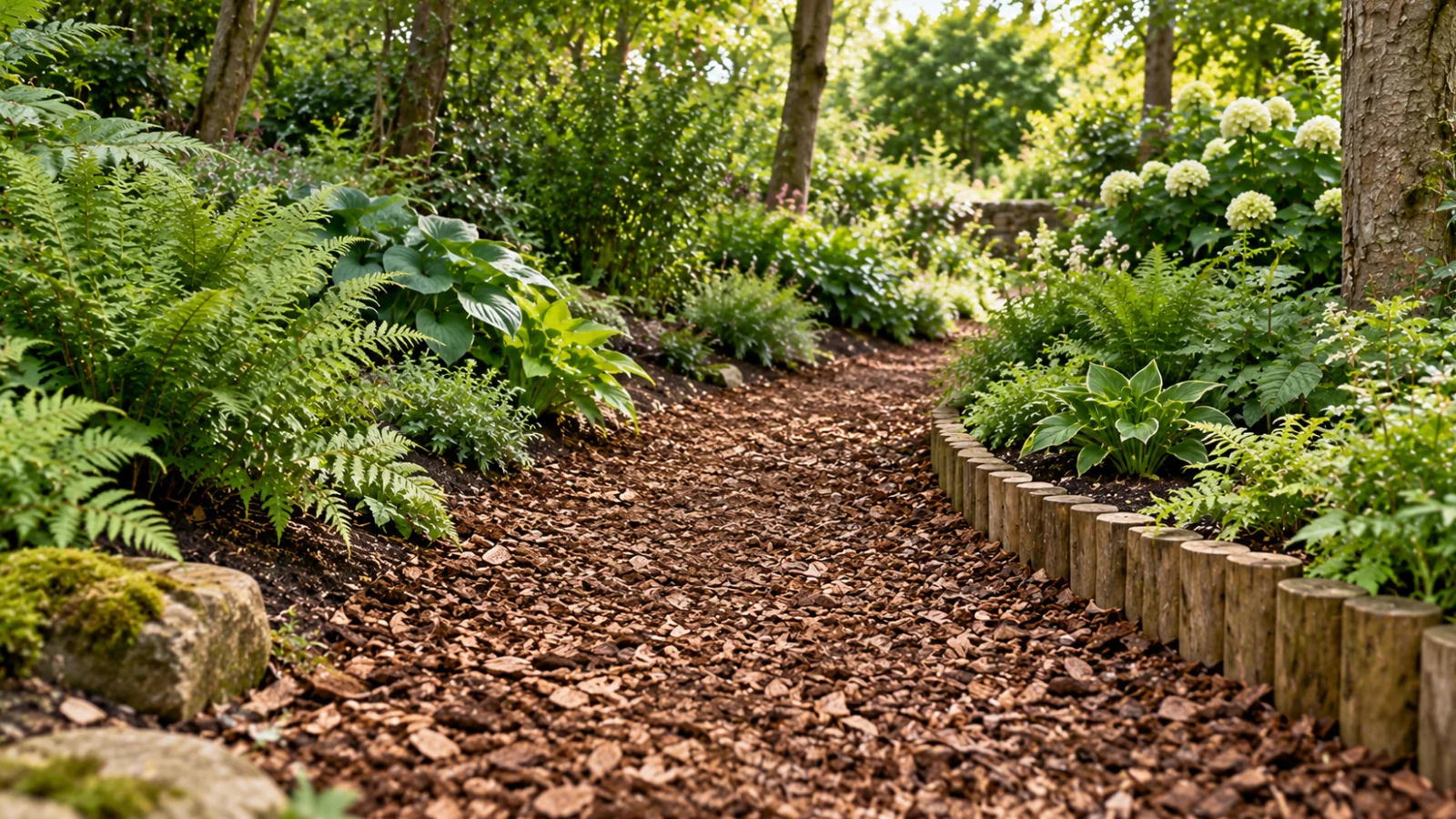
Bark and wood chip give a soft woodland feel and are the lowest-cost surface to lay. They break down and need topping up each year, so they suit a quiet path through planting.
Resin-bound surfaces mix stone with clear resin and are trowelled into a smooth, joint-free finish that suits wheelchairs, prams and bare feet. They can be laid permeable, but they need a sound base and a specialist installer, and repairs are not a DIY job.
What Is the Cheapest Surface for a Garden Path?
Gravel and bark are the cheapest to lay. Concrete paving slabs sit in the middle, and porcelain and natural stone cost the most upfront. Site conditions move the price more than the surface does: path length and width, access for machines and materials, any existing surface to remove, and how much base the ground needs.
Cheapest to lay is rarely cheapest to own, though. A bark path that needs refreshing every year, or a gravel path rebuilt after its base failed, costs more over its life than a firm surface done once.
If the budget is tight, build in stages. Put in the base, edging and drainage now, finish with gravel, and upgrade to paving later without digging anything up. Phased landscaping works this way: the groundwork goes in first.
Does a Garden Path Need a Sub-Base and Drainage?
Yes, gravel, paving and resin paths all need a proper base (the sub-base) and drainage, because a surface is only as good as the ground under it. Lightweight bark paths need much less. The base is dug out and filled with compacted crushed stone. Skip it and gravel sinks into the soil and brings mud up, slabs laid straight onto soil or loose gravel rock and tilt, and self-binding gravel turns to ruts.
Drainage is the other half. A path needs a slight fall away from the house and from any wall, and the runoff needs somewhere to go on your own ground: a lawn, a planted bed or a surface water drain, and not onto a neighbour’s land or the road. Heavy ground is common in parts of Ireland, and clay holds water. A path that holds a puddle grows moss and turns slippery.
How deep the base should be depends on the ground and the load, and wet clay often needs more. Ask any contractor how deep they dig, how they compact it and what they bed the surface on. A good one will welcome the question, and a vague answer tells you plenty.
Edging finishes the job: it stops gravel spreading onto the lawn and keeps the sides of a paved path from creeping outwards. Timber, steel, brick or stone setts all work.
What Surface Works for a Path on a Slope?
Paving with steps and level landings, or gravel held in a grid, works best on a slope. Loose gravel travels downhill with every downpour.
How Do You Make a Garden Path Look Nice?
Get the width, the shape and a focal point right, and a path stops looking like an afterthought.
Measure the widest thing that will travel along the path, usually a wheelbarrow or mower, and add room if two people will walk it together.
Straight lines suit a contemporary house and curves soften a cottage-style garden, but a curve needs a reason, such as a bed or a change of level.
A planted pot or a seat at the end of the path gives the eye somewhere to land.
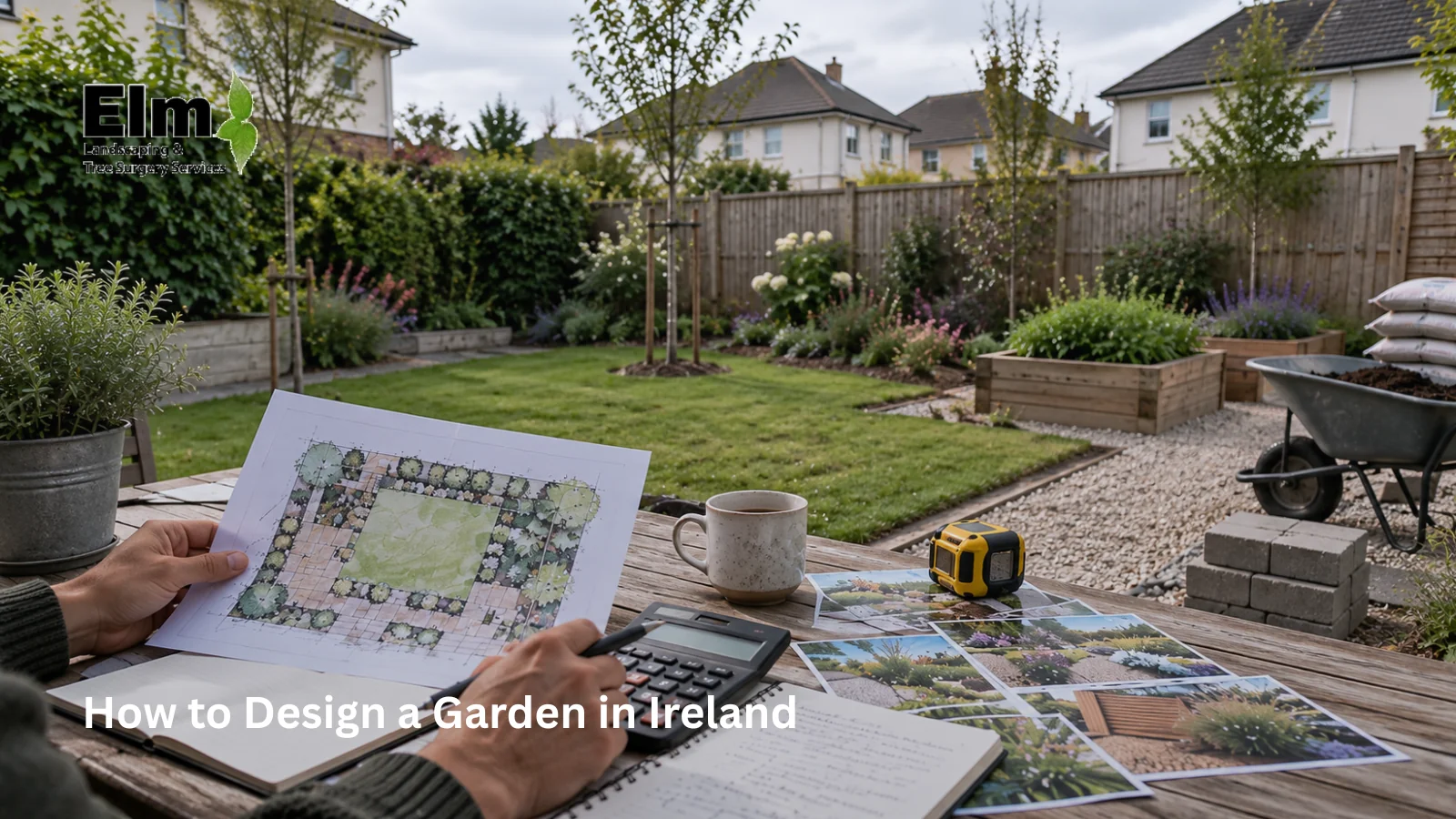
Plan the path with the rest of the layout, and Elm’s guide to designing a garden in Ireland shows how. Repeat the house’s materials or roof colour so the path looks as if it belongs, and soften the edges with low planting. A front path does more for kerb appeal than most beds, because it’s the first surface any visitor walks on.
Landscapers for Garden Paths in Clare, Limerick and Galway
A landscaper is worth calling when the path crosses a slope, runs over ground that stays wet, passes close to a mature tree whose roots could lift the surface, or has to join a patio, driveway and steps that all need to meet cleanly. A straight, level path on firm ground is still a reasonable weekend job for a confident homeowner.
When the path runs close to a tree, tree advice and groundwork from the same team saves a lot of back and forth. Elm Landscaping’s landscaping services have covered gardens, paths and the groundwork beneath them across Clare, Limerick, Galway and parts of Tipperary since 2008.
Before you order anything, check for buried cables and pipes, then dig a hole a spade deep where the path will run, wait for rain and see whether it holds water. If it does, or if you’d rather have someone walk the ground before you choose, you can book a 1-hour garden consultation at your property, where the ground, levels and drainage are looked at and a surface is recommended.