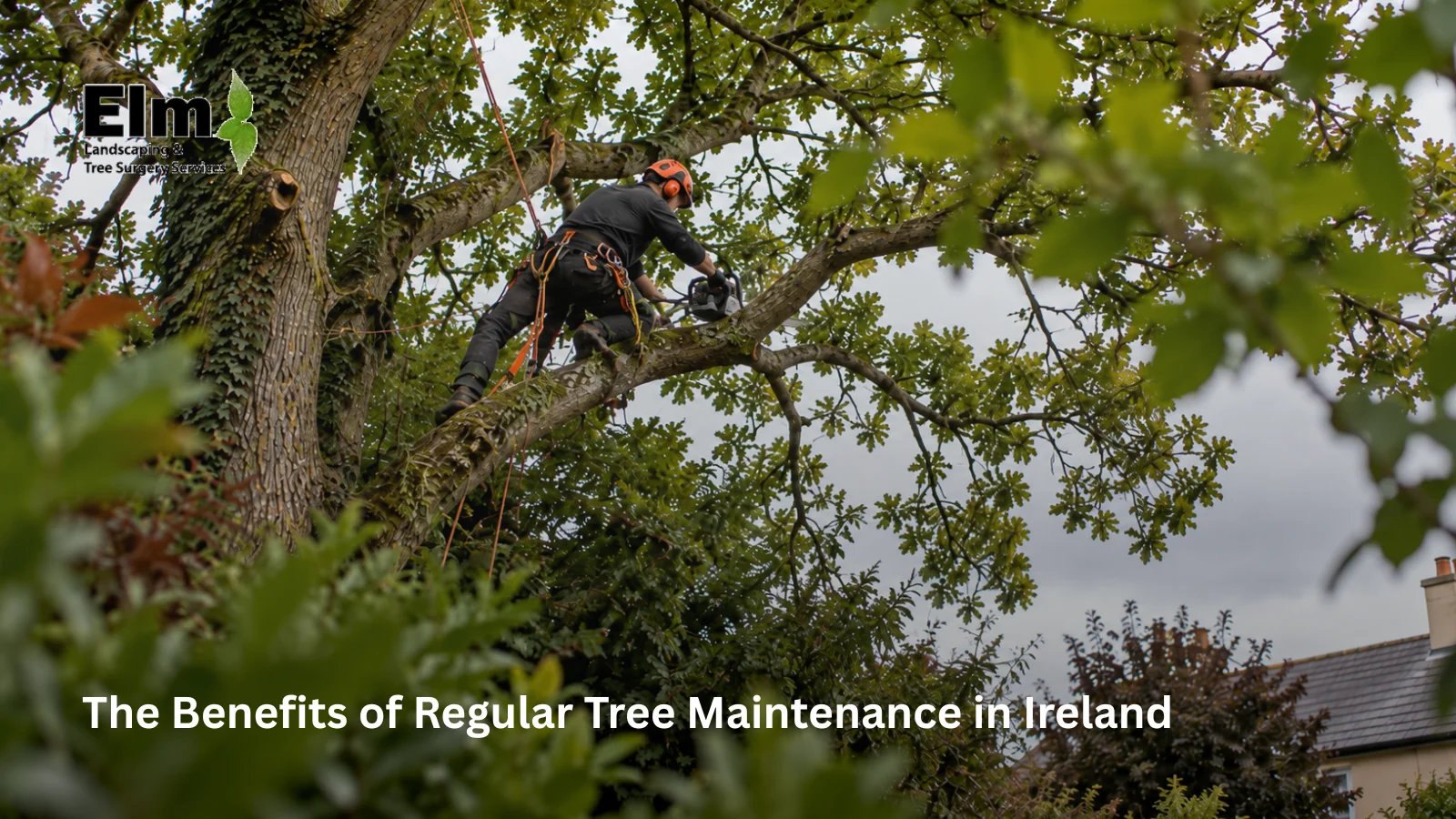
The benefits of regular tree maintenance come down to three things: healthier trees that live longer, fewer hazards around your home, and lower costs over the life of every tree on your property. What surprises most owners is how early the trouble starts.
Trees that come down in a winter storm have often been showing signs of weakness for a season or two, from a patch of fungus at the base to a dead limb high in the crown, and nobody was looking.
Regular maintenance closes the gap between the first warning sign and the fallen tree.
Why Tree Maintenance Matters More in the West of Ireland
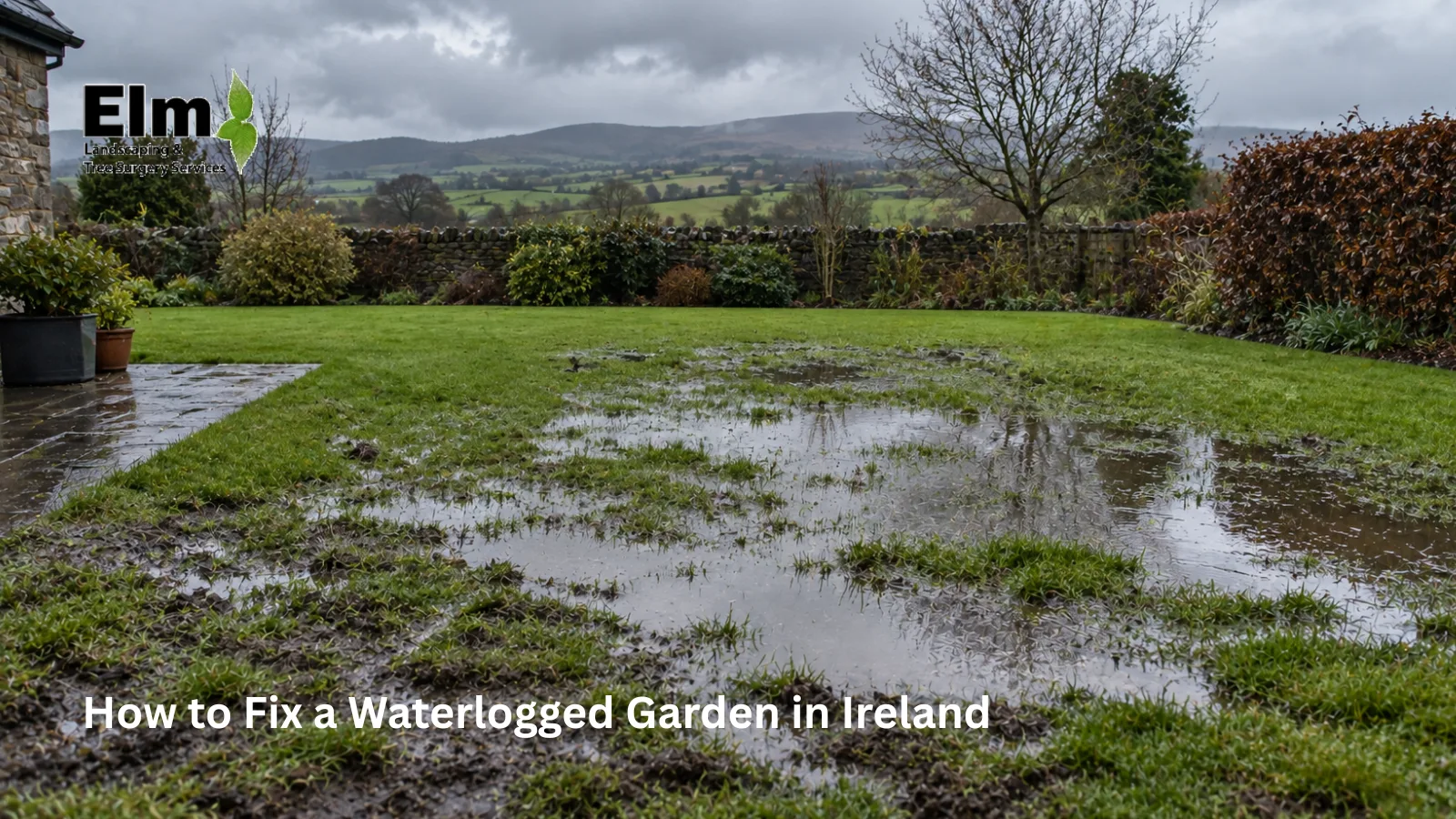
Trees in County Clare, Limerick and Galway live a harder life than most in Europe. Atlantic weather reaches us first, winters are long and wet, and many gardens stay waterlogged from October to March.
The importance of tree maintenance rises with each of those conditions.
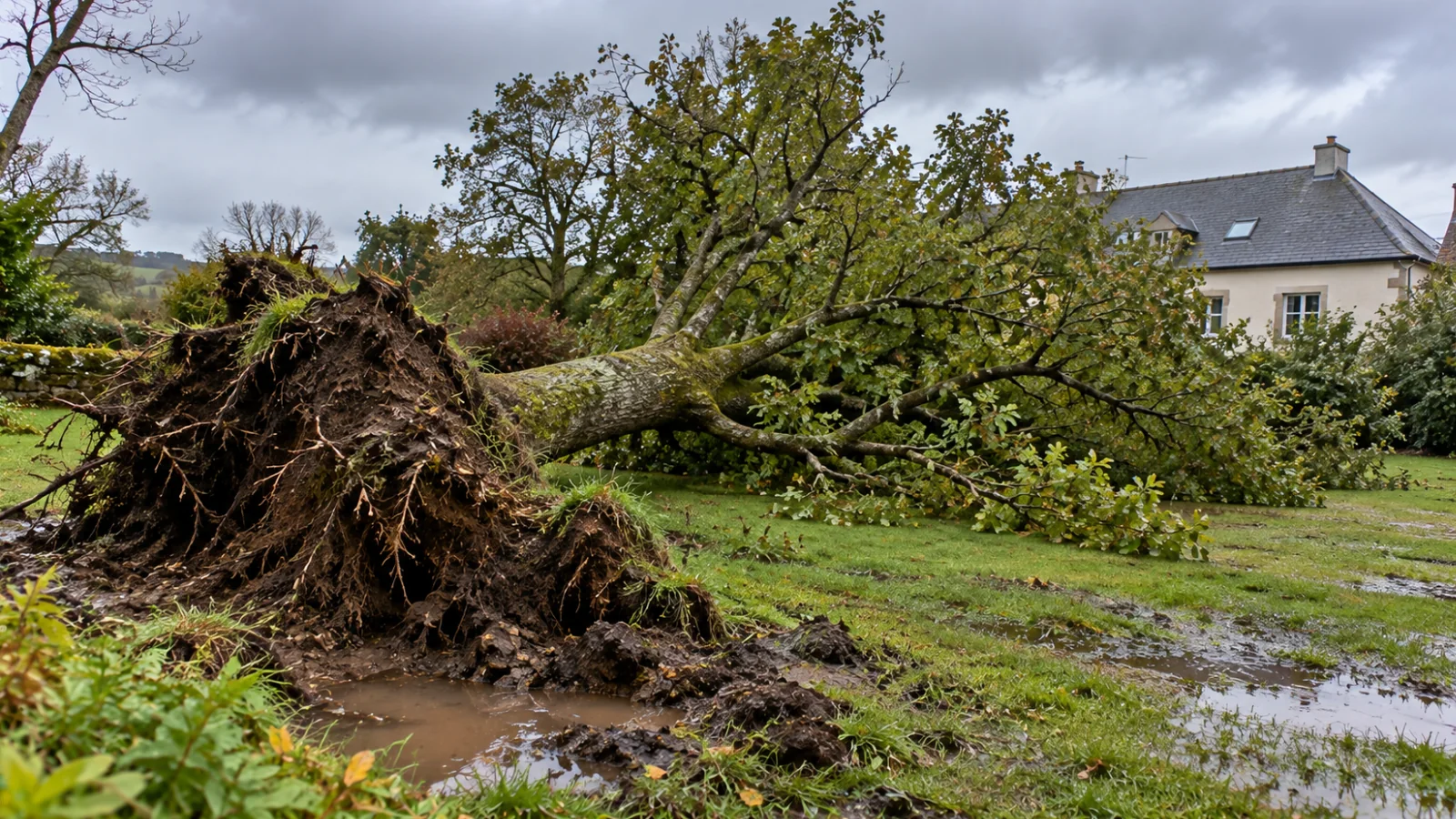
Wind is the obvious threat. Anyone who remembers the storms that have hit Ireland since 2015 has seen a heavy, unmanaged crown give way in a severe gust, and the storm damage land on roofs, cars and roads.
Storm Éowyn showed the scale in one night in January 2025. Around 26,000 hectares of Irish forest were hit, an estimated 50 million trees came down or were damaged, and Connacht took the largest share.
Closer to home, Elm’s crews were called to the Kilrush Road in Ennis after Éowyn to take down a large overhanging tree that had begun to lean, working for Clare County Council to make the road safe.
Rain is the quieter threat. Mild, damp conditions suit the fungi that decay trunks and root plates, and areas like the Shannon estuary suit them well.
Saturated soil also loosens its grip on roots, so many trees fail late in a wet winter, long after the first gale.
Environmental stressors like these rarely kill a tree overnight. They wear it down until one bad night finishes the job, and regular tree care stops that decline while the fix is still small.
Elm’s crews have worked through these winters across Clare, Limerick and Galway since 2008.
The Advantages of Regular Tree Maintenance
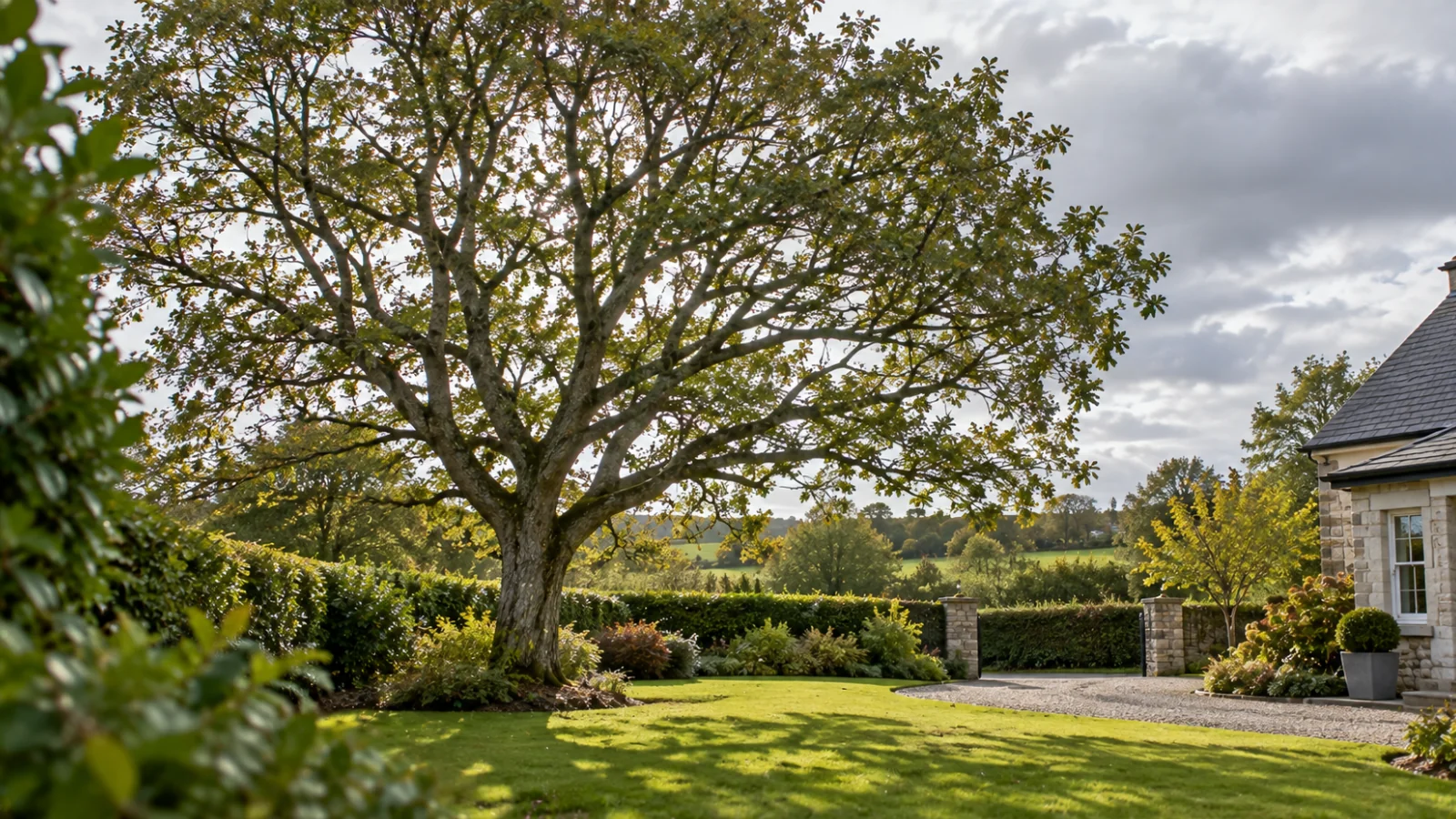
Regular tree maintenance pays off in six ways, from healthier trees and safer gardens to lower bills and a better-looking property.
Healthier, Longer-Lived Trees
Removing dead or diseased branches helps stop decay spreading into sound wood, so the tree puts its energy into healthy growth.
Proper pruning also thins a congested crown so air and light reach the inside, which is essential for tree health in a climate where damp foliage invites fungal problems.
Regular checks also catch pest and disease issues early, and ash is the clearest Irish example. Ash dieback is now found in every county and has no cure.
Anyone following how ash dieback is affecting Irish trees will know how quickly it can weaken a tree. A regular evaluation tells you whether an infected ash is stable, declining or becoming a hazard beside your house, so you can plan any removal before the weather forces the decision.
Removal isn’t the only option. On one job in Barefield, Co. Clare, Elm reduced a line of infected ash to a safe height, which kept the client’s privacy screen and left standing wood as habitat.
That attention protects a tree’s health and longevity. A mature oak or beech that’s looked after can stand for generations. Left alone, the same tree often doesn’t survive its first serious defect.
Safer Homes and Gardens
A dead limb over the driveway. A split fork above the children’s swing. A tree beginning to lean toward the road.
These are the potential hazards that regular inspections are designed to find, and they are far easier to deal with on a calm day in September than in the middle of a red warning.
Unstable trees pose significant risks to people and property. An arborist can assess structural integrity, remove hazardous deadwood and reduce weight on a weak limb long before it becomes an emergency.
For any tree near a house, school or public road, that is the single strongest reason to keep it on a schedule. The same checks also pick up roots lifting paths or driveways before the damage spreads.
Lower Long-Term Costs
Planned work is almost always cheaper than emergency tree services. A routine prune is booked for a convenient date, in good weather, with clear access.
A fallen tree after a storm brings an urgent callout, awkward rigging, damage to whatever it hit and a longer clean-up.
Losing a tree that could have been saved costs more again, because tree removal, stump grinding and replanting all land on the same bill.
Catching problems early is how you prevent further damage and keep that bill small. For a breakdown, what tree surgery typically costs in Ireland covers the main factors.
The economic benefits go beyond repairs. Mature trees give a property shelter and character, and keeping them healthy protects something a buyer notices from the gate.
More Light and Kerb Appeal
Crown lifting and thinning can bring daylight back into a garden or a north-facing room without taking the tree away.
Well-maintained trees also make a property look cared for, and the aesthetics of a healthy canopy are something visitors notice straight away.
A balanced, tidy tree frames a house. An overgrown one hides it, and slowly takes over the outdoor space around it.
Better Fruit and Flowers
Fruit trees respond well to seasonal pruning. Apples and pears are usually pruned while dormant in winter to encourage productive growth, while cherries and plums are generally pruned in summer to reduce the risk of silver leaf disease.
Getting the timing right for each tree type shows up in the fruit bowl: a heavier crop, and a tree with the vigour to keep producing year after year.
Richer Wildlife Habitat
Birds, bats, insects and fungi all depend on mature trees, and a tree that stands for another few decades keeps feeding the blackbirds and bees in your garden, and does more for local biodiversity than a replacement sapling can in the same time.
Good arboriculture also knows when to leave things alone. Where it’s safe, retaining some deadwood or a hollow limb supports ecosystem health without putting anyone at risk.
Looking after the trees you already have is one of the simplest ways to keep a community greener for future generations.
How Do You Maintain a Healthy Tree?
You maintain a healthy tree through regular inspection, deadwood removal, crown thinning and lifting, and formative pruning while it’s young.
Most visits involve a handful of these routine tasks, chosen to suit the tree and its surrounding environment.
Tree Inspections and Health Assessments
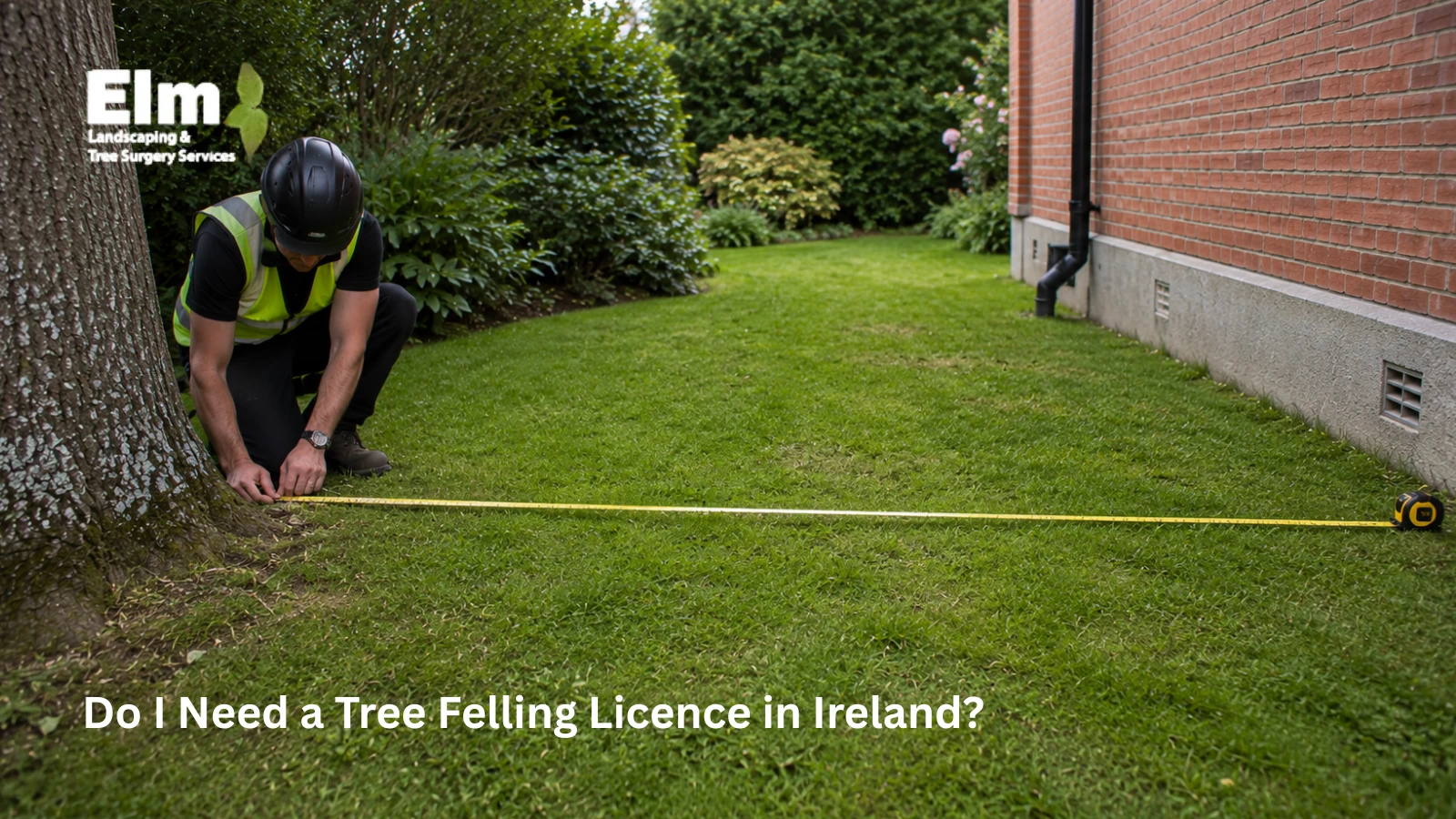
An arborist looks over the tree from root flare to crown. The check covers decay, cracks, fungal growth, pest activity and any change since the last visit. Inspection comes first, because everything else follows from it.
Deadwood Removal
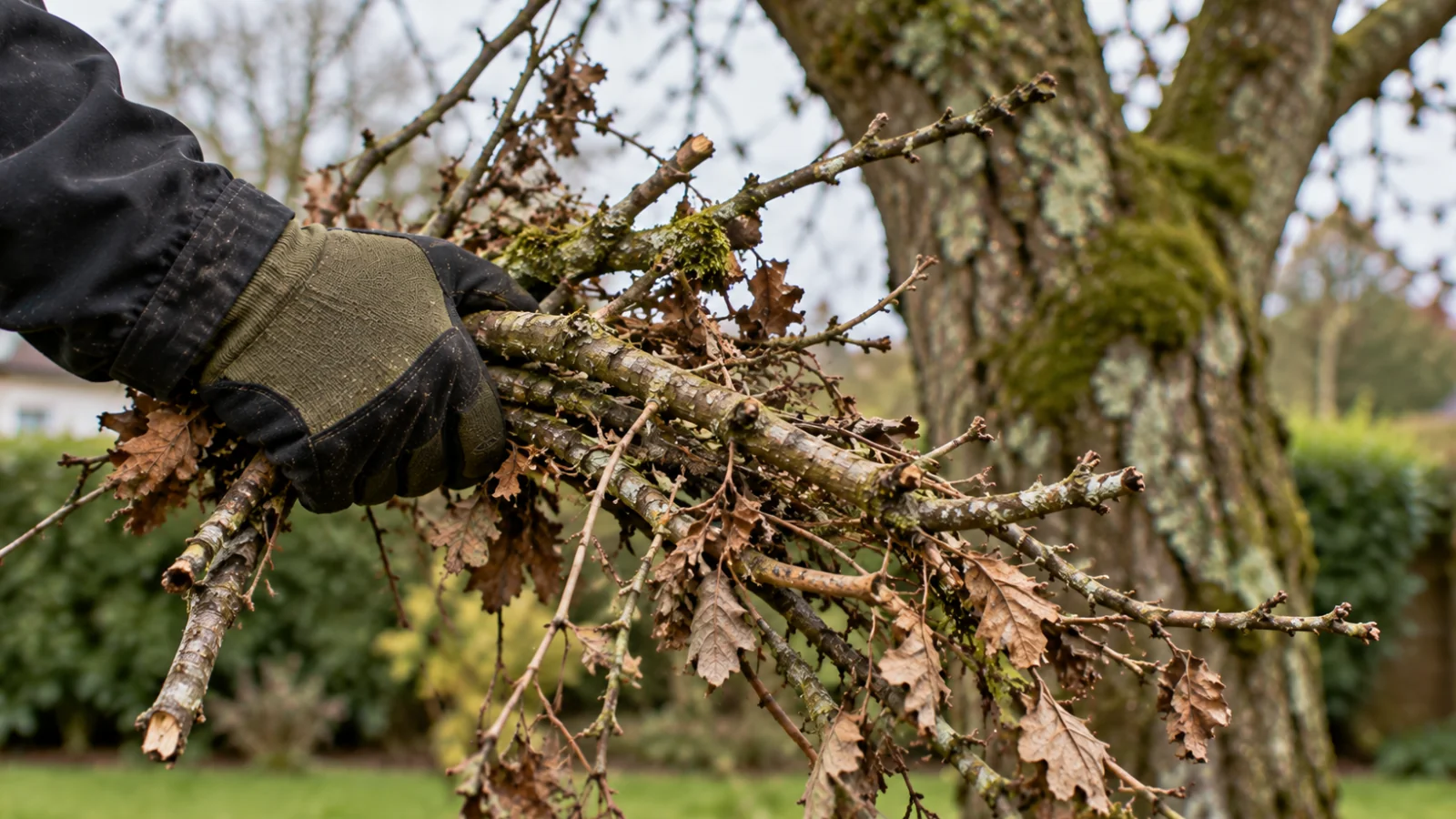
Dead branches are removed before they fall. On mature trees in exposed spots, this is often the most useful job on the list, because dead limbs are often the first thing a winter gale brings down.
Crown Thinning and Lifting
Strategic pruning inside the crown reduces its density and wind resistance, and lifting the lower canopy clears paths, driveways and windows. Good thinning removes only a small share of the crown, so a well-done job is hard to spot from the road.
If a tree looks obviously bare afterwards, too much has been taken.
Formative Pruning
Young trees are shaped early with light trimming to build a strong structure. A crossing branch the width of a thumb takes seconds to remove in year three.
Left until year fifteen, the same fault can mean a heavy cut, a large wound and a weak point for life.
Crown Reduction
On a tree that has outgrown its space, a careful reduction lowers height and spread while keeping the tree’s natural shape. Done properly, each cut is made back to a healthy side branch so the tree regrows in balance.
Topping, where limbs are cut back to stubs, tends to leave a tree weaker and more hazardous than before.
Integrated Pest Management
Pest problems are handled through integrated pest management: identify the cause, monitor it, and treat only when the tree needs it.
The aim throughout is to nurture the tree, not to cut for the sake of cutting.
How Often Should Trees Be Pruned?
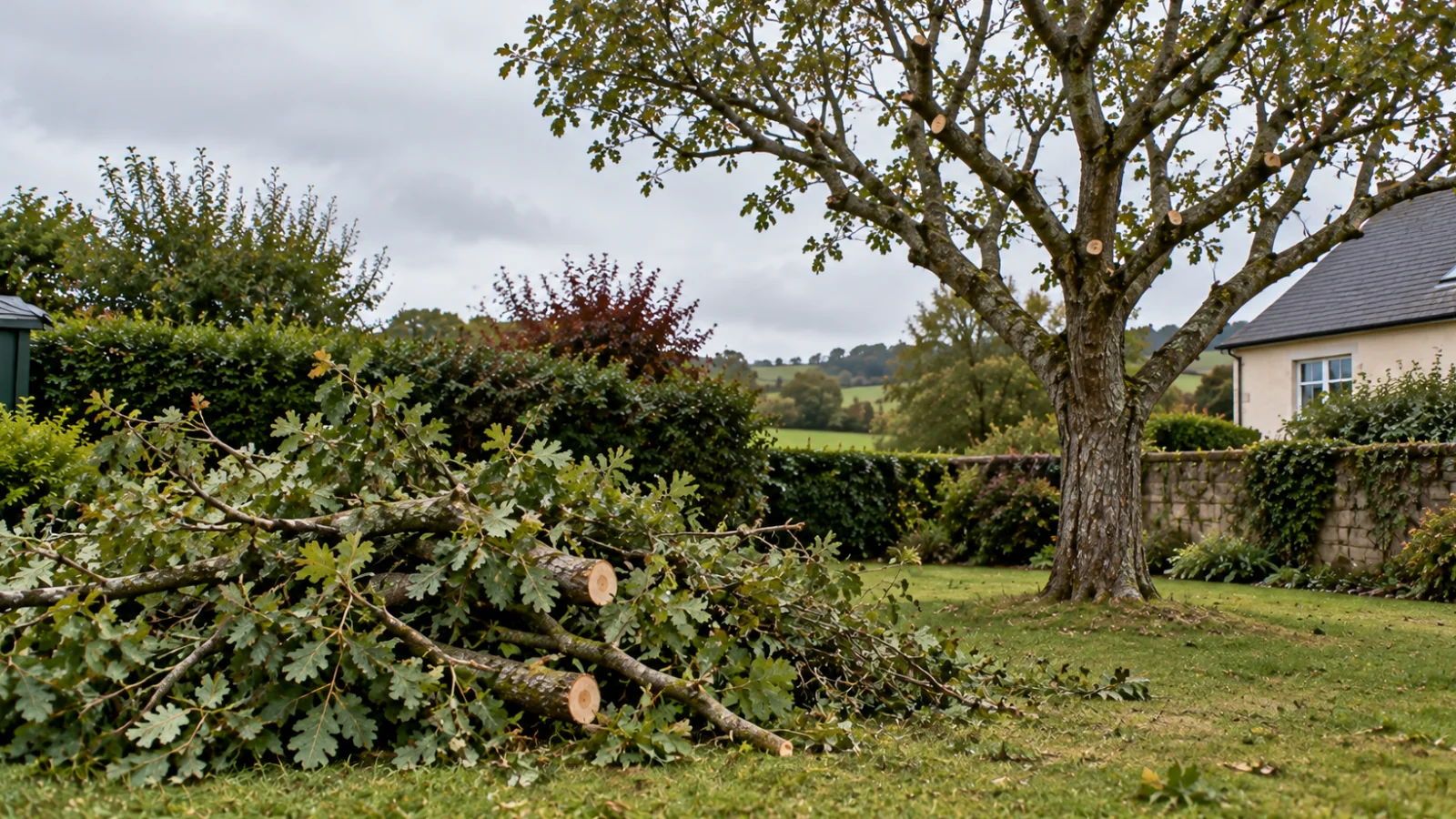
As a general guide, established trees tend to need pruning every 3 to 5 years, young trees every 1 to 2 years, and trees near houses or roads benefit from a yearly inspection. Species, age, location and past work all shift that schedule. As a working guide:
| Tree | Typical interval | Main focus |
| Young trees (first 5 years) | Every 1 to 2 years | Formative pruning and structure |
| Established trees | Every 3 to 5 years | Thinning, lifting and deadwood |
| Mature trees | Every 3 to 5 years, with work as needed | Inspection, deadwood and safety |
| Trees near houses, roads or play areas | Inspected every year and after major storms | Hazard assessment |
Fast growers such as leylandii and willow usually need attention more often. Selecting the right tree for the space at planting stage saves years of work later. Inspections can happen year-round, but the best time for cutting depends on the species, so an arborist will usually plan work around the tree rather than the calendar.
That way you ensure trees receive the right care at the point in the year when they handle it best.
How Can You Tell if a Tree Is Unhealthy?
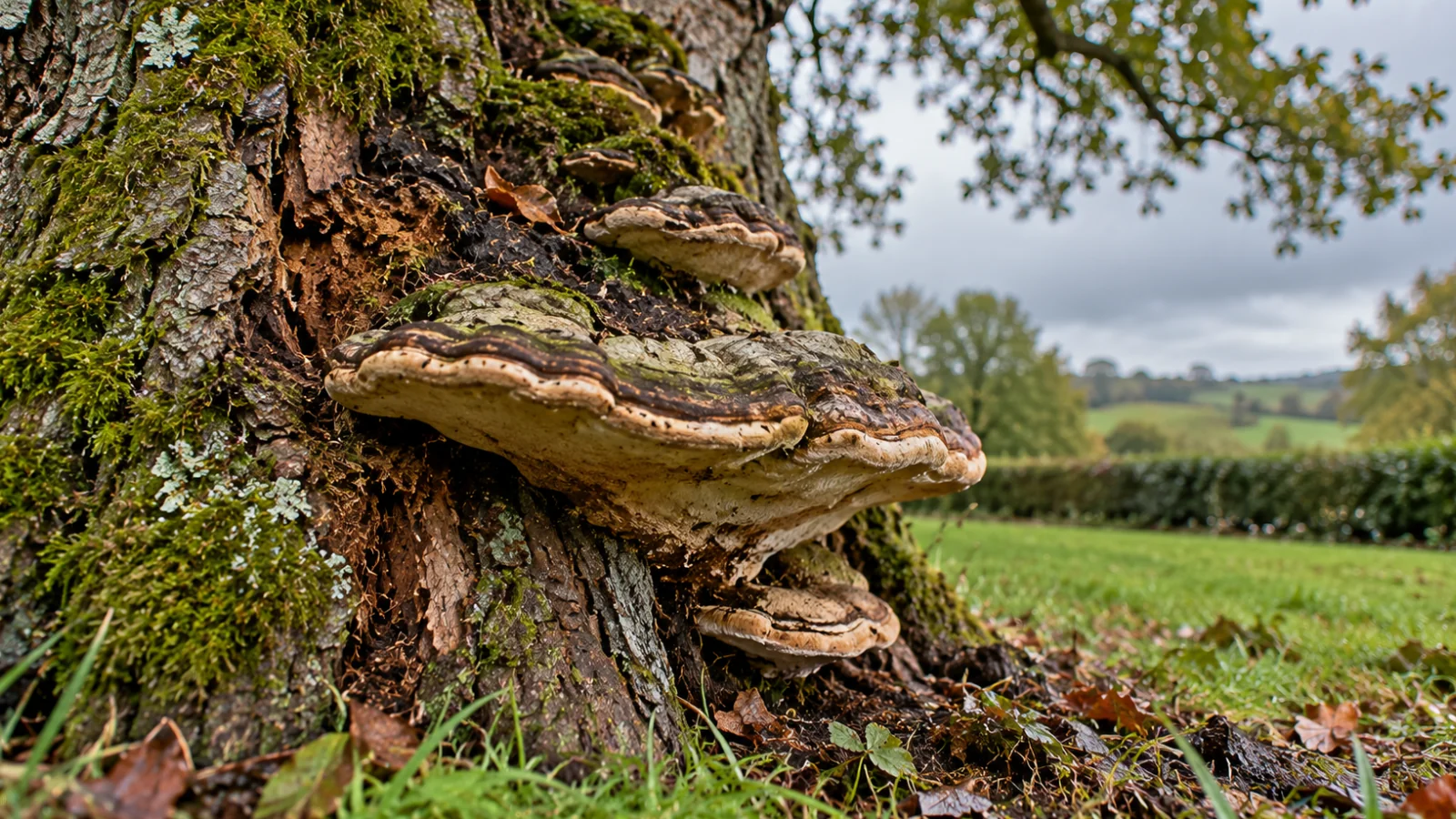
An unhealthy tree usually shows it through dead branches, fungus at the base, cracks or splits, a new lean, a thinning crown or damaged bark. Most of these signs are visible from the ground.
One on its own is worth watching, and two or more together are worth having a professional diagnose properly, before the tree has a chance to pose a risk to property or people.
Dead Branches in the Crown
Bare, brittle limbs that don’t leaf in spring are a falling hazard and a sign of wider stress. A quick test is to scratch a small twig with a fingernail.
Green underneath is a good sign the branch is alive, while brown and dry suggests it isn’t.
Fungus at the Base or Trunk
Mushrooms or bracket fungi often point to decay inside the wood or roots. Some fungi are harmless and live on leaf litter, but brackets growing from the trunk itself, or mushrooms that return around the root flare each autumn, are worth an arborist’s eye.
Cracks, Splits or Cavities
Deep splits in the trunk or at a fork can weaken the tree, especially under wind load. Cavities are less clear-cut. A hollow tree can stand for decades, so the real question is how much sound wood remains around the hollow, which is what an inspection assesses.
New or Worsening Lean
A lean that appears after a storm or gets worse over a few weeks, particularly with lifting or cracked soil on one side, can mean the root plate is failing and needs looking at quickly.
A long-standing lean is usually less worrying, since the tree has adapted to it.
Thinning Crown or Early Leaf Drop
Sparse foliage, or leaves browning in summer, suggests a tree struggling with disease, drought or root damage. In ash, thinning that starts at the tips of the upper branches is often the first visible sign of ash dieback.
Damaged or Weeping Bark
Loose bark, sunken patches or dark fluid running down the trunk can signal infection. On horse chestnut, dark weeping patches on the trunk can be a sign of bleeding canker.
Who Should Carry Out Tree Maintenance?
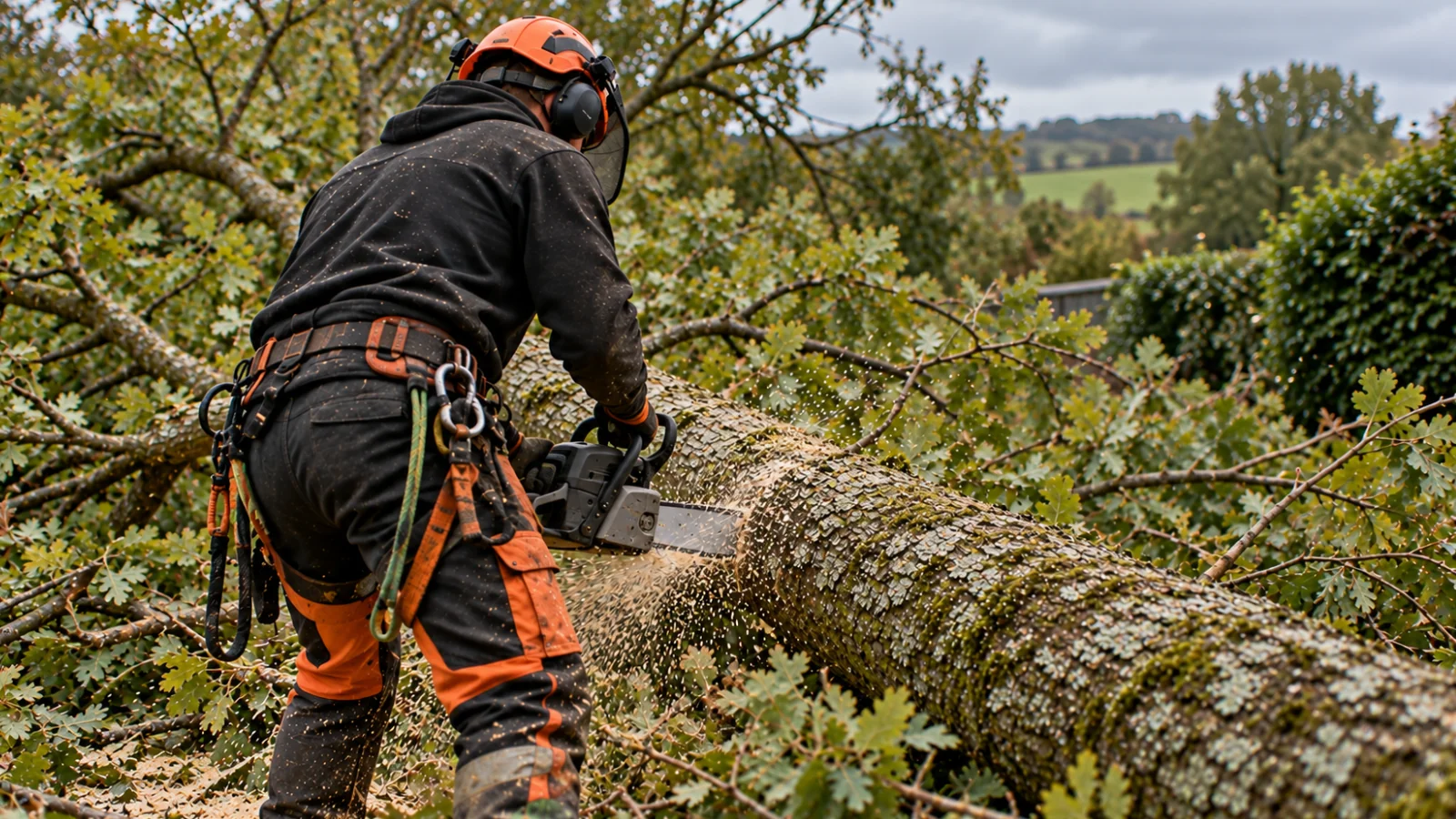
Tree maintenance should be carried out by qualified arborists and tree surgeons. The work involves chainsaws, height and heavy timber moving in ways that are hard to predict, and telling a harmless fungus from serious decay takes training and experience.
There’s still plenty a homeowner can do between visits. Walking the garden after a storm, watering young trees through dry spells, keeping mulch clear of the trunk and snipping small dead twigs within reach from the ground are all sensible jobs.
Anything at height, anything that needs a chainsaw, anything near a roof or road, and any judgement on whether a tree is safe belongs with an arborist.
The right tree care starts with a certified arborist, who knows how trees respond to pruning, which cuts heal and which invite decay, and how to work safely around homes and roads.
Tree care professionals ensure the job meets current standards and is fully insured. Regular visits also ensure the health of each tree is tracked year on year.
At Elm Landscaping, our in-house certified arborist leads the tree work, supported by City & Guilds NPTC qualified crews. We’re a professional member of the Arboricultural Association, carry €6.5 million public liability insurance, and have provided professional tree care services across Clare, Limerick, Galway and Tipperary since 2008.
That full range of services means the people who know your trees are the ones working on them.
Arranging a Professional Tree Care Assessment
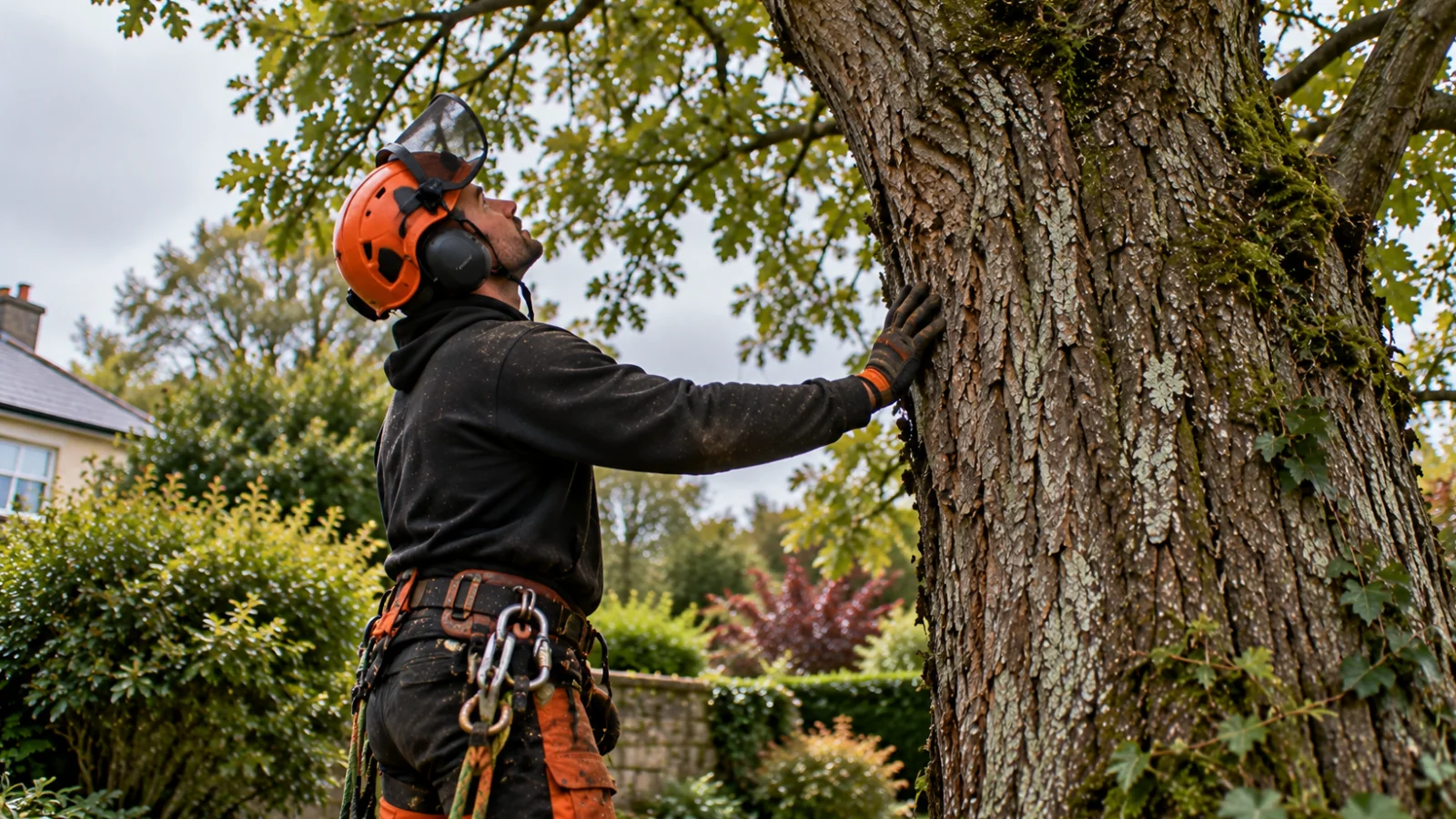
Many trees that fall in a January storm were trying to tell someone something the September before. If there are trees within falling distance of your house, a professional look before the storm season is the simplest protection you can put in place.
A proactive approach turns unknowns into a short, clear plan: which trees need work, which can wait, and which are fine as they are.
Our tree care service starts with that assessment, carried out on site by a qualified arborist, so you know exactly where you stand before any work is booked. Elm’s tree care team covers Clare, Limerick, Galway and parts of Tipperary, takes on larger projects nationwide, and can be reached at the Ennis office on 065 686 6773.
For schools, business parks and other commercial sites, scheduled maintenance for commercial grounds keeps every tree on a fixed inspection cycle, with reports kept on file.